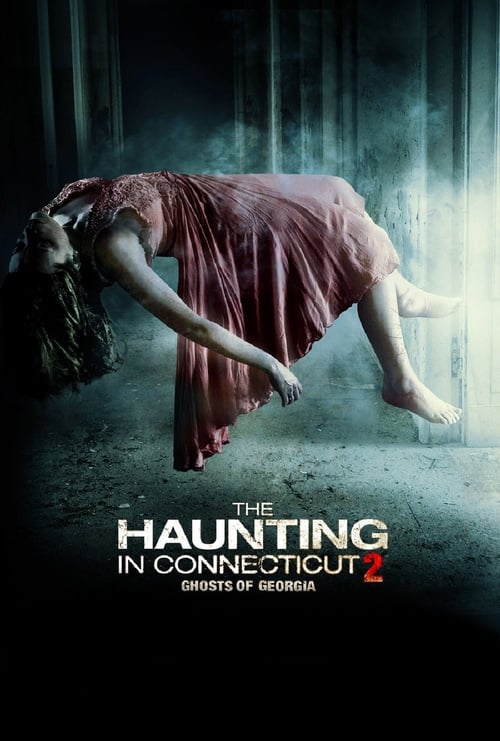
The Haunting in Connecticut 2: Ghosts of Georgia (2013)
Directed by Tom Elkins
No — The Haunting in Connecticut 2: Ghosts of Georgia is not especially woke, scoring 23 out of 100 on our wokeness meter.
The Haunting in Connecticut 2: Ghosts of Georgia arrives as a spiritual successor to a film about a different state and a different haunting, which is the sort of franchise logic that asks us to accept geography as a minor detail.
Consciousness Markers
The haunted house was a stop on the Underground Railroad, and the backstory involves enslaved people murdered by the Stationmaster. Race and slavery are central to the plot mechanics, but they are used as horror backdrop rather than contemporary racial commentary.
The main family is white, but the supporting cast includes Black actors such as Cicely Tyson, Brad James, and Jaren Mitchell in roles tied to the Underground Railroad backstory. This is modest diverse casting rather than a modern representation-driven ensemble.
The plot is driven by Lisa, her sister Joyce, and her daughter Heidi, with female characters confronting the supernatural threat. However, this is standard horror-family dynamics rather than an explicit feminist agenda.
There is some exposition about the house's Underground Railroad history and psychic abilities, but the film is not preachy or message-driven.
There are no LGBTQ+ characters, themes, or subtext in the film.
The film contains no climate-change themes or environmental messaging.
There is no critique of capitalism, wealth, or class exploitation in the film.
The film does not engage with body positivity or body-image themes.
Psychic abilities and medication are treated as supernatural/psychological plot elements, not as neurodivergence representation.
The Underground Railroad setting is fictionalized for supernatural horror, but the film does not offer a modern revisionist historical argument.
Why it received this score
The Haunting in Connecticut 2: Ghosts of Georgia arrives as a spiritual successor to a film about a different state and a different haunting, which is the sort of franchise logic that asks us to accept geography as a minor detail. The Wyrick family moves into a rural Georgia home, the daughter sees a pleasant dead man, the mother suppresses psychic gifts with medication, and the sister arrives to encourage the unlocking of same. The film is standard possession-adjacent domestic horror, competent enough in its jump scares and entirely content to let the past do the heavy lifting. It is 2013 product, and it carries the cultural fingerprints of that moment without much strain.
On the representation front, the supporting cast includes Cicely Tyson and other Black actors in roles tied to the house's Underground Railroad history. That history is not decorative: the Stationmaster's murders and the enslaved people he preyed upon are the engine of the haunting. Still, the film treats slavery as atmospheric backstory, a grim fact to be excavated for ghostly menace. It does not mount a contemporary argument about race. The family drama is female-driven, with Lisa, Joyce, and Heidi doing the seeing, investigating, and confronting, but this is the ordinary arithmetic of horror families, not a thesis.
Elsewhere the ledger is quiet. No LGBTQ characters or subtext, no climate concern, no critique of wealth or class, no body-image theme, no neurodivergence framing for the psychic material. The script explains the house's history and the rules of second sight when needed, and then it gets back to the business of things moving in the dark. The result is a modest, old-fashioned spook story with a historical hook, a few progressive set decorations, and no sermon to deliver. We have seen worse. We have also seen more ambitious attempts at the same material, and we remain tired.
Analysis generated by our Consciousness Algorithm


Synopsis
A young family moves into a historic home in Georgia, only to learn they are not the house's only inhabitants. Soon they find themselves in the presence of a secret rising from underground and threatening to bring down anyone in its path.
Questions about The Haunting in Connecticut 2: Ghosts of Georgia
Is The Haunting in Connecticut 2: Ghosts of Georgia woke?
No — The Haunting in Connecticut 2: Ghosts of Georgia is not especially woke, scoring 23 out of 100 on our wokeness meter. That earns it a verdict of Based.
Does The Haunting in Connecticut 2: Ghosts of Georgia have any woke elements?
1 of the 10 markers register at 30 or above, led by Racial Consciousness (35). On Racial Consciousness: The haunted house was a stop on the Underground Railroad, and the backstory involves enslaved people murdered by the Stationmaster.
How does The Haunting in Connecticut 2: Ghosts of Georgia compare to other 2013 movies?
It ranks #45 of the 274 films from 2013 we've scored; their average is 14. The wokest is Belle (76).
How is the Woke Score calculated?
An AI-assisted process researches the film and its reception, scores it 0–100 on ten markers, then combines those into one 0–100 Woke Score. It measures a specific set of 2020s cultural themes, not film quality.