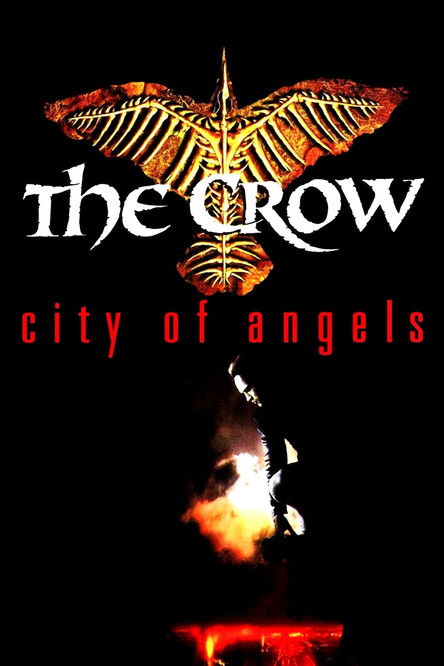
The Crow: City of Angels (1996)
Directed by Tim Pope
No — The Crow: City of Angels is not woke, scoring 10 out of 100 on our wokeness meter.
The Crow: City of Angels arrives in 1996 as a stand-alone sequel, a moody slab of urban gothic in which a murdered mechanic named Ashe Corven is fished out of a harbor by a crow and set loose upon the drug cartel that killed him and his son.
Consciousness Markers
The cast includes Thuy Trang, Richard Brooks, and Swiss actor Vincent Perez in prominent roles, but these are natural casting choices for a 1996 genre film with no commentary on identity.
This is a moody gothic action film that preaches nothing; any moralizing is limited to generic revenge-justice tropes.
Sarah Mohr is a returning co-protagonist, but the film is a male-led revenge narrative; notably, the studio rejected pitches for a female lead, so no feminist agenda is present on screen.
No LGBTQ+ characters, themes, or subtext appear anywhere in the film.
Race is never a theme or subject of commentary; the diverse cast exists without any racial consciousness framing.
No environmental or climate-related content whatsoever.
The antagonist is a drug kingpin, not a capitalist archetype, and the film offers no economic critique.
No body positivity themes; the film traffics in gothic, violent imagery of physical suffering.
No neurodivergent characters or themes are present.
The film is a supernatural revenge fantasy with no historical subject matter to revise.
Why it received this score
The Crow: City of Angels arrives in 1996 as a stand-alone sequel, a moody slab of urban gothic in which a murdered mechanic named Ashe Corven is fished out of a harbor by a crow and set loose upon the drug cartel that killed him and his son. Tim Pope, a music video director, gives the thing a wet, blue-black sheen, and Vincent Perez broods handsomely in face paint. The film was, by most accounts, taken from him in the editing room by the Weinsteins, who wanted a structure that matched the 1994 original. What reached theaters is a sloppy pretender, as the reviewers of the day agreed, though the cinematography retains its defenders.
The interesting material sits behind the camera. James O'Barr pitched a sequel built around a resurrected bride, and David Goyer agreed to write only if the protagonist were a woman. Miramax rejected both, reportedly on the grounds that nobody would pay to see an action film with a female lead. What we got instead is a father's revenge story, and Sarah Mohr, the returning tattoo artist, occupies a supporting position in a narrative that belongs to a man. That production history is worth recording. The finished film carries no feminist argument whatsoever. It carries leather, rain, and a body count.
The cast is diverse by the standards of its moment, with Thuy Trang, Richard Brooks, and a Swiss lead, and the script never remarks upon any of it. No character pauses to explain what their presence signifies. Race is not a subject here, nor is sexuality, nor the climate, nor the body, nor the mind's varied wiring. Judah Earl is a drug lord, and the film holds no interest in economics. The moral register is vengeance, delivered without a sermon. It is a grim, pretty, mostly unsuccessful genre exercise that asks nothing of its audience except patience. The sommelier notes a thin vintage, poured into a heavy glass.
{"thematic_tags": ["sequel", "superhero", "book_adaptation", "box_office_number_one"]}
Analysis generated by our Consciousness Algorithm


Synopsis
A murder victim is brought back to life by a mysterious crow. With the help of a beautiful woman, he exacts revenge on his killers – only to realize his enemy has discovered the one weakness that can destroy him forever.
Questions about The Crow: City of Angels
Is The Crow: City of Angels woke?
No — The Crow: City of Angels is not woke, scoring 10 out of 100 on our wokeness meter. That earns it a verdict of Ultra Based.
Does The Crow: City of Angels have any woke elements?
Very few. None of the 10 markers reaches 30, the level where a marker counts as present; the highest is Representation Casting at 22.
How does The Crow: City of Angels compare to other 1996 movies?
It ranks #34 of the 93 films from 1996 we've scored; their average is 11. The wokest is Bound (60).
How is the Woke Score calculated?
An AI-assisted process researches the film and its reception, scores it 0–100 on ten markers, then combines those into one 0–100 Woke Score. It measures a specific set of 2020s cultural themes, not film quality.