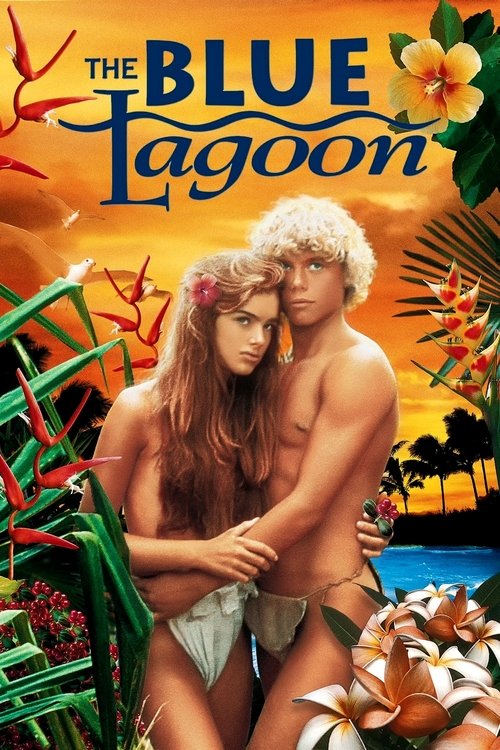
The Blue Lagoon (1980)
Directed by Randal Kleiser
No — The Blue Lagoon is not woke, scoring 0 out of 100 on our wokeness meter.
The Blue Lagoon arrives from 1980 like a message in a bottle from a simpler time, before cinema felt the need to append a social studies lesson to every shipwreck.
Consciousness Markers
The cast is entirely white, with no modern diverse casting agenda; indigenous characters appear only as anonymous threatening background figures.
There are no LGBTQ+ themes, characters, or subtext in the film.
The film depicts a traditional heterosexual romance and gender roles without any feminist critique or agenda.
Race is not examined; indigenous people are portrayed as exotic and menacing human sacrificers, not as subjects of racial consciousness.
The tropical island setting is purely romantic backdrop, with no environmental or climate-crisis messaging.
The film contains no critique of capitalism, wealth inequality, or economic systems.
Nudity is presented as idealized adolescent sexual awakening, not as a body-positivity statement.
No characters are depicted with neurodivergence or related themes.
The Victorian-era setting is used for romantic fantasy rather than historical revisionism.
The film is a sentimental adventure romance and does not lecture the audience on social or political issues.
Why it received this score
The Blue Lagoon arrives from 1980 like a message in a bottle from a simpler time, before cinema felt the need to append a social studies lesson to every shipwreck. Two white cousins and a cook are stranded on a tropical island, where they grow up, discover puberty, and eventually have a child, all without a single nod to representation casting, LGBTQ+ themes, or the climate crisis. The film's only concession to diversity is a shark with a nonspeaking role. One might expect a story about two children raised outside society to interrogate gender roles or racial dynamics, but the film is content to let them reinvent the nuclear family with a hut that resembles a Club Med honeymoon cottage.
The narrative treats Emmeline's menstrual panic and Richard's masturbation as quaint mysteries, never as opportunities for a feminist critique or body-positivity statement. The indigenous islanders appear only as anonymous silhouettes committing human sacrifice, a portrayal that manages to be both exotic and menacing without ever engaging racial consciousness. The Victorian setting is pure romantic backdrop, not revisionist history. And the film's attitude toward nudity is one of idealized adolescent awakening, not a celebration of diverse bodies. There is no economic critique, no neurodivergent character, no lecture on saving the planet. The film asks nothing of its audience except to admire the cinematography and suppress the urge to wonder how two teenagers failed to grasp basic biology.
In the current cultural ledger, The Blue Lagoon registers not a single blip. It is a sentimental adventure romance that preaches nothing, challenges nothing, and represents no one beyond the conventionally beautiful. We are left with a curious artifact: a film so thoroughly untroubled by modern progressive sensibilities that it loops back around to a kind of innocence. The score is a clean sweep of zeros, and the film seems almost proud of it.
Analysis generated by our Consciousness Algorithm


Synopsis
Two small children and a ship's cook survive a shipwreck and find safety on an idyllic tropical island. Soon, however, the cook dies and the young boy and girl are left on their own. Days become years and Emmeline and Richard make a home for themselves surrounded by exotic creatures and nature's beauty. But will they ever see civilization again?
Questions about The Blue Lagoon
Is The Blue Lagoon woke?
No — The Blue Lagoon is not woke, scoring 0 out of 100 on our wokeness meter. That earns it a verdict of Ultra Based.
Does The Blue Lagoon have any woke elements?
No. All 10 markers score zero.
How does The Blue Lagoon compare to other 1980 movies?
It ranks #32 of the 37 films from 1980 we've scored; their average is 10. The wokest is Nine to Five (42).
How is the Woke Score calculated?
An AI-assisted process researches the film and its reception, scores it 0–100 on ten markers, then combines those into one 0–100 Woke Score. It measures a specific set of 2020s cultural themes, not film quality.