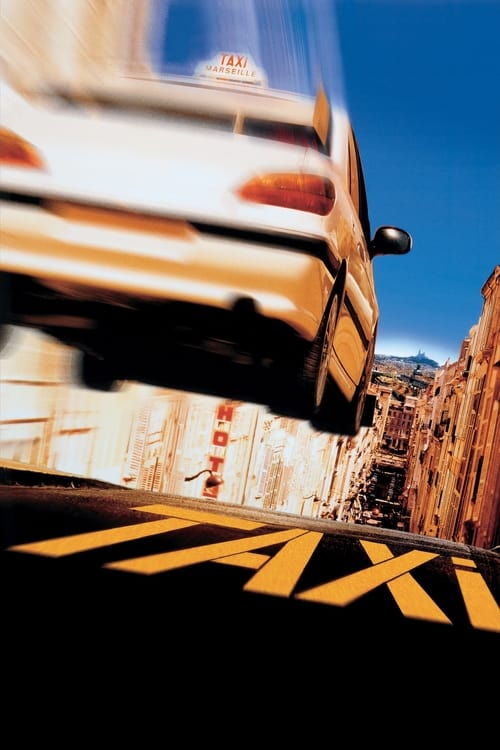
Taxi (1998)
Directed by Gérard Pirès
No — Taxi is not woke, scoring 0 out of 100 on our wokeness meter.
Some assignments arrive like a bottle of Beaujolais nouveau: young, unpretentious, and entirely without aspiration to be mistaken for something grander.
Consciousness Markers
The cast includes actors of North African and Asian descent, but they are present naturally and the film makes no modern representation-casting statement or commentary.
No LGBTQ+ characters, themes, or subtext appear in the film.
Female characters are present as girlfriend and police sergeant, but the film has no feminist agenda or gender-role critique.
The film does not engage with racial identity, systemic racism, or racial consciousness.
No environmental or climate themes are present.
The film is a mainstream action comedy with no critique of capitalism, wealth, or class structures.
There is no body-positive messaging or challenge to conventional body standards.
Émilien's comic ineptitude is played for laughs and is not framed as neurodivergence.
The film does not revise or reinterpret historical events or figures.
The film is entertainment-driven and contains no preachy or lecture-like social messaging.
Why it received this score
Some assignments arrive like a bottle of Beaujolais nouveau: young, unpretentious, and entirely without aspiration to be mistaken for something grander. Taxi, the 1998 French action comedy from director Gérard Pirès and writer-producer Luc Besson, is a machine built for a single purpose, which is to move a white Peugeot 406 very quickly through Marseille while a bumbling inspector complains from the passenger seat. There is no thesis hiding in the glovebox. Daniel Morales wants his taxi license, Émilien Coutant-Kerbalec wants a date with Sergeant Petra, and a gang of German bank robbers wants to be caught cinematically. The film delivers all three and then stops.
It is a relief, honestly, to sit through a mainstream crowd-pleaser and find nothing worth annotating. The cast is diverse in the casual, unremarked manner of a port city, and the film treats this as neither achievement nor subject. Women appear as a girlfriend and a sergeant, both competent, neither positioned as a statement. The villains are German because the plot needs efficient drivers, not because the screenplay holds opinions about Germany. Nobody lectures. Nobody learns a lesson about society. The burned apartment, the duplicated traffic-light keys, the pizza delivery boys with walkie-talkies: these are jokes, and the film is content to let them remain jokes. Émilien's incompetence is played for pratfalls, not diagnosis.
There is craftsmanship here, and there is also an absence, and the absence is the interesting part. No cause is advanced. No audience is scolded. The film asks only that we enjoy a car chase, and it is polite enough not to ask anything else. A clean specimen, then, and a rare one. We file it without complaint.
Analysis generated by our Consciousness Algorithm
Part of


Synopsis
In Marseilles a skilled pizza delivery boy Daniel who drives a scooter finally has his dreams come true. He gets a taxi license. Caught by the police for a huge speed infraction, he will help Emilien, a loser inspector who can't drive, on the track of German bank robbers, so he doesn't lose his license and his dream job.
Questions about Taxi
Is Taxi woke?
No — Taxi is not woke, scoring 0 out of 100 on our wokeness meter. That earns it a verdict of Ultra Based.
Does Taxi have any woke elements?
No. All 10 markers score zero.
How does Taxi compare to other 1998 movies?
It ranks #110 of the 118 films from 1998 we've scored; their average is 12. The wokest is Show Me Love (60).
Is Taxi the most woke Taxi movie?
No. It ranks #5 of the 5 Taxi films we've scored; the wokest is Taxi 3 (12).