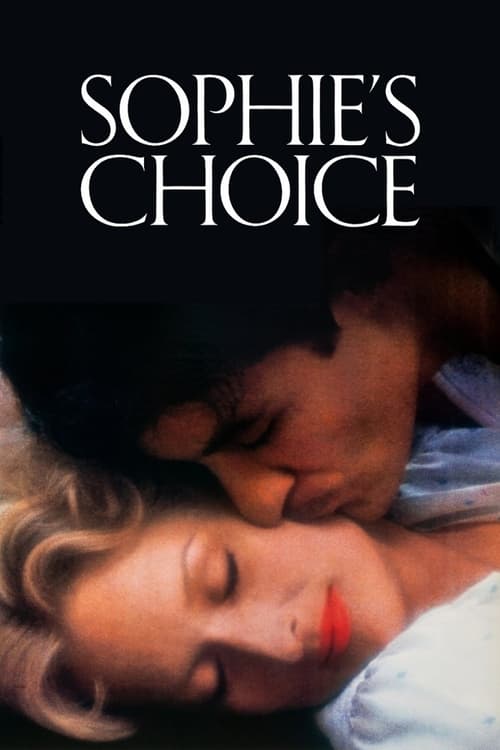
Sophie's Choice (1982)
Directed by Alan J. Pakula
No — Sophie's Choice is not woke, scoring 6 out of 100 on our wokeness meter.
Alan J. Pakula's Sophie's Choice arrives from 1982 with the grim dignity of a monument and the social consciousness of a different era.
Consciousness Markers
While Sophie is a complex and resilient character, the film focuses on her trauma and psychological state rather than delivering a modern feminist critique of patriarchy.
The film features a predominantly white cast, focusing on European immigrant trauma rather than modern demands for diverse representation.
The film deals with European ethnic persecution (the Holocaust) but does not engage with contemporary racial justice issues or modern systemic racism.
Nathan is diagnosed with paranoid schizophrenia, but the film does not frame this condition through a modern, self-aware neurodivergence lens.
The film touches upon the oppressive nature of the Nazi regime, but it does not offer a critique of modern global capitalism or wealth disparity.
There are no significant LGBTQ+ themes or representation present in the narrative or character development.
There is no thematic engagement with environmentalism or climate change concerns in the film's plot or setting.
The film does not address body image, diverse body types, or promote body positivity.
The film is a dramatic retelling of known historical atrocities and does not attempt to challenge established historical facts.
The film is a psychological drama and character study, lacking the didactic, activist tone associated with modern 'lecture energy' cinema.
Why it received this score
Alan J. Pakula's Sophie's Choice arrives from 1982 with the grim dignity of a monument and the social consciousness of a different era. It is a postwar psychological drama about Stingo, Sophie, and Nathan, and it treats the Holocaust as a moral wound, not as a platform for contemporary instruction. The cast is almost entirely white and European, which suits the material's focus on Polish immigrant trauma. There is no LGBTQ+ thread, no climate concern, and no body positivity subplot. The film has other business on its mind.
Sophie herself is complex, resilient, and ultimately destroyed, but the film observes her suffering without mounting a modern feminist critique of patriarchy. Race enters only through the historical persecution of European Jews, not through any engagement with contemporary racial justice. Nathan's paranoid schizophrenia is presented as a tragic clinical condition, not through a self-aware neurodivergence lens. The Nazis are condemned as an oppressive regime, yet the film offers no critique of modern capitalism or wealth disparity. It is a character study, not a sermon.
The film leaves us with Meryl Streep's Oscar-winning performance and a sorrow that earns itself honestly. There is no revisionist history here, no lecture energy, no preachy address to the audience about present-day obligations. The picture asks us to watch three people flounder in the bewilderment of being human. That is an old-fashioned ambition, and the film pursues it with a straight face. As a specimen of modern progressive sensibility, it is nearly barren. As a serious drama, it holds together.
Analysis generated by our Consciousness Algorithm


Synopsis
Stingo, a young writer, moves to Brooklyn in 1947 to begin work on his first novel. As he becomes friendly with Sophie and her lover Nathan, he learns that she is a Holocaust survivor. Flashbacks reveal her harrowing story, from pre-war prosperity to Auschwitz. In the present, Sophie and Nathan's relationship increasingly unravels as Stingo grows closer to Sophie and Nathan's fragile mental state becomes ever more apparent.
Questions about Sophie's Choice
Is Sophie's Choice woke?
No — Sophie's Choice is not woke, scoring 6 out of 100 on our wokeness meter. That earns it a verdict of Ultra Based.
Does Sophie's Choice have any woke elements?
Very few. None of the 10 markers reaches 30, the level where a marker counts as present; the highest is Feminist Agenda at 15.
How does Sophie's Choice compare to other 1982 movies?
It ranks #20 of the 41 films from 1982 we've scored; their average is 7. The wokest is Gandhi (42).
How is the Woke Score calculated?
An AI-assisted process researches the film and its reception, scores it 0–100 on ten markers, then combines those into one 0–100 Woke Score. It measures a specific set of 2020s cultural themes, not film quality.