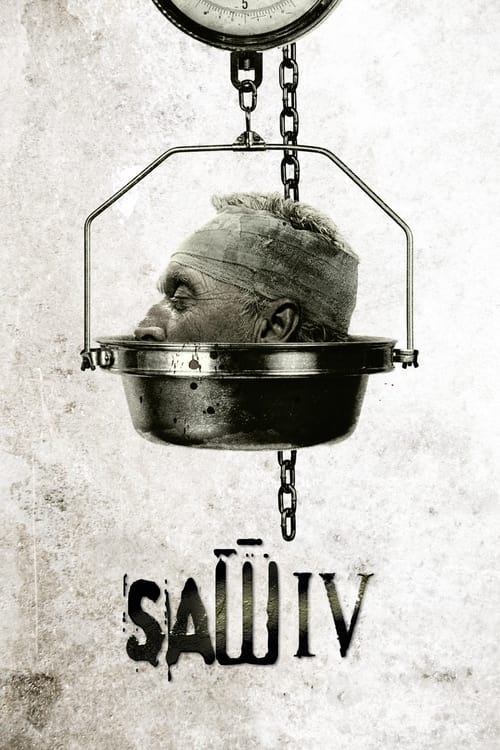
Saw IV (2007)
Directed by Darren Lynn Bousman
No — Saw IV is not woke, scoring 4 out of 100 on our wokeness meter.
Saw IV arrives as the fourth annual installment of a franchise that had, by 2007, settled into a rhythm of industrial reliability.
Consciousness Markers
The cast includes Black actors (Lyriq Bent as the lead Detective Rigg, Athena Karkanis) in prominent roles, but their presence is unremarked and carries no representational agenda.
Jigsaw's tapes deliver moralizing about appreciating one's life, but this is franchise philosophy rather than social-issue lecturing.
Betsy Russell's Jill Tuck receives a backstory, but the film offers no feminist framing or commentary on gender.
A Black actor anchors the film, yet race is never addressed or thematized; the victims and villains are drawn without racial commentary.
No LGBTQ+ characters, themes, or subtext appear anywhere in the film.
No environmental or climate themes whatsoever.
The villains are individual sadists and criminals; there is no critique of capitalism or wealth.
No body-positivity themes; the film's treatment of bodies is purely visceral horror.
No neurodivergent characters or themes are present.
No historical revisionism; the film is a contemporary fictional horror narrative.
Why it received this score
Saw IV arrives as the fourth annual installment of a franchise that had, by 2007, settled into a rhythm of industrial reliability. Darren Lynn Bousman returns to direct, the screenwriting duties pass to new hands for the first time, and ten million dollars are converted into ninety minutes of machinery, splanchnic detail, and the dependable ticking of timers. The picture opens on an autopsy, which tells us most of what we need to know about its ambitions. Jigsaw is dead. The franchise is not. The audience is expected to keep up.
What the film does not do is carry any recognizable social program. A Black actor, Lyriq Bent, anchors the proceedings as Detective Rigg, and the casting is never remarked upon, which is correct behavior for a thriller and a poor foundation for a thesis. The victims are drawn from a rogues' gallery of personal villains: a sex trafficker, a serial rapist, a man acquitted of domestic abuse. The moral ledger here is individual and punitive, not structural. Nobody in this film is exploited by a system. They are punished by a dying engineer with a taste for carpentry and a grudge.
Jigsaw's cassette recordings do their share of sermonizing, though the sermon concerns gratitude for one's own life, which is franchise philosophy and not social instruction. Women exist in the film to be pregnant, miscarried, or impaled, and the screenplay offers no framework in which that might be examined. The bodies on screen are raw material for traps and nothing else. The film sits near the bottom of the ledger, a relic of pre-recession horror economics, competently assembled, culturally inert, and honest about exactly one thing: it wants your money.
Analysis generated by our Consciousness Algorithm
Part of


Synopsis
Despite Jigsaw's death, and in order to save the lives of two of his colleagues, Lieutenant Rigg is forced to take part in a new game, which promises to test him to the limit.
Questions about Saw IV
Is Saw IV woke?
No — Saw IV is not woke, scoring 4 out of 100 on our wokeness meter. That earns it a verdict of Ultra Based.
Does Saw IV have any woke elements?
Very few. None of the 10 markers reaches 30, the level where a marker counts as present; the highest is Representation Casting at 15.
How does Saw IV compare to other 2007 movies?
It ranks #140 of the 201 films from 2007 we've scored; their average is 12. The wokest is Like Stars on Earth (92).
Is Saw IV the most woke Saw movie?
No. It ranks #6 of the 10 Saw films we've scored; the wokest is Saw VI (25).