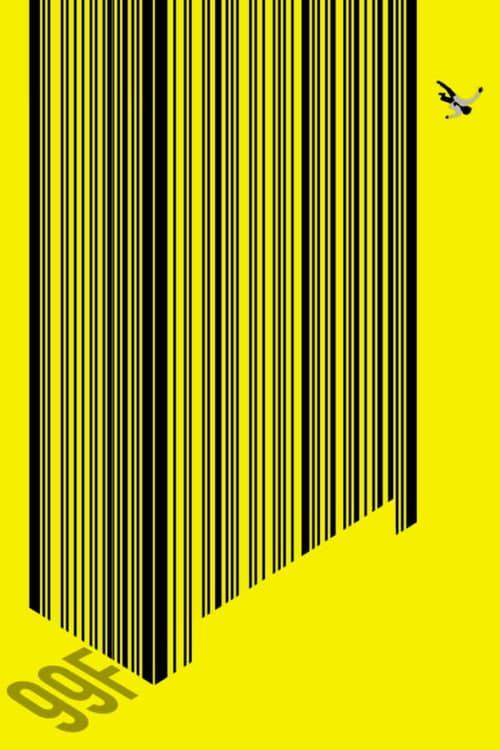
99 Francs (2007)
Directed by Jan Kounen
Partly — 99 Francs is somewhat woke, scoring 51 out of 100 on our wokeness meter.
Paris, 2001, or thereabouts.
Consciousness Markers
The film is a sustained satire of the advertising industry, consumerism, and corporate cynicism, culminating in a revolt against the business.
The film uses satirical voiceover and direct critique to lecture the audience about advertising, consumerism, and modern emptiness.
The cast is entirely white French actors, with no evident emphasis on diverse or inclusive casting.
There are no LGBTQ+ themes, characters, or subplots in the film.
The film does not advance a feminist agenda; female characters exist mainly within the protagonist's hedonistic orbit.
Race and racial identity are not addressed or made thematically relevant.
Environmental or climate concerns are absent from the film's satire.
There is no body-positivity theme or critique of body standards.
Neurodivergence is not represented or discussed.
The film does not revise or reinterpret historical events.
Why it received this score
Paris, 2001, or thereabouts. Octave Parango sells yogurt for a living and despises himself for the talent he brings to it. Jan Kounen's adaptation of Frédéric Beigbeder's novel follows this advertising man through a fog of cocaine, one-night stands, and corporate cynicism, all of it narrated by a voice that has already given up. The camera swoops, the soundtrack throbs, the coke is plentiful. The film is a hangover in search of a morning after.
Its real target is commerce, and the aim is steady. The agency is drawn as a factory that manufactures desire and invoices for the privilege. Octave's eventual revolt against his employers carries genuine venom, the disgust of a man who has read the industry's own brochures and found them empty. This is anti-capitalist in the older, European sense: sour, personal, and uninterested in solutions. It is also, by 2007 standards, nothing new. The film is angry at advertising the way a man is angry at his own reflection.
Elsewhere the cupboard is bare. The cast is white, the women exist to orbit Octave's ego, race goes unmentioned, the climate is not a concern, and no body is asked to feel good about itself. The narration does lecture, though gently, pausing to explain the joke before and after delivering it. Jean Dujardin, all jaw and self-loathing, is very good, which does not change the ledger. We are left with a period piece of disillusionment, a Frenchman disgusted by capitalism without the modern paperwork. We classify it, we nod, we move on.
Analysis generated by our Consciousness Algorithm


Synopsis
Paris, France, 2001. Octave Parango, a young advertiser working at the Ross & Witchcraft advertising agency, lives a suicidal existence, ruled by cynicism, irresponsibility and debauchery. The obstacles he will encounter in developing a campaign for a new yogurt brand will force him to face the meaning of his work and the way he manages his relationship with those who orbit around his egotistic lifestyle.
Questions about 99 Francs
Is 99 Francs woke?
Partly — 99 Francs is somewhat woke, scoring 51 out of 100 on our wokeness meter. That earns it a verdict of Woke-Adjacent.
What makes 99 Francs woke?
2 of the 10 markers register at 30 or above, led by Eat the Rich (60) and Lecture Energy (35). On Eat the Rich: The film is a sustained satire of the advertising industry, consumerism, and corporate cynicism, culminating in a revolt against the business.
How does 99 Francs compare to other 2007 movies?
It ranks #7 of the 201 films from 2007 we've scored; their average is 12. The wokest is Like Stars on Earth (92).
How is the Woke Score calculated?
An AI-assisted process researches the film and its reception, scores it 0–100 on ten markers, then combines those into one 0–100 Woke Score. It measures a specific set of 2020s cultural themes, not film quality.