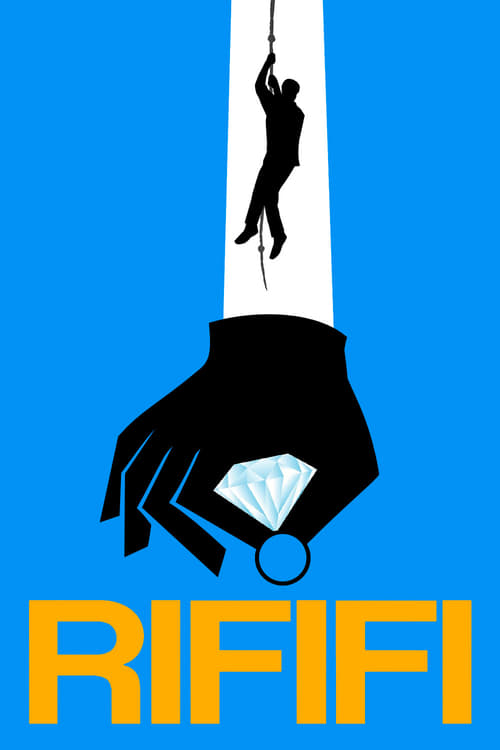
Rififi (1955)
Directed by Jules Dassin
No — Rififi is not woke, scoring 0 out of 100 on our wokeness meter.
Rififi arrives from 1955 carrying a suitcase full of francs and nothing to confess.
Consciousness Markers
The cast is a natural ensemble of French and European actors (Servais, Möhner, Manuel, Dassin) cast for talent and budget, with no modern representational intent. The Italian and Swedish characters are narrative texture, not casting statements.
No LGBTQ+ characters, themes, or subtext appear anywhere in the film.
The film's treatment of Mado is decidedly pre-feminist: Tony savagely beats her for taking up with Grutter, and she exists largely as a possession to be reclaimed. No feminist agenda is present.
Dassin deliberately stripped the novel's racist Arab-versus-European framing, replacing it with the ethnically neutral 'Grutter' gang. This is an act of removing racial content, not advancing racial consciousness.
No environmental or climate themes whatsoever.
A heist film about professional thieves pursuing personal gain and revenge; it offers no critique of capitalism or class structure.
No body-positivity themes or messaging.
No neurodivergence themes; Rémy's heroin addiction is a criminal-plot device, not a neurodivergence narrative.
A straightforward adaptation of a contemporary crime novel with no historical revisionism.
The film is famously spare and silent, with the half-hour heist shot without dialogue or music. It shows rather than tells and preaches nothing.
Why it received this score
Rififi arrives from 1955 carrying a suitcase full of francs and nothing to confess. Jules Dassin, freshly blacklisted out of Hollywood, took Auguste Le Breton's crime novel, discarded its more lurid passages, and built a picture around a half hour of men chiseling through a ceiling in silence. No music. No dialogue. No narrator stepping forward to explain what we ought to feel about the jewelry trade. The heist is a job, and the film treats it as labor, which is the closest this thing comes to a political position.
The picture's handling of Mado will trouble the modern viewer, and the film extends no apology. Tony beats her for having taken up with Grutter, and the camera regards this as a sad fact in a sad man's life, not as an argument requiring our assent. Dassin likewise stripped the novel's Arab-versus-European hostility and replaced it with a gang named Grutter. That is the removal of racial content, not the advancement of racial awareness, and no critic should pretend otherwise. The ensemble is French, Swedish, and Italian by way of plot convenience and a modest budget. Remy's heroin habit is a device, not a diagnosis. Nobody here is present to instruct us.
What remains is craft. The burglary sequence has been imitated by actual thieves on several continents, which is a form of praise no marketing department could manufacture. There is no sermon in this film. It shows four men doing a difficult thing well, then watches the thing curdle into kidnapping and revenge. We score it at the bottom of every column, and we intend that as a compliment.
Analysis generated by our Consciousness Algorithm
Synopsis
Out of prison after a five-year stretch, jewel thief Tony turns down a quick job his friend Jo offers him, until he discovers that his old girlfriend Mado has become the lover of local gangster Pierre Grutter during Tony's absence. Expanding a minor smash-and-grab into a full-scale jewel heist, Tony and his crew appear to get away clean, but their actions after the job is completed threaten the lives of everyone involved.
Questions about Rififi
Is Rififi woke?
No — Rififi is not woke, scoring 0 out of 100 on our wokeness meter. That earns it a verdict of Ultra Based.
Does Rififi have any woke elements?
No. All 10 markers score zero.
How does Rififi compare to other 1955 movies?
It ranks #13 of the 15 films from 1955 we've scored; their average is 3. The wokest is Diabolique (10).
How is the Woke Score calculated?
An AI-assisted process researches the film and its reception, scores it 0–100 on ten markers, then combines those into one 0–100 Woke Score. It measures a specific set of 2020s cultural themes, not film quality.