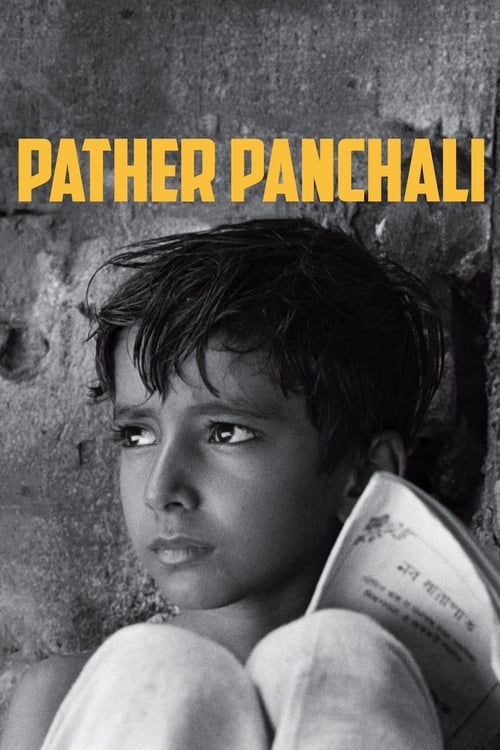
Pather Panchali (1955)
Directed by Satyajit Ray
No · Ultra Based
How we score movies →Consciousness Markers
The film authentically casts Bengali actors from rural backgrounds, but this reflects documentary naturalism rather than conscious diversity programming. There is no contemporary consciousness about representation.
The film depicts rural Bengali people with dignity and authenticity, but without the framing of contemporary racial or caste consciousness. It is simply showing Bengali life as it exists.
Women are depicted with sympathy and complexity, but within traditional gender roles. Sarbojaya is a suffering caregiver; there is no critique of patriarchy or advancement of feminist ideology.
No LGBTQ+ themes or representation. The film is set in a conservative rural Bengali village in 1955 and contains no such elements.
No climate messaging or environmental consciousness. The natural world appears as backdrop and setting, not as subject of political concern.
The film portrays poverty as human tragedy, not as a catalyst for systemic critique or anti-capitalist messaging. Economic hardship is presented as existential fact.
Bodies are presented as they are, neither celebrated nor critiqued through the lens of body positivity. The film contains no commentary on body image or acceptance.
No representation or celebration of neurodivergence. Characters with unusual behaviors are not framed through contemporary disability consciousness frameworks.
The film presents its historical moment authentically without rewriting or revising history for contemporary sensibilities. It is historically grounded, not revisionist.
The film shows rather than tells, trusting viewers to understand its themes through observation and emotional experience. There is no preachy moralizing or lecture-like tone.


Synopsis
Impoverished priest Harihar Ray leaves his rural Bengal village in search of work. His wife, Sarbojaya, looks after their rebellious daughter, Durga, and young son, Apu. The children enjoy the small pleasures of their difficult life.
Why it received this score
Pather Panchali stands as perhaps the most important film of the 1950s, a work of such artistic integrity and humanistic depth that it fundamentally altered what cinema could be. Satyajit Ray's debut presents the daily struggles of a Brahmin family in rural Bengal with unflinching naturalism, finding poetry in poverty and grace in suffering. The film's power derives from its commitment to showing rather than telling, allowing viewers to inhabit the emotional reality of characters whose lives are constrained by circumstance.
Yet we must distinguish between moral seriousness and contemporary cultural programming. The film depicts women within traditional gender hierarchies of rural 1950s India, presenting these not as injustice to be critiqued but as the texture of lived experience. There are no lectures about patriarchy, no performative gestures toward representation as we understand it today. The children are portrayed as actual children, not as vessels for messaging about neurodiversity or body consciousness. The poverty is rendered as tragedy, not as an occasion for anti-capitalist theorizing.
This is cinema operating in a mode that preceded and transcends contemporary progressive frameworks. It is a work about human dignity that needs no cultural validation from 2020s sensibilities to justify its existence. Scoring it on contemporary metrics feels like measuring a Bach fugue by its adherence to rap lyrics. The film simply exists in a different moral universe.
Analysis generated by our Consciousness Algorithm
Critic Reviews
“Simple, but not a simplistic, and it is hardly a romanticized paean to childhood, although there are moments of great beauty.”
“It's a truly amazing accomplishment which Hollywood and its mass-production thinking could well ponder on.”
“Everything about Pather Panchali points to the beautiful life of the human spirit.”
“Pather Panchali, very simply, is a masterpiece with events that unfold languorously, and nature seems to set the pace.”