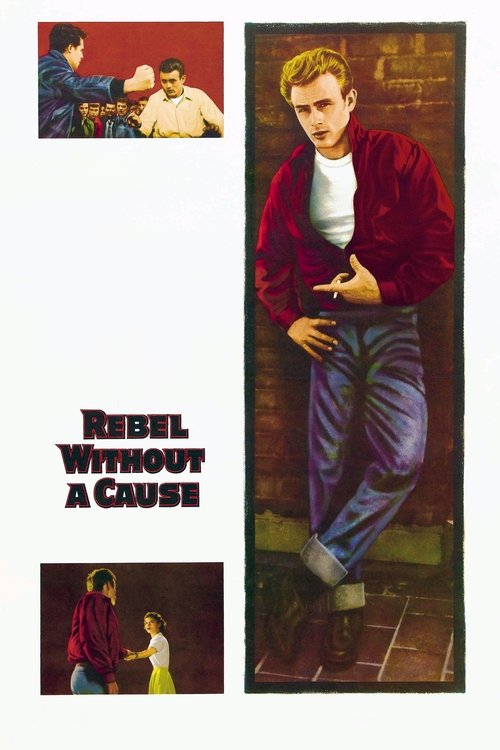
Rebel Without a Cause (1955)
Directed by Nicholas Ray
No · Ultra Based
How we score movies →Consciousness Markers
Sal Mineo's character Plato contains coded queer subtext that modern critics have identified as groundbreaking for its time, but this remains implicit and embedded in tragedy rather than explicit representation or celebration.
Natalie Wood's presence as a leading female character was notable for 1955, though she exists primarily as a romantic interest. No deliberate diversity casting; the film reflects the racial homogeneity typical of 1950s mainstream Hollywood.
While Judy has agency and emotional depth, the film does not engage in feminist critique or consciousness-raising. She is a troubled teen navigating social dynamics, not a character defined by gender politics.
While the film portrays the alienation of youth in post-war consumer society, it does not offer any systematic critique of capitalism or advocate for economic restructuring.
Ray's direction is observational rather than preachy. The film trusts viewers to draw their own conclusions about the characters' situations without explicit moral instruction.
The film contains no engagement with racial themes or consciousness whatsoever. It is set in an entirely white suburban world without acknowledgment of this fact.
No climate themes present in the film.
The film does not engage with body positivity themes or critique of beauty standards in any way.
While characters display psychological distress, the film does not employ the language or framework of neurodivergence or neurodiversity awareness.
The film is not a historical work and does not attempt to revise historical narratives.


Synopsis
After moving to a new town, troublemaking teen Jim Stark is supposed to have a clean slate, although being the new kid in town brings its own problems. While searching for some stability, Stark forms a bond with a disturbed classmate, Plato, and falls for local girl Judy. However, Judy is the girlfriend of neighborhood tough, Buzz. When Buzz violently confronts Jim and challenges him to a drag race, the new kid's real troubles begin.
Why it received this score
Nicholas Ray's 1955 melodrama captures the existential turmoil of American youth with a sensitivity that was genuinely progressive for the era, yet it remains a product of its time. The film's exploration of teenage alienation, parental failure, and the search for belonging speaks to universal human anxieties rather than to the specific cultural consciousness markers that would emerge decades later. Natalie Wood's Judy possesses agency and her own emotional arc, which was notable in 1950s cinema, but she exists within a narrative framework that predates modern conversations about representation. The film's treatment of Sal Mineo's Plato contains a queer subtext that contemporary critics have identified as groundbreaking, yet this subtext is embedded in the character's coded loneliness and tragic fate rather than in any explicit or celebratory engagement with LGBTQ identity. The film was controversial upon release not for progressive reasons but for its sympathetic portrayal of delinquent youth, which alarmed conservative critics and audiences.
What distinguishes this film from genuinely woke cinema is its lack of preachy intent around social categories. The characters are troubled because of family dysfunction, social alienation, and the existential confusion of adolescence, not because of systemic oppression or identity politics. Ray's camera observes their pain without offering the kind of consciousness-raising commentary that would characterize later progressive filmmaking. The film does not lecture about society's failures toward its young people; it simply shows us young people failing within society, and invites us to feel their confusion.
The verdict is clear: this is a humanist masterpiece of the 1950s, and it was ahead of its time in many ways, but it is not a woke film by any contemporary measure. To apply such a framework would be anachronistic and would diminish the film's actual achievement, which lies in its emotional immediacy and its refusal to offer easy answers to the questions it raises about belonging, identity, and connection in post-war America.
Analysis generated by our Consciousness Algorithm
Critic Reviews
“A milestone in the creation of new idea about young people.”
“The red-jacketed, Method-pouting James Dean steals every scene, but the ensemble playing is nothing short of exemplary.”
“Where the attitudes of "East of Eden" are hopelessly dated and broad, the poetic longing for connection in Rebel Without a Cause will always feel timeless.”
“[A] generation-gap soap opera of the 50s, which had more emotional resonance for the teenagers of the time than many much better movies.”