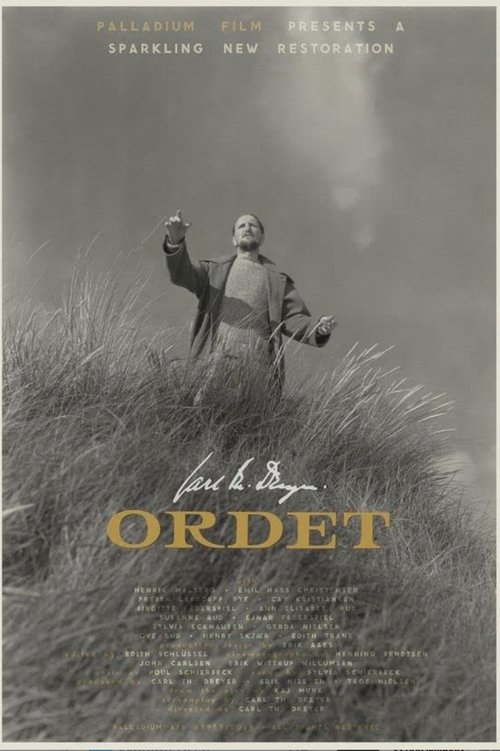
Ordet (1955)
Directed by Carl Theodor Dreyer
No · Ultra Based
How we score movies →Consciousness Markers
All-white Danish cast reflecting the film's cultural context. No apparent effort toward diverse representation, though this was not a cultural priority in 1955 Denmark.
The film communicates through aesthetic and narrative choices rather than explicit preachiness. Religious conviction shapes the work, but this is not the contemporary lecture-oriented preachiness of modern progressive cinema.
Women occupy traditional domestic roles. Inger is defined through her role as wife and mother. The narrative does not critique gender roles or advocate for women's autonomy.
No LGBTQ+ themes or representation present in the film.
No racial consciousness or commentary present. The film does not engage with race as a thematic concern.
No climate consciousness or environmental themes present in the film.
No anti-capitalist critique or 'eat the rich' sentiment present in the film.
No body positivity agenda or commentary on physical appearance and acceptance present.
Johannes's delusion is presented as a spiritual crisis rather than neurodivergence. No celebration or affirmation of neurodivergent experience.
No revisionist history present. The film is not concerned with reinterpreting historical narratives.


Synopsis
The three sons of devout Danish farmer Morten have widely disparate religious beliefs. Youngest son Anders shares his father's religion, but eldest son Mikkel has lost his faith, while middle child Johannes has become delusional and proclaims that he is Jesus Christ himself. When Mikkel's wife, Inger goes into a difficult childbirth, everyone's beliefs are put to the test.
Why it received this score
Ordet stands as one of cinema's supreme achievements, a meditation on faith and doubt that treats its theological questions with gravity and formal precision. Yet it remains a product of 1950s religious certainty, exploring philosophical conflict without engaging the frameworks of contemporary social consciousness. The film's women occupy traditional domestic spaces, defined primarily through their relationships to husbands and reproduction, while the narrative resolves through masculine spiritual authority rather than collective liberation or structural critique. What we witness is masterful cinema in service of religious conviction, not progressive social vision. The film's power derives from its formal sophistication and emotional authenticity, not from any engagement with modern sensibilities regarding representation, equity, or systemic change. We are watching an artist of supreme talent work within a worldview that predates the social movements that would later reshape cultural discourse. To praise the film's artistic merit is not to confuse it with social consciousness, a category to which it makes no claim.
Analysis generated by our Consciousness Algorithm
Critic Reviews
“Ordet, set in 1925, is a dead-on take of old-school Scandinavian culture, suffused with both the most intense dramatic elements imaginable and moments of comic relief as well.”