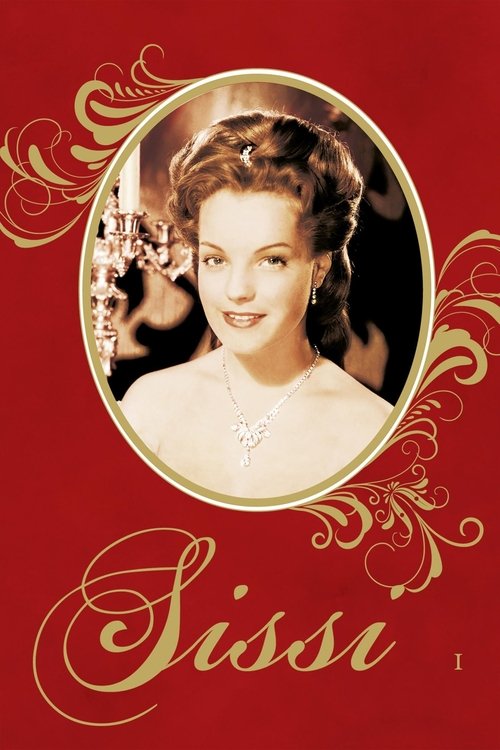
Sissi (1955)
Directed by Ernst Marischka
No — Sissi is not woke, scoring 4 out of 100 on our wokeness meter.
Sissi presents itself as a lush, highly polished European historical romance, a cinematic confection draped in the silks and aesthetics of the late nineteenth century.
Consciousness Markers
While Sissi is a romantic lead, her agency is ultimately constrained by royal duty and societal expectations, making the film a gentle, rather than radical, exploration of female agency.
The film is a highly traditional European royal drama, offering no meaningful representation of marginalized groups or diverse perspectives.
The film features nature as a romantic backdrop for the courtship, but it offers no commentary or 'crusade' regarding environmental issues.
The film is a highly fictionalized, romanticized account of a historical figure, but it does not actively challenge or revise established historical facts in a critical manner.
The narrative is strictly focused on a heterosexual romance and contains no subtext or themes related to LGBTQ+ identities.
The setting is exclusively European aristocracy, and there is no engagement with issues of race or racial injustice.
The film romanticizes the established power structure of the Habsburg monarchy and the aristocracy, showing no critique of wealth or class systems.
The portrayal of the characters adheres strictly to the idealized, restrictive beauty standards of the mid-20th-century European royal aesthetic.
There are no characters depicted with visible or discussed neurodivergent traits.
The film is a pure romantic comedy/drama and contains no didactic speeches or social commentary delivered with 'lecture energy'.
Why it received this score
Sissi presents itself as a lush, highly polished European historical romance, a cinematic confection draped in the silks and aesthetics of the late nineteenth century. It functions as a meticulously crafted period piece, offering a gentle immersion into the gilded life of the Habsburg monarchy. The film is preoccupied with court etiquette and pastoral charm, which is perhaps its most defining characteristic. We find very little engagement with modern social consciousness; the drama remains tightly bound to the established power structures and the traditional expectations of aristocracy.
Its most significant cultural contribution lies in the handling of its central female lead. While the narrative ultimately confines Sissi to the rigid duties of royal life, her personal journey offers a modest exploration of feminine agency. This gentle push against societal constraints is the only element that elevates the film beyond simple historical fluff. However, this limited scope does not extend to any broader progressive sensibilities. The film offers no commentary on environmental degradation, wealth disparity, or the nuances of modern identity. We see no concerted effort toward racial awareness or exploration of marginalized perspectives.
This is a film dedicated to beauty and tradition. Its focus remains strictly on the domestic sphere and the romantic ideals of the era. It is a work of considerable charm, though one that finds little resonance in the current cultural climate demanding deeper systemic critique. It exists as a perfect, perfectly preserved artifact of its time, bound by the conventions of romance and its adherence to idealized historical portraiture.
Analysis generated by our Consciousness Algorithm


Synopsis
The young Bavarian princess Elisabeth, who all call Sissi, goes with her mother and older sister Néné to Austria where Néné will be wed to an emperor named Franz Joseph, Yet unexpectedly Franz runs into Sissi while out fishing and they fall in love.
Questions about Sissi
Is Sissi woke?
No — Sissi is not woke, scoring 4 out of 100 on our wokeness meter. That earns it a verdict of Ultra Based.
Does Sissi have any woke elements?
Very few. None of the 10 markers reaches 30, the level where a marker counts as present; the highest is Feminist Agenda at 10.
How does Sissi compare to other 1955 movies?
It ranks #4 of the 15 films from 1955 we've scored; their average is 3. The wokest is Diabolique (10).
How is the Woke Score calculated?
An AI-assisted process researches the film and its reception, scores it 0–100 on ten markers, then combines those into one 0–100 Woke Score. It measures a specific set of 2020s cultural themes, not film quality.