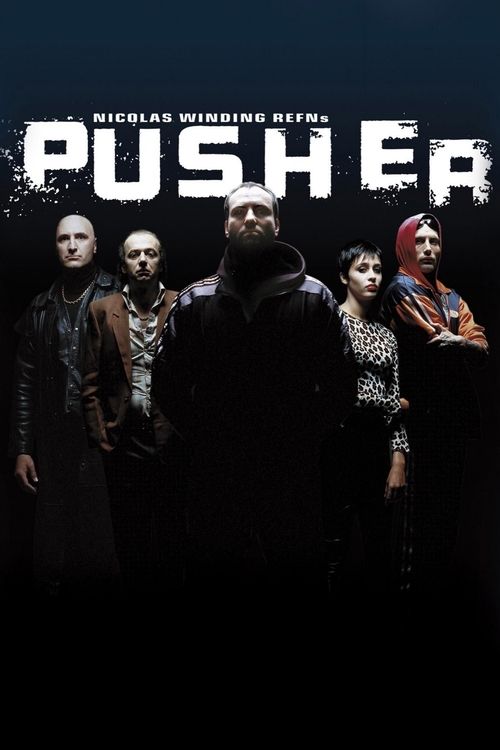
Pusher (1996)
Directed by Nicolas Winding Refn
No — Pusher is not woke, scoring 7 out of 100 on our wokeness meter.
Pusher arrives from 1996, a year when a Danish gangster film could still be made without a closing statement of intent.
Consciousness Markers
The cast is Danish and Balkan, with Serbian and Croatian characters played by actors of matching background, but this is organic to the Copenhagen underworld setting rather than a self-conscious diversity statement.
No LGBTQ+ characters, themes, or subtext of any kind.
Vic is a prostitute who wants a real relationship with Frank, but she is a character in a crime story, not a vehicle for a feminist thesis.
Balkan characters and a war-criminal poster appear as gritty texture, but the film makes no racial or ethnic commentary.
No environmental themes whatsoever.
The drug trade is depicted as brutal and unglamorous rather than as a critique of capitalism or wealth inequality.
No body-positivity themes present.
Tonny is described as manic, but this is characterization, not a neurodivergence narrative.
No historical revisionism; the film is a contemporary crime drama.
The film observes its characters with documentary detachment and never lectures the audience on social issues.
Why it received this score
Pusher arrives from 1996, a year when a Danish gangster film could still be made without a closing statement of intent. Nicolas Winding Refn's debut follows Frank, a low-level dealer, through a week of compounding errors: a deal interrupted, a debt to a Serbian supplier, a series of increasingly panicked attempts to raise money. The camera is hand-held, the actors are frequently backlit into near-invisibility, and the whole thing carries the texture of something observed instead of composed. Refn has said he wanted to avoid glamorizing the life. He succeeded.
The cast is drawn largely from Danish and Balkan performers, with Serbian and Croatian roles filled by actors of corresponding background. This is not a diversity gesture. It is what the Copenhagen underworld of the period would have looked like, and the film treats it as furniture. The poster of a Serbian paramilitary commander on Milo's wall, supplied by the actor playing Radovan, functions as grime and nothing more. Laura Drasbæk's Vic is a sex worker who wants a real relationship with a man who does not want one, and the film lets her be sad about it without turning her into an argument. Mads Mikkelsen's Tonny is cheerful and unstable, which is a character trait and not a diagnosis.
Nothing here stops to instruct. The drug trade is squalid and joyless, a matter of debts and beatings, and it is never framed as a parable about markets or inequality. There is no climate, no body politics, no historical revision, no sermon. Instead there is a man standing at a lake having lost the merchandise, and an ending that offers him nothing. The film trusts us to keep up. It is lean, unpleasant, and durable, and it has no interest in telling anyone how to feel about it.
Analysis generated by our Consciousness Algorithm


Synopsis
A drug pusher grows increasingly desperate after a botched deal leaves him with a large debt to a ruthless drug lord.
Questions about Pusher
Is Pusher woke?
No — Pusher is not woke, scoring 7 out of 100 on our wokeness meter. That earns it a verdict of Ultra Based.
Does Pusher have any woke elements?
Very few. None of the 10 markers reaches 30, the level where a marker counts as present; the highest is Representation Casting at 12.
How does Pusher compare to other 1996 movies?
It ranks #46 of the 93 films from 1996 we've scored; their average is 11. The wokest is Bound (60).
How is the Woke Score calculated?
An AI-assisted process researches the film and its reception, scores it 0–100 on ten markers, then combines those into one 0–100 Woke Score. It measures a specific set of 2020s cultural themes, not film quality.