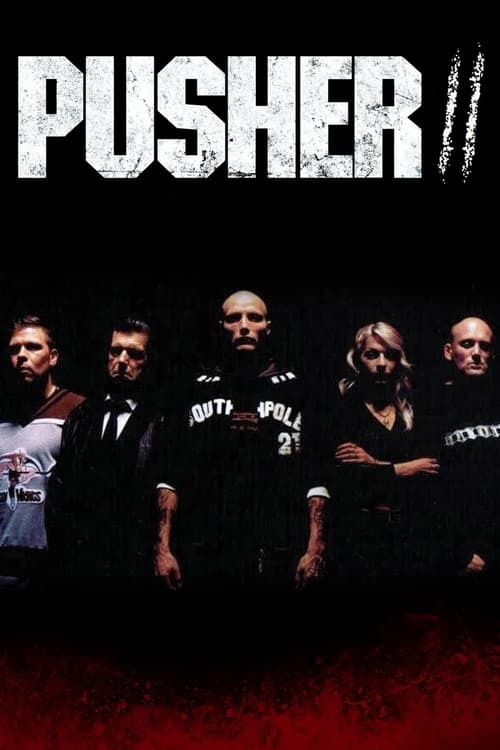
Pusher II (2004)
Directed by Nicolas Winding Refn
No — Pusher II is not woke, scoring 0 out of 100 on our wokeness meter.
Pusher II arrives as the middle chapter of Nicolas Winding Refn's Copenhagen underworld trilogy, a sequel that assumes we remember the first film's debts and bruises.
Consciousness Markers
The cast is predominantly Danish with a few ethnic minority actors in natural underworld roles, but there is no deliberate diversity casting agenda.
No LGBTQ+ characters, themes, or subtext appear in the film.
The film depicts toxic masculinity and troubled fatherhood without advancing a feminist critique or agenda.
Ethnic minority characters exist in the criminal milieu, but race is not examined or made a thematic concern.
No environmental or climate-related themes are present.
The story concerns debt and criminal exploitation, but it offers no systemic anti-capitalist critique or eat-the-rich message.
No body positivity themes or messaging appear.
No neurodivergent characters or themes are present.
The film is a fictional crime story with no historical revisionism.
The film is bleak and character-driven, with no preachy or lecture-like moralizing.
Why it received this score
Pusher II arrives as the middle chapter of Nicolas Winding Refn's Copenhagen underworld trilogy, a sequel that assumes we remember the first film's debts and bruises. Mads Mikkelsen's Tonny leaves prison with a desire to rebuild, though the screenplay has no interest in redemption arcs that flatter the audience. The film observes a man failing at fatherhood, employment, and loyalty with the patience of a coroner. It is grim, lean, and entirely uninterested in contemporary social instruction.
The cast is Scandinavian and the criminal milieu is ethnically mixed in the casual manner of a drug economy, but the film does not pause to celebrate or interrogate that fact. Race remains background texture. Women exist as prostitutes, neglectful mothers, and objects of violence, and the narrative offers no feminist counterargument to the men's cruelty. There is no LGBTQ subtext, no climate anxiety, no anti-capitalist parable about the debt that drives Tonny back to his father. The body positivity movement would find no purchase in a film where bodies are primarily things to be beaten, stabbed, or abandoned.
Neurodivergence is absent, unless we count the general emotional damage of Refn's men, which we should not. History is not revised because history is not consulted. The film's moral posture is bleak and implicit; it never lectures, never explains its themes, and never suggests that better social arrangements would save Tonny from himself. The residue is a cold, effective crime drama about inherited violence and paternal rejection. As a specimen of modern progressive cinema, it is a vintage of zero proof. As a specimen of Danish misery, it is robust.
Analysis generated by our Consciousness Algorithm


Synopsis
Tonny is released from prison - again. This time he has his mind set on changing his broken down life, but that is easier said than done.
Questions about Pusher II
Is Pusher II woke?
No — Pusher II is not woke, scoring 0 out of 100 on our wokeness meter. That earns it a verdict of Ultra Based.
Does Pusher II have any woke elements?
No. All 10 markers score zero.
How does Pusher II compare to other 2004 movies?
It ranks #151 of the 178 films from 2004 we've scored; their average is 12. The wokest is Tropical Malady (62).
How is the Woke Score calculated?
An AI-assisted process researches the film and its reception, scores it 0–100 on ten markers, then combines those into one 0–100 Woke Score. It measures a specific set of 2020s cultural themes, not film quality.