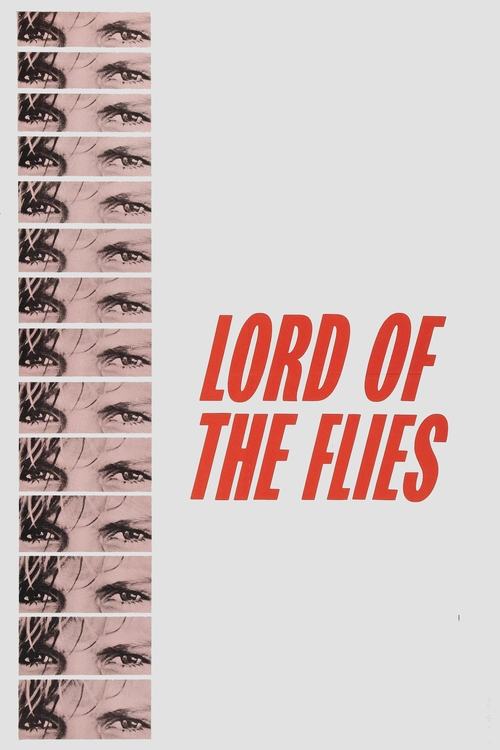
Lord of the Flies (1963)
Directed by Peter Brook
No — Lord of the Flies is not woke, scoring 0 out of 100 on our wokeness meter.
Peter Brook's 1963 adaptation of the Golding novel carries no screenplay credit, because there was no screenplay.
Consciousness Markers
All characters are white British schoolboys; no deliberate inclusive or race-swapped casting.
No LGBTQ+ characters, relationships, or themes are present.
No female characters or feminist commentary; the story is entirely about boys.
No engagement with race, racism, or racial identity.
The island setting is a survival backdrop, not an environmentalist allegory.
No critique of capitalism or wealth; conflict is about power and savagery.
Piggy is mocked for his weight, but the film does not promote body positivity; it depicts body shaming.
Piggy's asthma is physical, not neurodivergence; no neurodiversity themes are present.
A fictional allegory, not a revisionist historical narrative.
The film's moral is about inherent human violence, not modern social-justice preaching.
Why it received this score
Peter Brook's 1963 adaptation of the Golding novel carries no screenplay credit, because there was no screenplay. The boys were non-professionals, borrowed from their summer holidays, and the dialogue was largely improvised. Brook gives us a documentary-adjacent descent: English schoolboys, evacuated from an unnamed war, survive a crash and then dismantle themselves. The camera watches. It does not instruct.
That refusal to instruct keeps the film clean of contemporary cultural programming. The cast is uniformly white, male, and British, and no effort was made to correct this, since the source material concerns a specific colonial education and its discontents. There are no women at all, which is a structural fact of the story, not a feminist argument. Piggy is fat and asthmatic, and the other boys torment him for both; the film records the cruelty without dignifying it as a lesson in acceptance. The island is a stage for the collapse of order, not an environmental parable. The fighting is over the conch and the hunt, not over the ownership of means. The parachutist, the sow's head, the signal fire: theological props, not policy proposals.
There is no sermon here. The closing image, Ralph weeping on the beach while a naval officer stares at his painted hunters, offers no remedy and no instruction. We are left with the proposition that the veneer of civilization is a temporary arrangement. That is a bleak and unfashionable thesis, and it is useless to anyone hoping to improve the world through cinema. The film is a black-and-white record of boys becoming animals, indifferent to our current preoccupations. Golding, four thousand miles away, was presumably chuckling into his beard.
Analysis generated by our Consciousness Algorithm


Synopsis
Following a plane crash a group of schoolboys find themselves on a deserted island. They appoint a leader and attempt to create an organized society for the sake of their survival. Democracy and order soon begin to crumble when a breakaway faction regresses to savagery with horrifying consequences.
Questions about Lord of the Flies
Is Lord of the Flies woke?
No — Lord of the Flies is not woke, scoring 0 out of 100 on our wokeness meter. That earns it a verdict of Ultra Based.
Does Lord of the Flies have any woke elements?
No. All 10 markers score zero.
How does Lord of the Flies compare to other 1963 movies?
It ranks #16 of the 16 films from 1963 we've scored; their average is 7. The wokest is High and Low (28).
How is the Woke Score calculated?
An AI-assisted process researches the film and its reception, scores it 0–100 on ten markers, then combines those into one 0–100 Woke Score. It measures a specific set of 2020s cultural themes, not film quality.