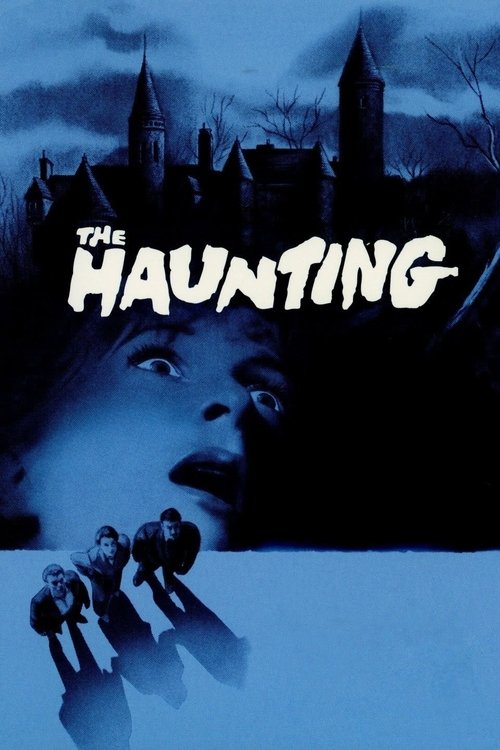
The Haunting (1963)
Directed by Robert Wise
No — The Haunting is not woke, scoring 6 out of 100 on our wokeness meter.
Robert Wise's 1963 effort, The Haunting, arrives with all the atmospheric weight of a meticulously designed museum piece.
Consciousness Markers
Theodora is coded as bohemian and implicitly lesbian — Eleanor's accusation that she is 'unnatural' carries the implication — but this is 1963 subtextual suggestion, not an affirmative LGBTQ+ theme.
Eleanor and Theo are the film's psychological center, and Eleanor's spinsterhood and caretaker burden are treated with real interiority, but the film offers no feminist argument or critique of patriarchy.
The cast is uniformly white and British/American, assembled under Eady Levy quota requirements rather than any diversity imperative. No representation casting of any kind.
No non-white characters and no engagement with race whatsoever.
No environmental themes. The house is haunted, not overheating.
Luke Sannerson is a flippant heir, but the film has no interest in class critique or wealth as a subject.
No engagement with body image or physical appearance as a theme.
Eleanor's fragile mental state is the film's engine, but it is framed as Gothic psychological horror and possible possession, not as neurodivergence to be affirmed or destigmatized.
A fictional haunted-house story with no historical record to revise.
Markway's opening narration is atmospheric exposition, not moral instruction. The film shows; it does not scold.
Why it received this score
Robert Wise's 1963 effort, The Haunting, arrives with all the atmospheric weight of a meticulously designed museum piece. We find ourselves in a mansion where the real drama is the architectural imposition of dread, rather than any modern engagement with social consciousness. The film is a deep dive into a psychological space where existential dread replaces any contemporary progressive agenda. Eleanor Vance and her circle are treated with interiority, certainly, but their experiences serve only as the foundation for a Gothic study of mental fragility. The small gestures toward the marginalized, like the subtle suggestion of fluid gender roles between two women, are buried under layers of 1960s subtext, surviving only as faint echoes of cultural awareness.
This is a piece of cinema that prioritizes mood over manifesto. The cast remains uniformly white, fulfilling the studio's requirements for budgetary and industry compliance without offering any real commentary on demographics. We observe the characters grapple with a fractured reality, yet the narrative remains comfortably within the bounds of a traditional supernatural framework. There is no attempt to modernize the trauma, nor any effort to import critiques of capitalism or global environmental decay. The house is haunted, not the climate.
Ultimately, The Haunting is a masterclass in focused paranoia. Its strength lies in its ability to convey profound isolation through setting. It functions as a compelling piece of psychological horror, a richly textured relic of a specific era in filmmaking. It provides a fascinating glimpse into a time when the anxieties of the individual were expressed through shadows and madness, not through the lens of current cultural imperatives. It is a solid, if entirely conventional, piece of dramatic art.
Analysis generated by our Consciousness Algorithm


Synopsis
Dr. John Markway recruits three strangers for a sleep-disorder study at the eerie and isolated Hill House. It soon becomes clear his real interest lies in the mansion itself and its sinister history, as they are forced to confront the nature of its horror…
Questions about The Haunting
Is The Haunting woke?
No — The Haunting is not woke, scoring 6 out of 100 on our wokeness meter. That earns it a verdict of Ultra Based.
Does The Haunting have any woke elements?
Very few. None of the 10 markers reaches 30, the level where a marker counts as present; the highest is LGBTQ+ Themes at 15.
How does The Haunting compare to other 1963 movies?
It ranks #7 of the 16 films from 1963 we've scored; their average is 7. The wokest is High and Low (28).
How is the Woke Score calculated?
An AI-assisted process researches the film and its reception, scores it 0–100 on ten markers, then combines those into one 0–100 Woke Score. It measures a specific set of 2020s cultural themes, not film quality.