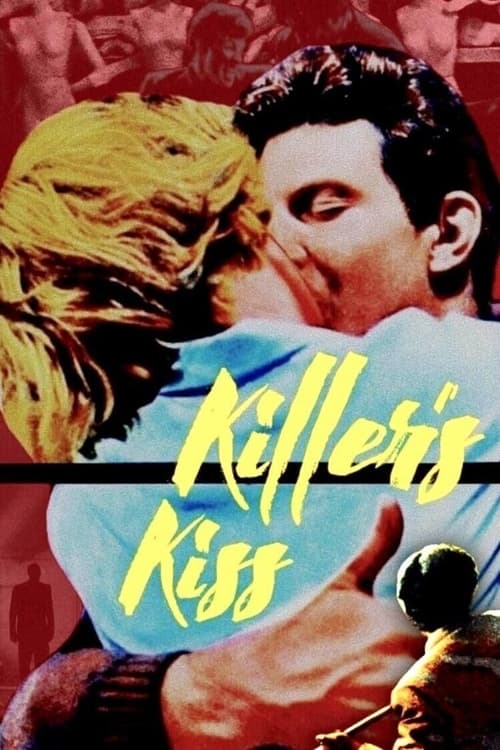
Killer's Kiss (1955)
Directed by Stanley Kubrick
No — Killer's Kiss is not woke, scoring 2 out of 100 on our wokeness meter.
Killer's Kiss arrives from 1955, the second feature from Stanley Kubrick, and it carries itself like a man who has seen too many rainy alleys.
Consciousness Markers
The cast is overwhelmingly white, with Frank Silvera (of Mexican descent) cast as the gangster Rapallo — a natural genre role with no commentary on identity. No deliberate representation casting.
No LGBTQ+ characters, themes, or subtext of any kind.
Gloria is a taxi dancer and damsel-in-distress whose arc revolves around being rescued by the male lead. No feminist agenda whatsoever.
No engagement with race or racial consciousness; the film is a straightforward noir crime drama.
No environmental or climate themes present.
While noir often traffics in seedy urban underbellies, this film offers no critique of capitalism or class structure as a message.
No body positivity themes; the film treats its dancer character through a conventional mid-century gaze.
No neurodivergent characters or themes.
A fictional noir story with no historical revisionism.
A lean, visual crime thriller with no didactic or preachy messaging.
Why it received this score
Killer's Kiss arrives from 1955, the second feature from Stanley Kubrick, and it carries itself like a man who has seen too many rainy alleys. Davey Gordon is a boxer at the end, Gloria Price is a taxi dancer, and Vincent Rapallo is the violent boss who wants her. The plot is a standard noir triangle, executed with location shots around Times Square, Penn Station, and the Brooklyn waterfront. The film's social consciousness is minimal. Frank Silvera, an actor of Mexican descent, plays Rapallo, a gangster role that fits the genre without comment. The rest of the cast is white. This is not representation casting in any deliberate sense. It is a genre convenience, and the needle barely moves.
On the other markers, the cupboard is bare. No LGBTQ themes or subtext. No feminist argument: Gloria exists to be threatened, abducted, and embraced at the end. No racial consciousness. No climate concerns. No critique of capitalism, despite the squalid corners and the dance hall's petty exploitation. No body positivity: the camera regards Gloria through a conventional midcentury gaze. No neurodivergence. No revisionist history, since the story is fiction. No lecture energy. The film does not stop to explain its moral. It shows a man running across rooftops and a fight in a mannequin warehouse. The axe and the pike pole do the talking. That is not a flaw. It is simply a different era's grammar.
Kubrick later dismissed the film, and United Artists forced a happier ending upon it. There remains a lean, moody exercise with a few startling images. If we search for contemporary cultural awareness, we find almost nothing. The film is not interested in the modern progressive checklist, and it would be dishonest to pretend otherwise. It is a noir about loneliness, obsession, and bad luck. The social consciousness is close to absent. The cinematography is not. We classify it accordingly, with the sober precision of a sommelier noting that the bottle is old, dry, and entirely of its time.
Analysis generated by our Consciousness Algorithm


Synopsis
Davey Gordon, a New York City boxer at the end of his career, falls for dancer Gloria Price. However, their budding relationship is interrupted by Gloria's violent boss, Vincent Rapallo, who has eyes for Gloria. The two decide to skip town, but before they can, Vincent and his thugs abduct Gloria, and Davey is forced to search for her among the most squalid corners of the city, with his enemy hiding in the shadows.
Questions about Killer's Kiss
Is Killer's Kiss woke?
No — Killer's Kiss is not woke, scoring 2 out of 100 on our wokeness meter. That earns it a verdict of Ultra Based.
Does Killer's Kiss have any woke elements?
Very few. None of the 10 markers reaches 30, the level where a marker counts as present; the highest is Representation Casting at 5.
How does Killer's Kiss compare to other 1955 movies?
It ranks #9 of the 15 films from 1955 we've scored; their average is 3. The wokest is Diabolique (10).
How is the Woke Score calculated?
An AI-assisted process researches the film and its reception, scores it 0–100 on ten markers, then combines those into one 0–100 Woke Score. It measures a specific set of 2020s cultural themes, not film quality.