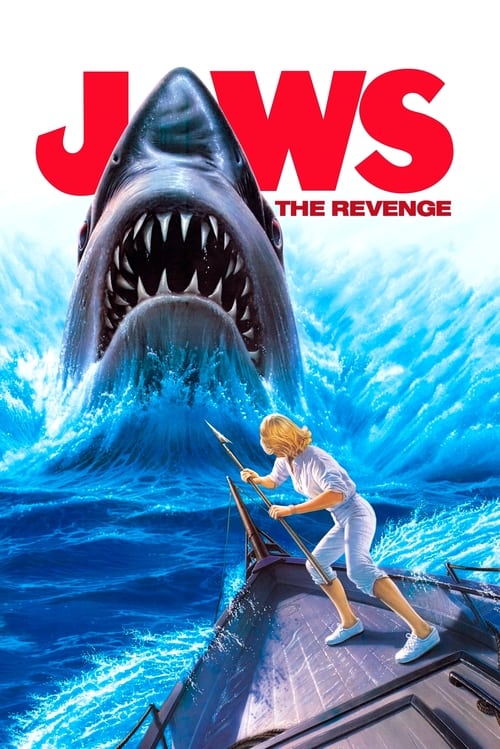
Jaws: The Revenge (1987)
Directed by Joseph Sargent
No — Jaws: The Revenge is not woke, scoring 9 out of 100 on our wokeness meter.
Jaws: The Revenge arrives as the fourth and terminal entry in a franchise that had already exhausted its appetite for the ocean.
Consciousness Markers
The cast includes Black actors in supporting roles, such as Mario Van Peebles and Lynn Whitfield, plus Bahamian locals, but the film makes no thematic point of representation.
No LGBTQ+ characters, themes, or subtext are present.
Ellen Brody is the central protagonist, but the film frames her as a grieving mother and revenge-seeker rather than advancing a feminist agenda.
Non-white characters appear naturally in the story, but race is not examined or commented upon.
No environmental or climate-crisis themes are present.
The film has no critique of capitalism, wealth, or class structures.
No body-positivity themes or messaging appear.
No neurodivergence themes or characters are present.
The film is a fictional shark thriller and does not revise historical narratives.
The film does not pause for social or political lecturing.
Why it received this score
Jaws: The Revenge arrives as the fourth and terminal entry in a franchise that had already exhausted its appetite for the ocean. The production was assembled in under nine months, a schedule visible in every frame, and the marketing department settled on the phrase "This time, it's personal," which remains the most honest thing anyone involved produced. The cast includes Mario Van Peebles and Lynn Whitfield in supporting roles, along with Bahamian locals hired as extras, and the film treats their presence as unremarkable. That is the whole of its representational ambition. Nobody pauses to explain it. Nobody is asked to applaud.
Lorraine Gary returns as Ellen Brody, and she carries the picture as its central figure. This is a woman driven by grief and a conviction that a great white shark holds a grudge against her bloodline, a premise the film states with a straight face and never examines. Her prominence is structural, not ideological. She is a mother in mourning, not a statement. The shark follows her from New England to the Caribbean because the script requires it, and the screenplay offers no theory of why. Michael Caine collects a paycheck and later admits he never watched the result. His candor is the most rigorous analysis the film has received.
There is no environmental sermon here, no class critique, no meditation on identity or the body. The ocean is simply a place where a large fish eats people. For a viewer accustomed to contemporary releases, the absence of instruction is disorienting. The film has nothing to teach and no interest in trying. It is a bad movie, but it is an unlecturing one, and in the current climate that counts for something. A modest pour. Roughly drinkable. Almost certainly not worth the price of the boat.
Analysis generated by our Consciousness Algorithm
Part of


Synopsis
After another deadly shark attack, Ellen Brody decides she has had enough of New England's Amity Island and moves to the Caribbean to join her son, Michael, and his family. But a great white shark has followed her there, hungry for more lives.
Questions about Jaws: The Revenge
Is Jaws: The Revenge woke?
No — Jaws: The Revenge is not woke, scoring 9 out of 100 on our wokeness meter. That earns it a verdict of Ultra Based.
Does Jaws: The Revenge have any woke elements?
Very few. None of the 10 markers reaches 30, the level where a marker counts as present; the highest is Representation Casting at 15.
How does Jaws: The Revenge compare to other 1987 movies?
It ranks #16 of the 59 films from 1987 we've scored; their average is 8. The wokest is Maurice (68).
Is Jaws: The Revenge the most woke Jaws movie?
Yes. It scores highest of the 4 Jaws films we've scored.