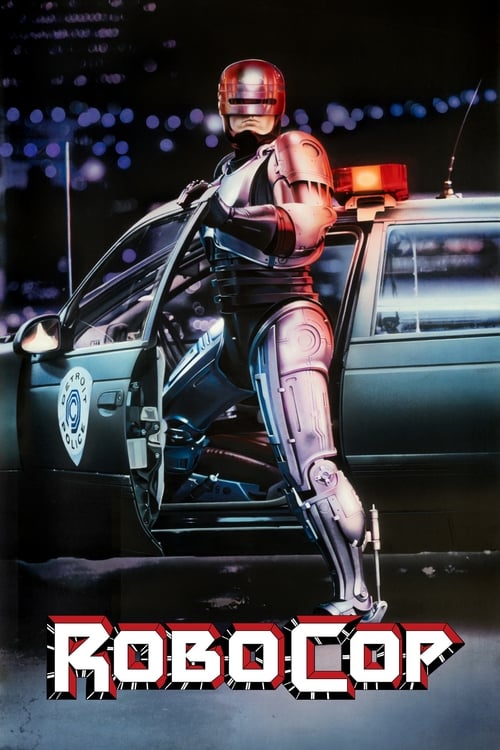
RoboCop (1987)
Directed by Paul Verhoeven
No — RoboCop is not especially woke, scoring 29 out of 100 on our wokeness meter.
The year is 1987.
Consciousness Markers
The film is a sustained satire of Reaganomics, corporate greed, and the privatization of public services, with OCP as a murderous megacorporation literally owning the police and treating a dead officer as a product.
The satirical media breaks and corporate-critique subtext carry a message, but it is delivered through dark comedy and genre action rather than preachy moralizing.
The cast is overwhelmingly white, with Robert DoQui and Felton Perry appearing as supporting authority figures whose presence is unremarked and incidental rather than a deliberate representational statement.
Nancy Allen's Anne Lewis is a capable, loyal partner and Verhoeven deliberately de-sexualized her look, but the film is not organized around a feminist critique or agenda.
Race is essentially absent as a theme; minority characters exist naturally in the story without any commentary on racial dynamics.
There are no LGBTQ+ characters, themes, or subtext anywhere in the film.
No environmental or climate themes are present.
No body-positivity themes; the film's treatment of the body is about gore and mechanical reconstruction, not acceptance.
No neurodivergence themes are present.
The film is set in a fictional near-future and makes no revisionist claims about real historical events.
Why it received this score
The year is 1987. Detroit is collapsing, the police department has been sold to a corporation, and the corporation has decided that a dead officer makes for a cheaper product than a living one. Paul Verhoeven's RoboCop presents this arrangement without outrage, which is what makes it sting. Omni Consumer Products owns the law, bills the city for it, and treats a murdered man as inventory. The satire aims squarely at the privatization of public services and the cheerful savagery of late-century American business. It is a sustained joke told with a straight face, punctuated by gunfire and advertisements for nonsense products.
The corporate critique carries most of the film's social weight, and it lands through comedy instead of sermonizing. The media breaks are the sharpest instrument in the box, a running gag about a news culture that has already surrendered. Elsewhere the film is content to be an action picture. Race is background texture; two Black authority figures appear, are competent, and are never asked to explain themselves. There is no LGBTQ+ presence, no environmental lament, no meditation on body image, no engagement with neurodivergence, no rewriting of the historical record. The body here is a machine to be rebuilt or a sack to be shredded. That is the whole of its interest in flesh.
Nancy Allen's Anne Lewis is the closest thing to a progressive gesture on the personnel front. Verhoeven cut her hair short so the character would not be sexualized, and she is written as a capable partner who saves the hero twice. The film is not organized around her, though, and it never argues a case about gender. What remains is a lean, mean piece of pulp with an unusually bitter view of capital, made years before the current cultural vocabulary existed to describe it. It earns its marks where it earns them because it meant every cruel word about the boardroom, and nothing at all about the rest.
Analysis generated by our Consciousness Algorithm


Synopsis
In a violent, near-apocalyptic Detroit, evil corporation Omni Consumer Products wins a contract from the city government to privatize the police force. To test their crime-eradicating cyborgs, the company leads street cop Alex Murphy into an armed confrontation with crime lord Boddicker so they can use his body to support their untested RoboCop prototype. But when RoboCop learns of the company's nefarious plans, he turns on his masters.
Questions about RoboCop
Is RoboCop woke?
No — RoboCop is not especially woke, scoring 29 out of 100 on our wokeness meter. That earns it a verdict of Based.
Does RoboCop have any woke elements?
2 of the 10 markers register at 30 or above, led by Eat the Rich (72) and Lecture Energy (30). On Eat the Rich: The film is a sustained satire of Reaganomics, corporate greed, and the privatization of public services, with OCP as a murderous megacorporation literally owning the police and treating a dead officer as a product.
How does RoboCop compare to other 1987 movies?
It ranks #2 of the 59 films from 1987 we've scored; their average is 8. The wokest is Maurice (68).
Is RoboCop the most woke RoboCop movie?
Yes. It scores highest of the 3 RoboCop films we've scored.