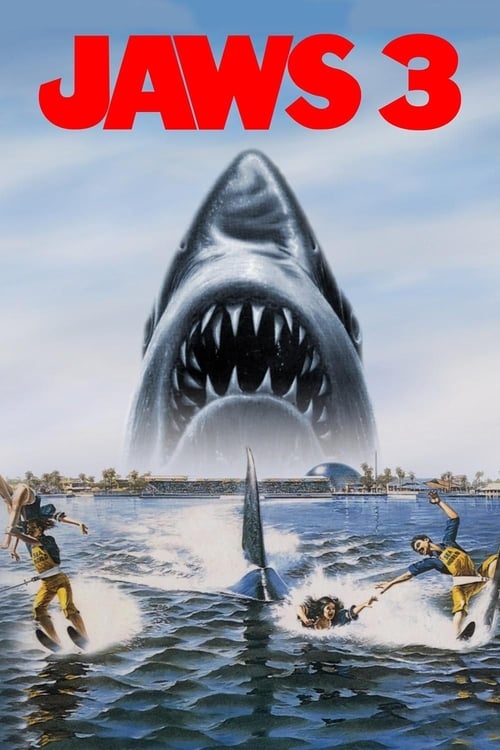
Jaws 3-D (1983)
Directed by Joe Alves
No · Ultra Based
How we score movies →Consciousness Markers
Louis Gossett Jr. appears in the cast, but his character exists without any particular attention to representation or meaningful diversity narrative. The casting is incidental rather than intentional.
While Louis Gossett Jr. is part of the ensemble cast, the film exhibits no particular racial consciousness or awareness. He is simply one actor among many in a creature feature.
Female characters exist within the standard early 1980s thriller framework. Bess Armstrong and Lea Thompson function as supporting characters without any feminist consciousness or agenda guiding their roles.
The SeaWorld setting accidentally gestures toward animal welfare concerns, but this is incidental to the plot mechanics. No coherent environmental or climate messaging is present.
The film exhibits minimal preachy intent. Any messages about shark behavior or marine biology are delivered within the context of standard action-thriller exposition rather than as cultural instruction.
No LGBTQ+ themes, characters, or subtext are present in the film. The narrative focuses entirely on heterosexual relationships and shark survival scenarios.
The film contains no critique of capitalism, wealth accumulation, or systemic economic injustice. The SeaWorld facility is simply a convenient location for shark mayhem.
No body positivity themes or discussions appear in the film. The narrative is indifferent to body representation or acceptance messaging.
No neurodivergent characters or discussion of neurodiversity appear. The film makes no attempt to explore or represent different neurotypes.
The film contains no historical narrative or revisionist framework. It is a contemporary (to 1983) creature feature with no engagement with historical events or reinterpretation.


Synopsis
A giant thirty-five-foot shark becomes trapped in a SeaWorld theme park and it's up to the sons of police chief Brody to rescue everyone.
Why it received this score
Jaws 3-D stands as a monument to the pre-woke era, a time when filmmakers concerned themselves primarily with whether a shark could be made to look menacing in three dimensions rather than with the cultural consciousness that would later become fashionable. Joe Alves' 1983 sequel presents us with a narrative so divorced from any identifiable social commentary that it functions as a kind of temporal capsule, hermetically sealed against the influence of progressive sensibilities. The film's only claim to distinction in this regard is the presence of Louis Gossett Jr. in the cast, though his role exists in the story as simply another character rather than as an opportunity for representation scoring.
The mechanics of the plot, involving a giant shark trapped in a SeaWorld facility, accidentally stumble toward a mild critique of animal captivity, but this observation would grant the film far more intellectual intention than it possesses. The screenplay exhibits no lecture energy, promotes no particular body positivity agenda, offers no revisionist historical framework, and remains entirely agnostic on matters of climate consciousness or anti-capitalist messaging. The female characters, while present, function within the standard conventions of early 1980s thriller cinema without any apparent awareness of feminist theory.
What we have here is a creature feature that knows exactly what it is and aspires to nothing beyond competent entertainment. In the context of our specific analytical framework, Jaws 3-D represents the baseline, the null set against which more culturally ambitious films might be measured. It is, in short, a film that operates entirely outside the cultural conversation that would later define a generation of cinema.
Analysis generated by our Consciousness Algorithm
Critic Reviews
“It's harmless but unsurprising...Without Steven Spielberg's timing or John Williams's music, the shark's periodic visits become feeding scenes rather than ferocious attacks. It's like watching someone make regular raids on a refrigerator in search of midnight snacks.”
“Yes, it's all pretty silly. But for those who can stand the annoyance of the cardboard glasses, there are worse ways to kill a hot afternoon. [23 July 1983, p.D6]”
“Although shot well and boasting some effective 3-D work, this is a woefully inadequate effort, and the series began to slip into inadvertent self-parody. ”
“Jaws 3-D, in which the Amity horror swims south to Florida, looks a lot like a Poligrip commercial, what with its extreme close-ups of the Great White's artificial chompers. [29 July 1983, p.17]”