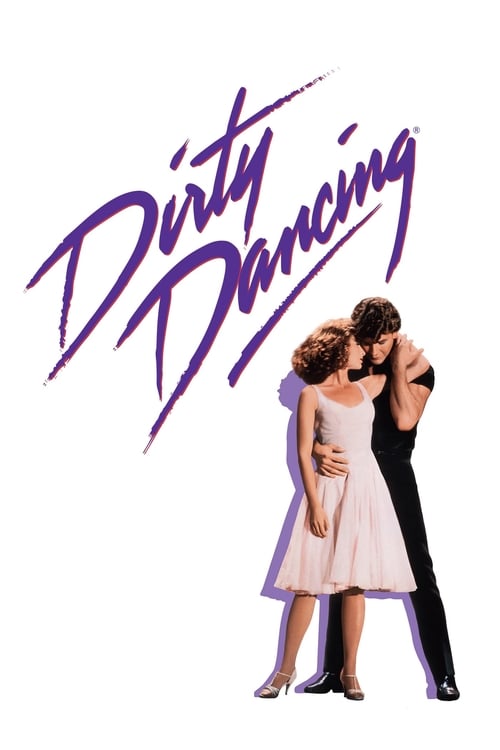
Dirty Dancing (1987)
Directed by Emile Ardolino
No · Based
How we score movies →Consciousness Markers
Baby's sexual self-determination and rejection of paternal control contain feminist elements, but the narrative ultimately centers male validation and heterosexual romance as the path to female empowerment.
Class divisions between guests and staff are depicted with sympathy for working-class dancers, but the critique remains implicit and the system itself is not fundamentally questioned.
The cast reflects 1980s demographics without deliberate attention to diverse representation. Supporting roles are limited and follow conventional patterns of the era.
The film celebrates the dancing body but does so through a conventional lens of physical attractiveness and heterosexual desirability rather than body diversity or acceptance.
The film contains no racial commentary or consciousness. The cast is predominantly white with minimal representation of other races, presented without examination.
The film trusts its narrative to convey meaning rather than explicitly lecturing the audience. Any progressive message emerges organically from character conflict rather than preachy exposition.
No LGBTQ+ themes are present. The narrative is entirely centered on heterosexual romance with no acknowledgment of alternative sexualities or gender identities.
No climate or environmental themes are present in the narrative. The resort setting is treated as backdrop rather than subject of environmental critique.
No representation of or engagement with neurodivergent characters or perspectives. The concept is entirely absent from the narrative.
The film makes no attempt to reexamine historical narratives or challenge conventional historical understanding. The 1960s setting is treated decoratively.


Synopsis
Expecting the usual tedium that accompanies a summer in the Catskills with her family, 17-year-old Frances 'Baby' Houseman is surprised to find herself stepping into the shoes of a professional hoofer—and unexpectedly falling in love.
Why it received this score
Dirty Dancing arrives as a film concerned with class division and female agency, themes that register as progressive within its 1987 context but do not constitute modern progressive sensibilities. Baby's journey from sheltered naivety to sexual self-determination was genuinely transgressive for the Reagan era, and the film's critique of class hierarchy between the resort guests and the working-class entertainers carries weight. Yet from a contemporary vantage point, these elements read as historical curiosities rather than markers of the specific constellation of 2020s cultural consciousness that defines modern progressive filmmaking.
The cast composition reflects the demographics of its era without conscious attention to representation beyond what the narrative naturally requires. Jennifer Grey carries the film as a genuinely complex female protagonist, which was noteworthy in 1987 but is now baseline expectation. The film's sexual politics, while relatively frank for its time, center heterosexual romance and male-directed female desire rather than exploring alternative expressions of identity or sexuality. There is no attempt to interrogate power structures beyond class, no engagement with questions of systemic inequality that would preoccupy contemporary progressive cinema, and no visible consciousness of the cultural markers that have come to define modern social awareness.
The film's modest score reflects its position as a well-crafted entertainment that happened to contain progressive elements for 1980s audiences, but which lacks the deliberate cultural signaling that contemporary progressive filmmaking employs. We are not looking at a film that was ahead of its time in ways that would still resonate today, but rather at a film that was appropriate to its moment and has aged into period charm.
Analysis generated by our Consciousness Algorithm
Critic Reviews
“Smart and funny, touching and unabashedly sensual... the sweet sleeper of a hot season. [21 Aug 1987]”
“Dirty Dancing is "Flashdance" with a triple-digit IQ.”
“Above all, you've got Jennifer Grey, as a rich girl summering in the Catskills and falling for her working-class dance instructor, played by Patrick Swayze. The chemistry between them is red-hot, and they're wonderful dancers.”
“The filmmakers rely so heavily on cliches, on stock characters in old situations, that it's as if they never really had any confidence in their performers.”