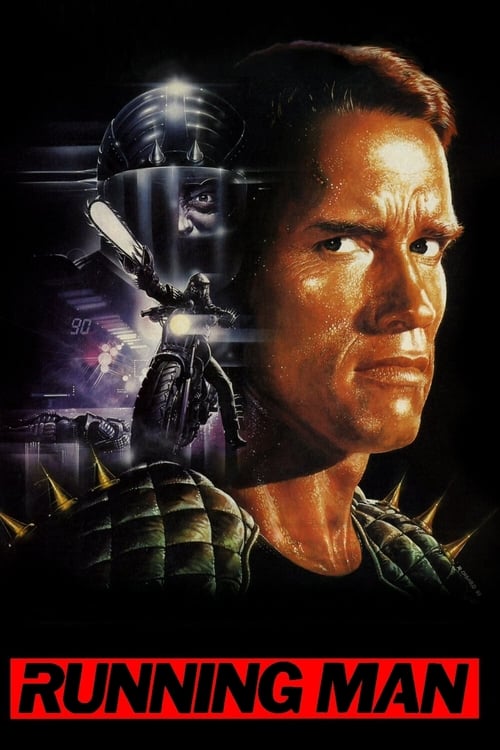
The Running Man (1987)
Directed by Paul Michael Glaser
No — The Running Man is not woke, scoring 18 out of 100 on our wokeness meter.
The Running Man arrives from 1987 carrying a premise that has aged into uncomfortable prophecy and a production history that has aged into anecdote.
Consciousness Markers
The film critiques state-controlled media, exploitation for ratings, and a widening rich-poor gap, though its primary target is authoritarianism rather than capitalism itself.
The cast includes several non-white and international actors, but their presence is natural to the action ensemble rather than a modern representation agenda.
The film includes satirical jabs at media manipulation and reality TV, but it delivers them through action spectacle rather than preachy modern lecture.
Amber Mendez has some agency and helps expose the truth, but the film is not structured around feminist themes or critique.
There are no LGBTQ+ characters, themes, or subtext in the film.
The film features Black actors in supporting roles but does not engage with racial identity, inequality, or consciousness.
The dystopian setting involves economic collapse and resource scarcity, not climate change or environmental activism.
There is no body positivity theme or messaging in the film.
The film does not address neurodivergence or neurodiverse characters.
The story is set in an alternate future and does not revise or reinterpret historical events.
Why it received this score
The Running Man arrives from 1987 carrying a premise that has aged into uncomfortable prophecy and a production history that has aged into anecdote. Arnold Schwarzenegger plays a framed police captain dropped into a lethal game show, presided over by Richard Dawson, who plays the smiling executioner with the oily ease of a man who spent decades reading contestants' faces for a living. The satire aims at state media, rigged ratings, and the cheerful complicity of a studio audience that votes with its applause. It is a mean little film wearing a tracksuit.
The cast is a broad action ensemble of the era, drawing on Black performers and international faces without ever making their presence a subject of comment, which is to say the production hired people and moved along. The female lead exists to doubt the hero, then believe him, then be rescued and kissed, and the film does not linger on the arrangement. Racial identity goes unexamined. The environment is not a concern. Nobody discusses their body or their mental health, because the film has other business, most of it involving men in costumes being thrown through drywall.
Where the film does carry a charge is in its contempt for the machinery of spectacle, the widening distance between the shantytowns and the towers, and the willingness of power to manufacture a villain for the evening news. That anger is aimed at authoritarianism more than at capital itself, and it is delivered through stunt work, one-liners, and a chainsaw rather than a lecture. The sermonizing, such as it is, arrives in the shape of a hockey-themed assassin and a host who cannot stop smiling. The result is a modest artifact of pre-millennial discontent, sincere in its cynicism and entirely innocent of the cultural vocabulary that would later be demanded of it.
Analysis generated by our Consciousness Algorithm


Synopsis
By 2017, the global economy has collapsed and U.S. society has become a totalitarian police state, censoring all cultural activity. The government pacifies the populace by broadcasting a number of game shows in which convicted criminals fight for their lives, including the gladiator-style The Running Man, hosted by the ruthless Damon Killian, where “runners” attempt to evade “stalkers” and certain death for a chance to be pardoned and set free.
Questions about The Running Man
Is The Running Man woke?
No — The Running Man is not woke, scoring 18 out of 100 on our wokeness meter. That earns it a verdict of Ultra Based.
Does The Running Man have any woke elements?
1 of the 10 markers register at 30 or above, led by Eat the Rich (35). On Eat the Rich: The film critiques state-controlled media, exploitation for ratings, and a widening rich-poor gap, though its primary target is authoritarianism rather than capitalism itself.
How does The Running Man compare to other 1987 movies?
It ranks #7 of the 59 films from 1987 we've scored; their average is 8. The wokest is Maurice (68).
How is the Woke Score calculated?
An AI-assisted process researches the film and its reception, scores it 0–100 on ten markers, then combines those into one 0–100 Woke Score. It measures a specific set of 2020s cultural themes, not film quality.