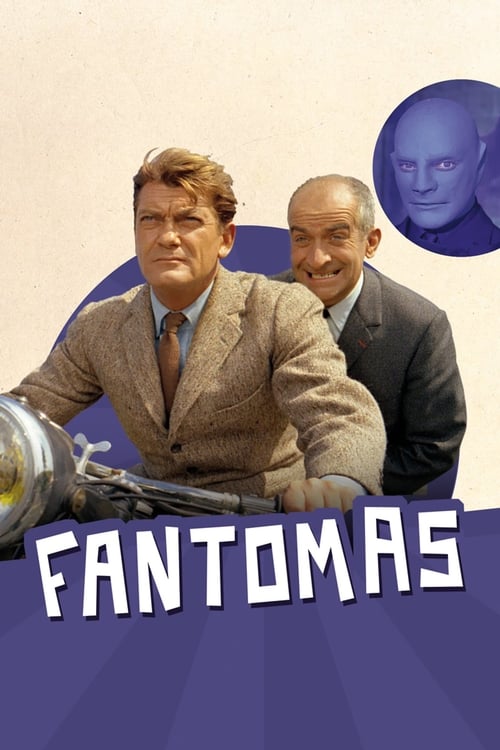
Fantomas (1964)
Directed by André Hunebelle
No — Fantomas is not woke, scoring 0 out of 100 on our wokeness meter.
The 1964 iteration of Fantômas arrives as a bright, kinetic exercise in high-stakes farce, yet its cultural footprint is disappointingly small.
Consciousness Markers
The cast is entirely white French performers of the era, with no diversity casting or commentary on representation.
No LGBTQ+ characters, themes, or subtext appear anywhere in the film.
Mylène Demongeot's Hélène is a conventional 1960s girlfriend role; the film advances no feminist agenda.
Race is entirely absent as a subject; the film is a light-hearted French crime caper with no racial themes.
There is no environmental or climate content whatsoever.
The film is a comedic chase between a master thief and police, with no critique of wealth or capitalism.
No body-positivity themes or messaging are present.
No neurodivergent characters or themes are depicted.
The film is a fictional adaptation of pulp novels and makes no historical claims to revise.
The tone is pure light-hearted slapstick comedy with no didactic or preachy messaging.
Why it received this score
The 1964 iteration of Fantômas arrives as a bright, kinetic exercise in high-stakes farce, yet its cultural footprint is disappointingly small. It functions purely as a glossy, mid-century caper, a mechanical clockwork of chases and disguises that has no discernible relationship to modern social discourse. The production is a self-contained universe of flamboyant crime and determined law enforcement, operating in a vacuum where contemporary concerns about identity, systemic critique, or environmental responsibility simply fail to materialize. We are offered spectacle instead of substance, a masterful execution of the pulp genre without the slightest intellectual rigor required to meet current standards of cultural complexity.
The central conflict between the elusive thief and the dogged detective is handled with a comfortable, almost soporific predictability. The supporting characters, including the ingenue Hélène, function only to anchor the central chase, offering no thematic depth or progressive commentary. There is no effort made to subvert gender roles, elevate marginalized voices, or introduce any challenging perspectives on wealth or societal structure. The narrative remains comfortably within the established confines of the theatrical adventure, prioritizing light slapstick and visual gags over any meaningful exploration of the human condition outside the scope of a simple caper. The film is a pure confection of cinematic escapism.
It is a competent piece of historical genre filmmaking, certainly a successful piece of entertainment for its specific time and place. However, its dedication to its own escapism results in a product entirely unconcerned with the sophisticated cultural mapping demanded by today's audience. It is an impeccably executed past, but its lack of any progressive sensibility makes it feel utterly inert against the backdrop of modern cinematic expectations. We are left with a charming, if utterly conventional, chase through Paris that never raises a single difficult question or offers a single shard of challenging social insight.
Analysis generated by our Consciousness Algorithm
Synopsis
Fantômas is a man of many disguises. He uses maquillage as a weapon. He can impersonate anyone using an array of masks and can create endless confusion by constantly changing his appearance.
Questions about Fantomas
Is Fantomas woke?
No — Fantomas is not woke, scoring 0 out of 100 on our wokeness meter. That earns it a verdict of Ultra Based.
Does Fantomas have any woke elements?
No. All 10 markers score zero.
How does Fantomas compare to other 1964 movies?
It ranks #12 of the 17 films from 1964 we've scored; their average is 5. The wokest is Mary Poppins (17).
Is Fantomas the most woke Fantomas movie?
No. It ranks #2 of the 3 Fantomas films we've scored; the wokest is Fantomas vs. Scotland Yard (6).