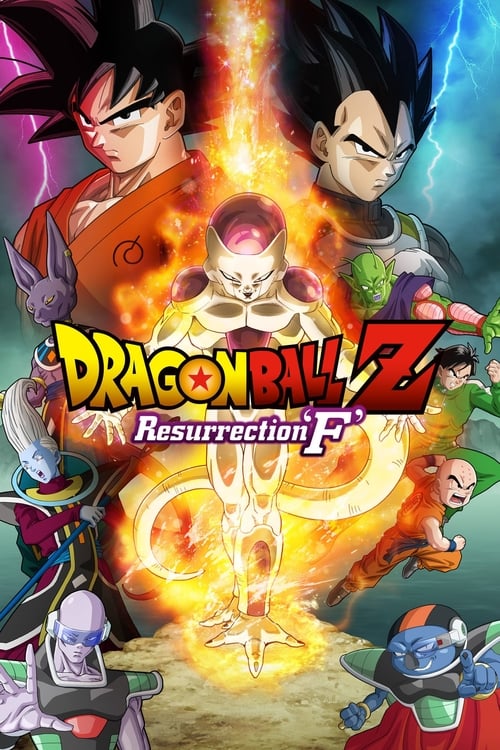
Dragon Ball Z: Resurrection 'F' (2015)
Directed by Tadayoshi Yamamuro
No — Dragon Ball Z: Resurrection 'F' is not woke, scoring 0 out of 100 on our wokeness meter.
Resurrection 'F' opens with the remnants of a galactic army scouring Earth for the Dragon Balls, which is a tidy way to announce that this film has no interest in the present cultural moment.
Consciousness Markers
The cast is a standard Japanese voice ensemble for the franchise; no deliberate diversity-driven casting agenda is present.
No LGBTQ+ characters, themes, or subtext appear anywhere in the film.
Bulma contributes a plot function, but the film offers no feminist commentary or gender-role critique.
The conflict is between alien warriors and a tyrant; no racial or social-justice themes are engaged.
Earth is destroyed by Frieza's blast, but this is a plot beat, not an environmentalist message.
No economic critique or eat-the-rich sentiment; Frieza is a galactic warlord, not a capitalist allegory.
No body-positivity themes; the film is built around power-level escalation and muscular combat.
No neurodivergent characters or themes are present.
The film is pure fictional franchise continuity with no historical revisionism.
The film is a fast-paced action spectacle with no moralizing or preachy messaging.
Why it received this score
Resurrection 'F' opens with the remnants of a galactic army scouring Earth for the Dragon Balls, which is a tidy way to announce that this film has no interest in the present cultural moment. Frieza returns, reassembled from pieces, and immediately resumes the only project he has ever had: revenge against the Saiyans who killed him. There is no subtext here. There is barely text. A tyrant trains for four months, achieves a gold-plated form, and gets punched.
The supporting cast includes Bulma, whose contribution is a phone call, and a roster of warriors whose contributions are punches of their own. We are not invited to reflect on gender, class, or the environment. When Frieza destroys the Earth in a fit of pique, the planet is restored three minutes later by a time-reversal, which is the least eco-conscious act in animated cinema and also not a metaphor for anything. The film's moral universe is strictly hierarchical: strength determines worth, and the strongest wins. This is not a critique of power. It is a celebration of it, staged with clean linework.
What the film does offer is craftsmanship. The animation is fluid, the fights are brisk, and the pacing was reportedly tuned for an American audience that prefers momentum to drama. We could call the result shallow, and many did, but shallow is a commitment, and the film honors it. Nothing in its ninety-three minutes lectures us about how to live. No character exists to represent a demographic. No villain stands in for an economic system. It is a sequel about two men with glowing hair hitting each other, and it knows exactly what it is. In an era of animated features that arrive with homework attached, that restraint deserves a quiet nod.
Analysis generated by our Consciousness Algorithm
Part of


Synopsis
One peaceful day on Earth, two remnants of Frieza's army named Sorbet and Tagoma arrive searching for the Dragon Balls with the aim of reviving Frieza. They succeed, and Frieza subsequently seeks revenge on the Saiyans.
Questions about Dragon Ball Z: Resurrection 'F'
Is Dragon Ball Z: Resurrection 'F' woke?
No — Dragon Ball Z: Resurrection 'F' is not woke, scoring 0 out of 100 on our wokeness meter. That earns it a verdict of Ultra Based.
Does Dragon Ball Z: Resurrection 'F' have any woke elements?
No. All 10 markers score zero.
How does Dragon Ball Z: Resurrection 'F' compare to other 2015 movies?
It ranks #258 of the 289 films from 2015 we've scored; their average is 15. The wokest is Chi-Raq (78).
Is Dragon Ball Z: Resurrection 'F' the most woke Dragon Ball Z movie?
No. It ranks #3 of the 15 Dragon Ball Z films we've scored; the wokest is Dragon Ball Z: The Return of Cooler (2).