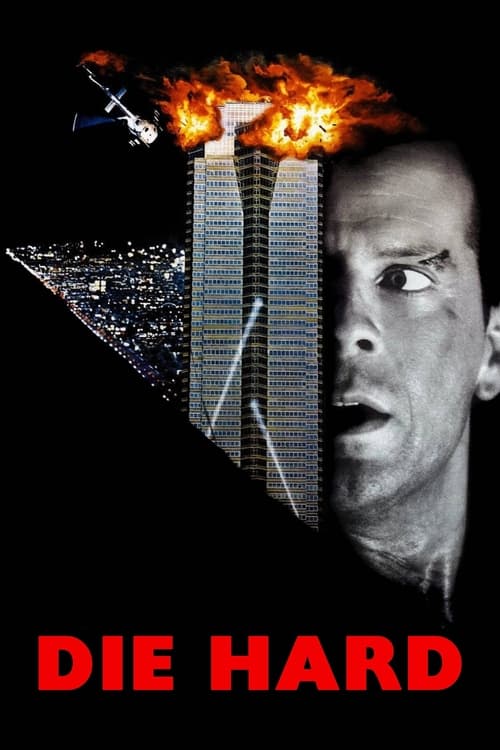
Die Hard (1988)
Directed by John McTiernan
No — Die Hard is not woke, scoring 7 out of 100 on our wokeness meter.
Die Hard (1988) arrives from a less self-conscious era, when an action film could be lean, mean, and entirely uninterested in explaining itself to the audience.
Consciousness Markers
The cast is overwhelmingly white, with a handful of minority actors (Reginald VelJohnson, De'voreaux White, Clarence Gilyard, James Shigeta) in supporting roles who exist naturally in the story without any commentary on their presence.
Holly Gennaro is a high-ranking corporate executive who uses her maiden name and punches a reporter, but the film treats this as character texture rather than a feminist thesis; the gender-role analysis is retrospective academic reading, not textual intent.
The villains are European and the setting is a Japanese-owned corporation, but the film's engagement with foreign influence is Cold War anxiety, not modern racial consciousness.
The antagonists are thieves after bearer bonds and there is mild satire of a sleazy executive, but the film has no systemic critique of capitalism.
Die Hard is a lean action film that shows rather than tells, offering no moralizing or preachy messaging.
There are no LGBTQ+ characters, themes, or subtext anywhere in the film.
No environmental themes or climate content of any kind.
No body-positivity themes; the film is a conventional action thriller with no commentary on body image.
No neurodivergent characters or themes are present.
The film is a straightforward action narrative with no historical revisionism.
Why it received this score
Die Hard (1988) arrives from a less self-conscious era, when an action film could be lean, mean, and entirely uninterested in explaining itself to the audience. John McTiernan directs Bruce Willis as John McClane, an off-duty New York cop who stumbles into a hostage crisis at a Los Angeles skyscraper. The film's social instruction manual is nearly blank. It has no interest in correcting the viewer, no appetite for moral instruction, and no desire to append a thesis to every explosion. That is not a moral failing. It is a classification note. The result is a thriller that trusts velocity, vulnerability, and Alan Rickman's velvet menace.
The trace elements of social consciousness are faint and mostly incidental. The cast is overwhelmingly white, with Reginald VelJohnson, De'voreaux White, Clarence Gilyard, and James Shigeta in supporting roles that exist without commentary. Bonnie Bedelia's Holly Gennaro is a high-ranking executive who uses her maiden name and punches a reporter, but the film treats this as character texture, not a feminist argument. The villains are European and the setting is a Japanese-owned corporation, which gestures at foreign influence anxiety from an older Cold War playbook, not modern racial consciousness. The thieves want bearer bonds. A sleazy executive receives his comeuppance. No systemic critique of capitalism follows. LGBTQ themes, climate concerns, body positivity, neurodivergence, and historical revisionism are absent. The absences are total. The film has other business.
Lecture energy is minimal. Die Hard shows instead of tells. It offers no moralizing coda, no preachy monologue, no final speech about the way we live now. The closest thing to a lesson is that a man should apologize to his wife, and even that arrives through broken glass and gunfire. As a cultural artifact, the film sits far from contemporary progressive sensibilities, which is precisely why it endures as a near-perfect machine. The critic's duty here is brief. We have classified the vintage. We may now return to the ventilation shaft.
Analysis generated by our Consciousness Algorithm
Part of


Synopsis
High above the city of L.A. a team of terrorists has seized a building, taken hostages, and declared war. One man has manages to escape... An off-duty cop hiding somewhere inside. He's alone, tired... and the only chance anyone has got.
Questions about Die Hard
Is Die Hard woke?
No — Die Hard is not woke, scoring 7 out of 100 on our wokeness meter. That earns it a verdict of Ultra Based.
Does Die Hard have any woke elements?
Very few. None of the 10 markers reaches 30, the level where a marker counts as present; the highest is Feminist Agenda at 15.
How does Die Hard compare to other 1988 movies?
It ranks #35 of the 73 films from 1988 we've scored; their average is 10. The wokest is Stand and Deliver (58).
Is Die Hard the most woke Die Hard movie?
No. It ranks #2 of the 5 Die Hard films we've scored; the wokest is Die Hard: With a Vengeance (42).