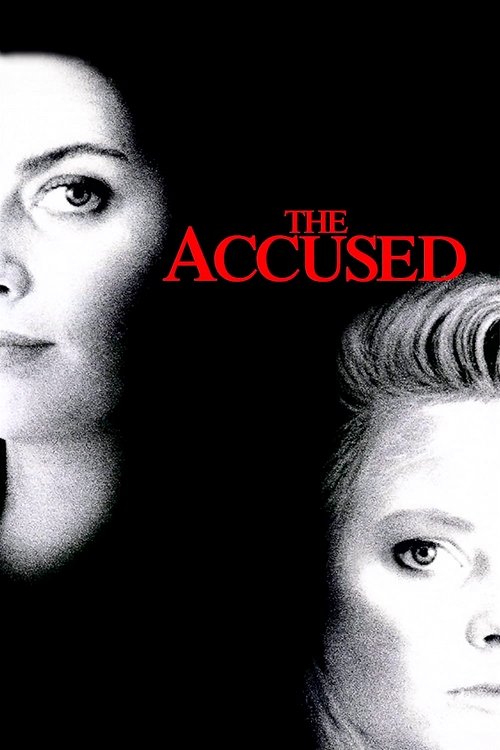
The Accused (1988)
Directed by Jonathan Kaplan
Partly — The Accused is somewhat woke, scoring 41 out of 100 on our wokeness meter.
The Accused lands in 1988 with a subject the marketplace had no appetite for.
Consciousness Markers
The film is squarely about rape, victim blaming, slut shaming, and women's empowerment, giving its female victim a voice against a system that doubts her; genuinely ahead of its time in centering a survivor's perspective.
The film carries an explicit message about sexual harassment as a form of violence and closes with on-screen rape statistics, giving it a clear didactic streak.
The film is led by two women (Foster and McGillis), notable for 1988, but the cast is otherwise predominantly white and casting was not driven by any diversity imperative.
No LGBTQ+ characters, themes, or subtext appear anywhere in the film.
Race is not a theme; the story and characters are not framed around racial dynamics.
No environmental or climate content whatsoever.
No critique of capitalism or wealth; the target is the justice system and misogyny, not economics.
No body-positivity themes; the film's treatment of the victim's appearance is about slut-shaming, not body acceptance.
No neurodivergent characters or themes are present.
Loosely inspired by the real Cheryl Araujo case, but it dramatizes rather than revises or reinterprets history for ideological ends.
Why it received this score
The Accused lands in 1988 with a subject the marketplace had no appetite for. Sarah Tobias, a waitress, is gang raped on a pinball machine in a bar while patrons cheer, and the film refuses to look away from the aftermath. Jodie Foster plays her without a shred of vanity. Kelly McGillis plays the assistant district attorney who plea-bargains the rapists down to reckless endangerment because she doubts the victim will survive cross-examination. The picture's true subject is the accounting a culture performs on women: who is credible, who was asking for it, whose body counts as evidence. Paramount's own test screenings recorded the lowest scores in studio history. A second screening, women only, produced some of the highest. That anecdote is the film in miniature.
The feminist argument here is structural, not decorative. Sarah wants her day in court, and the plot bends toward giving her one, which in 1988 was a genuine advance. The film has nothing to say about race, nothing about climate, nothing about wealth as a system, and no interest in body acceptance or neurodivergence. Its leads are two women, notable casting for the era, though the decision was driven by bankability and the rest of the ensemble is white men. Sherry Lansing and Stanley Jaffe pursued Foster only after Kim Basinger, Demi Moore, and Rosanna Arquette declined the part.
Where the film grows wearying is in its instruction. Roger Ebert drew the intended lesson: verbal harassment is a form of violence. The closing card supplies rape statistics, just in case the preceding ninety minutes were ambiguous. The sermon is worth hearing, and the film delivers it with craft, but it does deliver it. A viewer leaves educated. That is a compliment and a limitation, and this sommelier notes both.
Analysis generated by our Consciousness Algorithm
Part of


Synopsis
Out drinking one night after a fight with her boyfriend, three men brutally rape Sarah Tobias in a bar while people watch and cheer. District Attorney Kathryn Murphy takes the case; however, she allows the rapists to receive a mild sentence. A distraught Sarah decides to seek punishment for the men who witnessed and encouraged the rape. To get justice, Sarah must take the stand and revisit the night of her attack.
Questions about The Accused
Is The Accused woke?
Partly — The Accused is somewhat woke, scoring 41 out of 100 on our wokeness meter. That earns it a verdict of Woke-Adjacent.
What makes The Accused woke?
2 of the 10 markers register at 30 or above, led by Feminist Agenda (75) and Lecture Energy (45). On Feminist Agenda: The film is squarely about rape, victim blaming, slut shaming, and women's empowerment, giving its female victim a voice against a system that doubts her; genuinely ahead of its time in centering a survivor's perspective.
How does The Accused compare to other 1988 movies?
It ranks #3 of the 73 films from 1988 we've scored; their average is 10. The wokest is Stand and Deliver (58).
How is the Woke Score calculated?
An AI-assisted process researches the film and its reception, scores it 0–100 on ten markers, then combines those into one 0–100 Woke Score. It measures a specific set of 2020s cultural themes, not film quality.