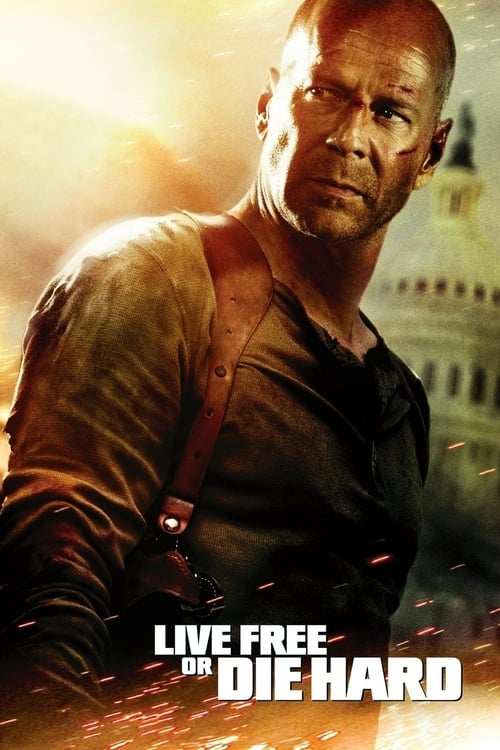
Live Free or Die Hard (2007)
Directed by Len Wiseman
No · Ultra Based
How we score movies →Consciousness Markers
Mary Elizabeth Winstead plays a capable FBI agent with agency and competence, though the film does not interrogate gender dynamics or provide feminist commentary beyond basic competence.
The film includes actors of color in supporting roles, but their casting appears functional to the plot rather than intentional representation. No meaningful discussion of diversity or inclusion is present.
No LGBTQ+ themes, characters, or subtext are present in the film.
The film contains no racial consciousness, commentary on race, or examination of systemic racism. Actors of color are present but race is never thematized.
Climate change or environmental concerns play no role in the narrative or thematic structure of the film.
The film presents no critique of capitalism or examination of economic systems. The villains are terrorists, not capitalists.
Body positivity themes are absent. The film features fit action heroes and makes no commentary on body diversity or acceptance.
Neurodivergence is not represented or discussed in the film.
The film contains no revisionist historical elements or reframing of historical narratives.
The film contains no preachy, preachy, or lecture-like exposition about social issues or progressive values.


Synopsis
John McClane is back and badder than ever, and this time he calls on the services of a young hacker in his bid to stop a ring of Internet terrorists intent on taking control of America's computer infrastructure.
Why it received this score
Live Free or Die Hard represents the action blockbuster in its pre-woke form, a film concerned primarily with the mechanics of spectacle and the complications of aging masculinity. The narrative centers on John McClane, a cop now past his prime, navigating a landscape of cyber-terrorism with the reluctant assistance of a young hacker who serves mainly as comedic relief. The film's cultural preoccupations are entirely divorced from the social consciousness movements that would come to define the 2010s and beyond.
The supporting cast includes actors of color, but their presence is functional rather than thematic. Maggie Q appears as a capable action character without any specific commentary on gender or representation. Cliff Curtis plays a villain without racial subtext. The film's only sustained engagement with generational difference concerns the analog versus digital divide, a safe form of technological anxiety rather than any meaningful social critique. The humor derives from fish-out-of-water scenarios and action set pieces, not from any interrogation of power structures or social hierarchies.
What emerges is a straightforward entertainment product that predates the intensification of progressive cultural sensibilities in mainstream cinema. It is not hostile to representation, merely indifferent to it. The film asks nothing of its audience except to enjoy explosions, quips, and the sight of a middle-aged action hero performing improbable feats. This is not a failing in itself, merely the honest posture of a franchise film unconcerned with the cultural conversations that would later come to dominate critical discourse.
Analysis generated by our Consciousness Algorithm
Critic Reviews
“Either Live Free or Die Hard will go down as the summer's best action blockbuster, or it's going to be one exceptional summer.”
“Easily the best in the series since the first one.”
“It's simply old-school stunts and movie magic.”
“The physical stunts by Maggie Q as a lethal martial arts expert and Cyril Raffaelli as a Eurotrash sniper who rappels buildings are more thrilling than the over-the-top chase sequences, so contrived as to verge on self-parody.”