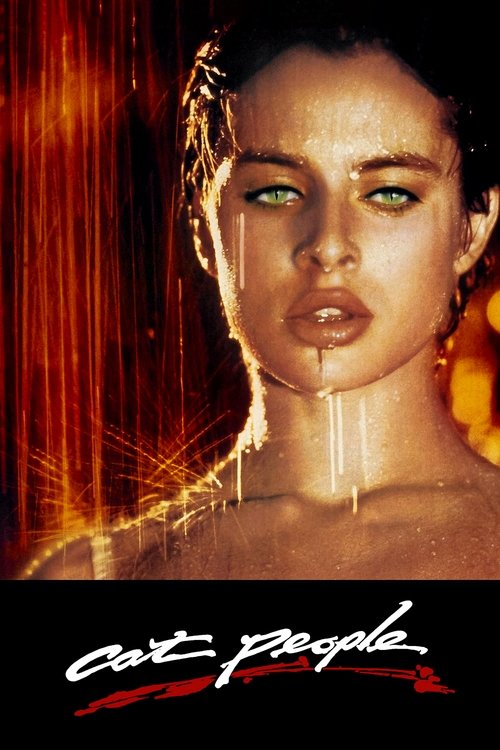
Cat People (1982)
Directed by Paul Schrader
No — Cat People is not woke, scoring 0 out of 100 on our wokeness meter.
Paul Schrader's 1982 Cat People is a remake of the 1942 RKO film, and it arrives with a Giorgio Moroder score, a David Bowie theme, and a commitment to skin over blood.
Consciousness Markers
The cast includes Ruby Dee and Frankie Faison in supporting roles, but these are natural, uncommented presences in a New Orleans setting, not deliberate representation casting.
No LGBTQ+ themes or characters are present; the central taboo is incestuous werecat mythology.
The film explores female sexual awakening through an exploitative male gaze, and its female protagonist is ultimately trapped, offering no feminist agenda.
The New Orleans setting and Creole housekeeper are atmospheric, not vehicles for racial commentary or consciousness.
No environmental or climate themes appear in the film.
The film contains no critique of capitalism or wealth inequality.
Nudity is presented erotically, not as a body-positive statement.
A character's childhood in psych wards is a plot detail, not a positive portrayal of neurodivergence.
The film is a supernatural horror remake, not a revisionist take on historical events.
The film aims to unsettle and titillate rather than deliver moral or social lectures.
Why it received this score
Paul Schrader's 1982 Cat People is a remake of the 1942 RKO film, and it arrives with a Giorgio Moroder score, a David Bowie theme, and a commitment to skin over blood. The premise finds Irena reuniting with her brother Paul in New Orleans and learning that their werecat heritage demands incest or panther transformation. This is Gothic exploitation, not social instruction. The film's cultural inventory comes back empty. The supporting presence of Ruby Dee and Frankie Faison feels like New Orleans casting, not a representation initiative.
The film's central taboo is incestuous werecat biology, a transgression that would scandalize a Victorian parlor and does nothing for a contemporary LGBTQ+ checklist. Irena's sexual awakening is staged for the camera's pleasure; she is undressed, observed, and finally caged. That is not a feminist program. The New Orleans setting supplies humidity and a Creole housekeeper, not racial consciousness. The nudity is erotic, not body-positive. Paul's childhood in psych wards is plot furniture, not neurodivergent identity.
No climate allegory, no eat-the-rich aside, no revisionist history, and no lecture. The film wants to unsettle and titillate, and it does so with a straight face. It is a relic of an era when a major studio could release a glossy horror film about incest and panthers without anyone demanding a moral. We can respect the craft and note the absence. The audit is clean, which is to say empty.
Analysis generated by our Consciousness Algorithm
Part of


Synopsis
After years of separation, Irena Gallier and her minister brother, Paul, reunite in New Orleans. When zoologists capture a wild panther, Irena is drawn to the cat – and zoo curator Oliver to her. Soon, Paul will have to reveal the family secret: that when sexually aroused, they revert into predatory jungle cats.
Questions about Cat People
Is Cat People woke?
No — Cat People is not woke, scoring 0 out of 100 on our wokeness meter. That earns it a verdict of Ultra Based.
Does Cat People have any woke elements?
No. All 10 markers score zero.
How does Cat People compare to other 1982 movies?
It ranks #35 of the 41 films from 1982 we've scored; their average is 7. The wokest is Gandhi (42).
How is the Woke Score calculated?
An AI-assisted process researches the film and its reception, scores it 0–100 on ten markers, then combines those into one 0–100 Woke Score. It measures a specific set of 2020s cultural themes, not film quality.