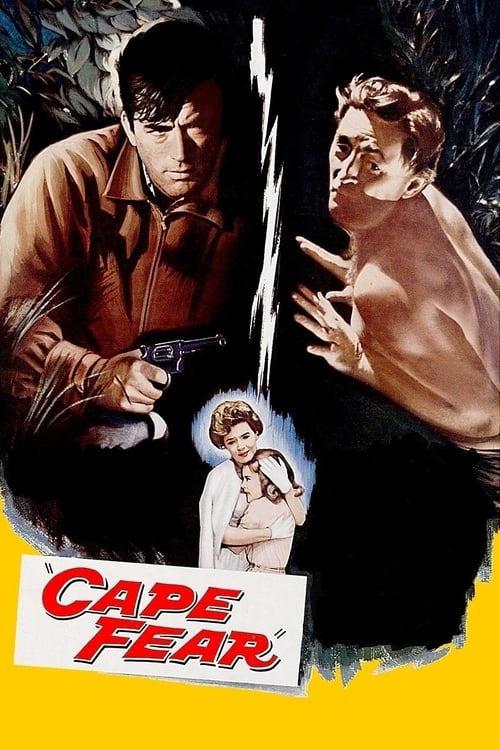
Cape Fear (1962)
Directed by J. Lee Thompson
No — Cape Fear is not woke, scoring 0 out of 100 on our wokeness meter.
Cape Fear arrives from 1962 with the confidence of a film that has no interest in instructing anyone.
Consciousness Markers
The cast is entirely white, drawn from the standard Hollywood roster of the era; no representation-conscious casting choices are present.
No LGBTQ+ characters or themes appear anywhere in this 1962 thriller.
Women (Peggy and Nancy Bowden) exist purely as targets whose endangerment motivates the male protagonist; the film is a product of its era with no feminist framework whatsoever.
Despite its Southeast Georgia setting, the film engages in no racial commentary or consciousness; race is simply absent as a subject.
No environmental or climate themes are present.
The film is a personal revenge thriller with no economic or class critique.
No body positivity themes or messaging of any kind.
Cady is depicted as a calculating, deliberate psychopath, not through any neurodivergence-aware lens.
The film is based on a contemporary novel with no historical revision or reinterpretation involved.
The film operates entirely as suspense and shock entertainment, offering no social messaging or moral lecturing to the audience.
Why it received this score
Cape Fear arrives from 1962 with the confidence of a film that has no interest in instructing anyone. J. Lee Thompson directs a southern gothic thriller adapted from John D. MacDonald's novel The Executioners, in which an ex-convict named Max Cady stalks the attorney who testified against him. The picture wants only to frighten, and it succeeds, largely because Robert Mitchum plays Cady with a menace that feels genuinely unwell. There is no message tucked beneath the suspense, no lesson waiting at the end of the pier. Just dread, delivered on schedule.
The cast is white, drawn from the standard roster of the period, and the film makes no apology or adjustment for this. Women exist here as the stakes of a man's quarrel: Peggy and Nancy are endangered, assaulted, chased into traffic, and their suffering functions as fuel for Sam Bowden's resolve. The setting is Southeast Georgia, yet race never surfaces as a subject, which is its own kind of silence. Money and class go unexamined. The villain is a psychopath by temperament, not a case study, and no diagnostic vocabulary is offered to soften him.
The result is a film that asks nothing of its audience beyond the willingness to be scared. No moral is pressed upon us, no contemporary sensibility is consulted. That restraint now reads as almost exotic, an artifact from a time when entertainment was permitted to be merely entertaining. We score it accordingly, and we do so without complaint. It is a clean specimen. The ledger stays empty.
Analysis generated by our Consciousness Algorithm


Synopsis
Sam Bowden witnesses a rape committed by Max Cady and testifies against him. When released after 8 years in prison, Cady begins stalking Bowden and his family but is always clever enough not to violate the law.
Questions about Cape Fear
Is Cape Fear woke?
No — Cape Fear is not woke, scoring 0 out of 100 on our wokeness meter. That earns it a verdict of Ultra Based.
Does Cape Fear have any woke elements?
No. All 10 markers score zero.
How does Cape Fear compare to other 1962 movies?
It ranks #20 of the 23 films from 1962 we've scored; their average is 9. The wokest is The Exterminating Angel (47).
How is the Woke Score calculated?
An AI-assisted process researches the film and its reception, scores it 0–100 on ten markers, then combines those into one 0–100 Woke Score. It measures a specific set of 2020s cultural themes, not film quality.