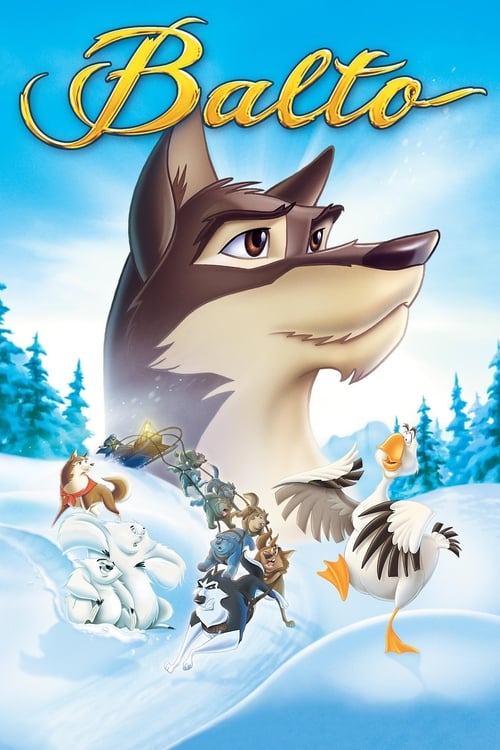
Balto (1995)
Directed by Simon Wells
No — Balto is not woke, scoring 10 out of 100 on our wokeness meter.
Balto arrived in December of 1995, a hand-drawn epic about a wolfdog who drags diphtheria antitoxin across an Alaskan blizzard, and it was promptly buried by a certain computer-generated cowboy.
Consciousness Markers
Balto's ostracism as a 'half-breed' wolfdog functions as a soft allegory for prejudice against mixed heritage, though the film never names race and resolves it through individual heroism rather than structural critique.
The moral about judging others by their heritage is delivered through the plot rather than direct preaching, keeping the sermonizing mild.
Jenna is given agency—she intervenes against the bear and devises the aurora signal—but this is standard love-interest competence rather than any feminist thesis.
The film takes heavy liberties with the 1925 serum run—inventing a villainous Steele, a wolfdog hero, and talking animals—but this is dramatic license rather than ideological rewriting of history.
The voice cast is entirely white Anglo-American actors (Bacon, Hoskins, Fonda, Collins), and the characters are animated dogs, geese, and bears with no human minority presence of note.
No LGBTQ+ characters, themes, or subtext appear anywhere in the film.
The Alaskan blizzard is a plot obstacle, not an environmentalist statement; no climate themes are present.
No economic critique of any kind; the story is a straightforward rescue narrative.
No body-image or body-acceptance themes appear in the film.
No neurodivergent characters or themes are present.
Why it received this score
Balto arrived in December of 1995, a hand-drawn epic about a wolfdog who drags diphtheria antitoxin across an Alaskan blizzard, and it was promptly buried by a certain computer-generated cowboy. The film opens and closes in Central Park, where an elderly woman named Rosy tells her granddaughter about the statue, a framing device that lends the enterprise an air of civic remembrance. What follows is a rescue narrative with talking animals, a scheming Malamute named Steele, and a goose with a Russian accent. It is earnest, handsome, and entirely conventional.
On matters of social consciousness, the film is a gentle creature. Balto's status as a half-breed earns him sneers from dogs and humans alike, and the screenplay gestures toward a lesson about judging others by their bloodlines. The allegory stays soft. No race is named, no system is indicted, and the prejudice evaporates the moment a single individual performs a heroic act. Jenna, the love interest, gets a few moments of competence: she charges a grizzly bear and later scratches an aurora into the snow to guide the team home. This is standard-issue pluck, not a thesis. Steele functions as a villain because he is vain and cruel, and the film disposes of him through social exile.
The remainder of the ledger sits empty. The blizzard is a logistical obstacle, not an environmental warning. Nome's economy goes unexamined. Nobody wrestles with body image, neurodivergence, or questions of identity beyond the canine variety. The historical record is rearranged considerably, though for spectacle instead of ideology, since a real dog named Balto did run the serum and a real villain named Steele did not exist. The moral arrives through plot mechanics and stays there. A film can be about kindness without being about anything else, and this one is content to be exactly that.
(Thematic tags: true_story.)
{"thematic_tags": ["true_story"]}
Analysis generated by our Consciousness Algorithm
Part of


Synopsis
An outcast half-wolf risks his life to prevent a deadly epidemic from ravaging Nome, Alaska.
Questions about Balto
Is Balto woke?
No — Balto is not woke, scoring 10 out of 100 on our wokeness meter. That earns it a verdict of Ultra Based.
Does Balto have any woke elements?
Very few. None of the 10 markers reaches 30, the level where a marker counts as present; the highest is Racial Consciousness at 25.
How does Balto compare to other 1995 movies?
It ranks #41 of the 108 films from 1995 we've scored; their average is 12. The wokest is Total Eclipse (60).
How is the Woke Score calculated?
An AI-assisted process researches the film and its reception, scores it 0–100 on ten markers, then combines those into one 0–100 Woke Score. It measures a specific set of 2020s cultural themes, not film quality.