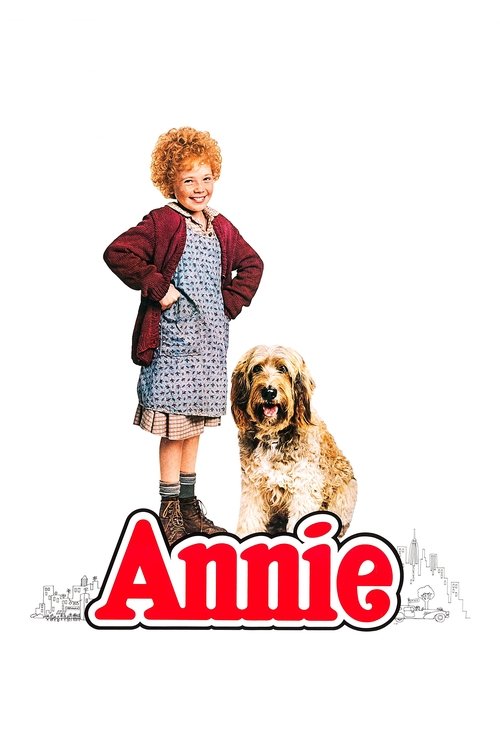
Annie (1982)
Directed by John Huston
No — Annie is not woke, scoring 6 out of 100 on our wokeness meter.
John Huston, a man who spent four decades filming men wrestling with God and their own appetites, ended up directing a Broadway musical about an orphan and a billionaire.
Consciousness Markers
The Depression-era New Deal and FDR's welfare program appear, but the film frames the benevolent billionaire Warbucks as the solution, a noblesse-oblige fantasy rather than an eat-the-rich critique.
The cast is overwhelmingly white; the few minority performers (Geoffrey Holder as a turbaned bodyguard, Roger Minami as a karate-teaching Japanese chauffeur) appear in exoticized servant roles rather than as deliberate inclusive casting.
There is mild uplift messaging about helping the poor via the New Deal, but it is delivered through song and story rather than preachy sermonizing.
Annie is a plucky girl protagonist, but the film offers no feminist critique; Miss Hannigan is a 'man-crazy drunk' and Grace is defined as secretary and love interest.
Minority characters exist as background servants with no engagement of race, racism, or racial identity as a theme.
No LGBTQ+ characters, themes, or subtext of any kind.
No environmental or climate themes whatsoever.
No body-positivity themes or messaging.
No neurodivergent characters or themes.
The film's Depression setting and FDR/New Deal depiction are period-appropriate and not a revisionist reframing of history.
Why it received this score
John Huston, a man who spent four decades filming men wrestling with God and their own appetites, ended up directing a Broadway musical about an orphan and a billionaire. The result is a thirty-five million dollar enterprise that mostly stands around looking expensive. The setting is 1933, the orphanage is cold, the locket is broken, and the audience is asked to feel something about a man who owns everything learning to love a child. That is the film's entire moral architecture, and it holds.
The cultural inventory here is thin and entirely of its moment. The cast is white to a person, with the exception of Geoffrey Holder in a turban as a bodyguard named Punjab and Roger Minami as a Japanese chauffeur who teaches the child karate. Both figures exist as decoration, exotic furniture in a mansion, and the film never notices. Miss Hannigan is a man-crazy drunk. Grace is a secretary who becomes a love interest. The plucky heroine's pluck is never aimed at any structure larger than a locked door. No queer subtext, no climate anxiety, no body politics, no neurodivergent reading. There is nothing to find because nothing was placed there.
The film does gesture at the poor. Roosevelt appears in his wheelchair, sketches a welfare program, and asks Warbucks to run it, and Annie urges him to say yes. The politics stop there. A benevolent billionaire funds the rescue, a fantasy of noblesse oblige, not a critique of the arrangement that produced him. The uplift arrives through song, which keeps the sermonizing at a low hum. Huston's camera never lectures. It lingers on sets that cost more than the orphanage would ever need. The whole thing is a period piece about 1933 made in 1982, and it is honest about both. We score it accordingly, and we move on.
Analysis generated by our Consciousness Algorithm


Synopsis
An orphan in a facility run by the mean Miss Hannigan, Annie believes that her parents left her there by mistake. When a rich man named Oliver "Daddy" Warbucks decides to let an orphan live at his home to promote his image, Annie is selected. While Annie gets accustomed to living in Warbucks' mansion, she still longs to meet her parents. So Warbucks announces a search for them and a reward, which brings out many frauds.
Questions about Annie
Is Annie woke?
No — Annie is not woke, scoring 6 out of 100 on our wokeness meter. That earns it a verdict of Ultra Based.
Does Annie have any woke elements?
Very few. None of the 10 markers reaches 30, the level where a marker counts as present; the highest is Eat the Rich at 12.
How does Annie compare to other 1982 movies?
It ranks #20 of the 41 films from 1982 we've scored; their average is 7. The wokest is Gandhi (42).
How is the Woke Score calculated?
An AI-assisted process researches the film and its reception, scores it 0–100 on ten markers, then combines those into one 0–100 Woke Score. It measures a specific set of 2020s cultural themes, not film quality.