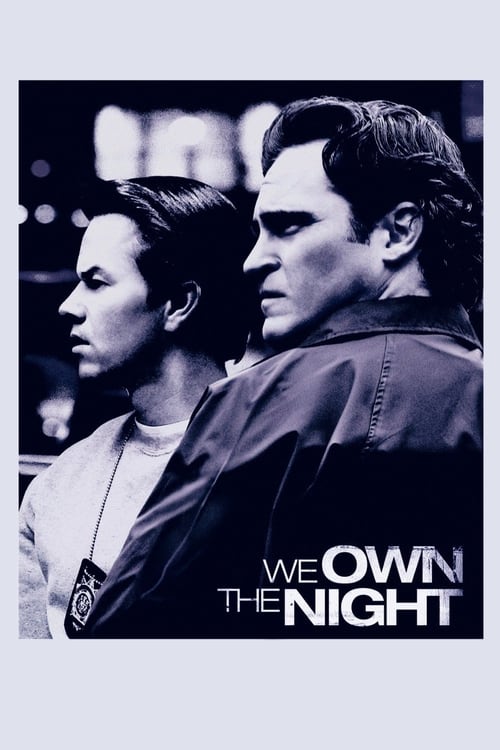
We Own the Night (2007)
Directed by James Gray
No — We Own the Night is not woke, scoring 8 out of 100 on our wokeness meter.
James Gray's 2007 crime drama arrives with a leather jacket, a furrowed brow, and a period setting of late-1980s Brooklyn, and it asks very little of the cultural scorekeeper.
Consciousness Markers
The cast is predominantly white, with Eva Mendes as the Latina girlfriend and a handful of ethnic Russian actors filling mafia roles. These are natural casting choices for a 1980s Brooklyn crime drama, not representation with commentary.
Amada's breakup with Bobby over his unilateral decision to join the NYPD gives her a moment of asserted agency, but it is a single plot beat in an otherwise male-driven crime saga.
No LGBTQ+ characters, themes, or subtext appear anywhere in the film.
The film deals with the Russian mafia and the NYPD but engages no racial consciousness or commentary on race relations.
No environmental or climate themes are present.
A crime drama about police and gangsters with no economic critique or anti-capitalist messaging.
No body positivity themes or body-diverse representation.
No neurodivergent characters or themes.
A period piece set in 1988-89 but not a revisionist retelling of history; it is a fictional crime narrative.
The film is a moody, atmospheric crime drama that shows rather than tells, with no preachy or didactic messaging.
Why it received this score
James Gray's 2007 crime drama arrives with a leather jacket, a furrowed brow, and a period setting of late-1980s Brooklyn, and it asks very little of the cultural scorekeeper. Joaquin Phoenix plays Bobby Green, a nightclub manager who prefers the company of cocaine dealers and his girlfriend Amada to the company of his police father and brother, until the Russian mafia shoots his brother in the face and the family business becomes a matter of blood. The film is atmospheric and grim and largely content to be a movie about men in coats walking toward each other in the rain. There is no sermon here, no moment where a character turns to the camera to explain the correct politics of the situation.
The representation on offer is the ordinary kind that casting a Brooklyn crime saga produces: a mostly white ensemble, Eva Mendes as Amada, and a handful of ethnic Russian performers filling the bratva roles. None of it is annotated or framed as a statement. Amada does get one moment of asserted agency, breaking with Bobby because he enlisted in the NYPD without consulting her, which registers as a genuine flicker of personhood in a film otherwise organized around fathers and sons. It is a single beat, and then the plot resumes its march toward the reed beds.
Everything else is silence. No environmental conscience, no economic critique, no meditation on race, no body-diverse casting, no neurodivergent characters, no revisionist retelling of the 1980s. The film shows rather than lectures, which in this climate reads as a kind of restraint. We are left with a moody, well-acted, faintly clichéd genre piece that has nothing to declare and no interest in declaring it.
Analysis generated by our Consciousness Algorithm


Synopsis
A New York nightclub manager tries to save his brother and father from Russian mafia hitmen.
Questions about We Own the Night
Is We Own the Night woke?
No — We Own the Night is not woke, scoring 8 out of 100 on our wokeness meter. That earns it a verdict of Ultra Based.
Does We Own the Night have any woke elements?
Very few. None of the 10 markers reaches 30, the level where a marker counts as present; the highest is Representation Casting at 15.
How does We Own the Night compare to other 2007 movies?
It ranks #93 of the 201 films from 2007 we've scored; their average is 12. The wokest is Like Stars on Earth (92).
How is the Woke Score calculated?
An AI-assisted process researches the film and its reception, scores it 0–100 on ten markers, then combines those into one 0–100 Woke Score. It measures a specific set of 2020s cultural themes, not film quality.