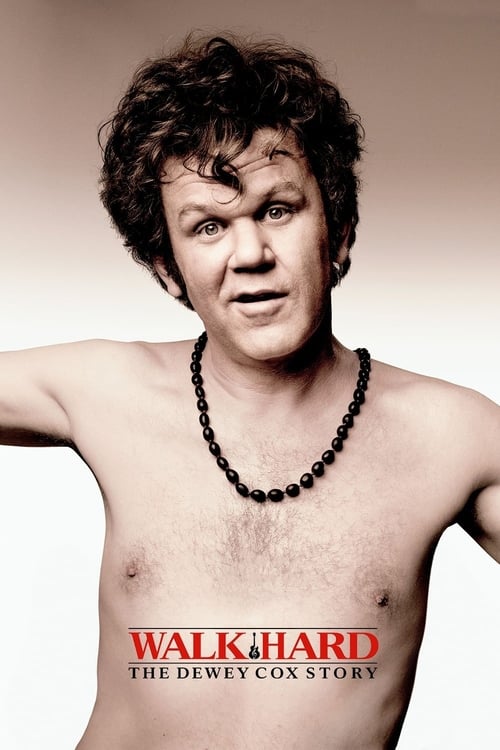
Walk Hard: The Dewey Cox Story (2007)
Directed by Jake Kasdan
No — Walk Hard: The Dewey Cox Story is not woke, scoring 5 out of 100 on our wokeness meter.
Walk Hard: The Dewey Cox Story arrives from 2007 with the confidence of a film that knows exactly what it is spoofing and no interest in anything else.
Consciousness Markers
The cast includes Tim Meadows and depicts a period all-Black nightclub, but this is period parody rather than diversity-driven casting; the leads are overwhelmingly white.
Race surfaces via the all-Black nightclub and the satirical 'Mulatto Song,' but purely as genre spoof rather than any consciousness-raising intent.
Record executives and the music industry are mocked, but as biopic cliché rather than any systemic anti-capitalist critique.
No LGBTQ+ characters or themes appear anywhere in the film.
The film revels in parodic chauvinism — multiple wives, 'The Mulatto Song,' 'Hole in My Pants' — with no feminist framing whatsoever.
No environmental or climate content of any kind.
No body-positivity themes present.
No neurodivergence themes; Dewey's quirks are addiction and trauma played for laughs.
The film is a wholly fictional parody biopic, not a revisionist retelling of real history.
A broad Apatow-era comedy that never lectures its audience on social issues.
Why it received this score
Walk Hard: The Dewey Cox Story arrives from 2007 with the confidence of a film that knows exactly what it is spoofing and no interest in anything else. Jake Kasdan and Judd Apatow built a fake biopic around John C. Reilly, a man who can actually sing and play guitar, then stuffed it with every cliché the musical biography genre had accumulated by the mid-2000s. The target is Ray and Walk the Line, but the scattergun takes in Bob Dylan, Brian Wilson, the Beatles, and a machete-based family tragedy that plays as absurdist farce. It is a comedy about fame, addiction, and the music industry, and it means none of it as a lesson.
The film's cultural footprint is nearly invisible by the standards of the current decade. An all-Black nightclub provides a setting, and the satirical Mulatto Song exists as a genre joke, but neither carries any consciousness-raising intent. The record executives are mocked because biopics always mock record executives. Dewey's many wives, his infidelity, and the suggestive hits are relics of a raunchier comedic era, offered without a single gesture toward feminist reclamation. There are no LGBTQ+ characters, no body-positivity thread, no climate anxiety, and no neurological conditions framed for sympathy. Dewey's problems are drugs, rage, and a lost sense of smell.
The result is a preachy-free zone, a rarity in any era and a genuine artifact of its own. The film never lectures. It never asks the audience to examine its complicity in anything. A viewer searching for social instruction will find only a man dueling his father with machetes and a rapper named Lil' Nutzzak sampling the title track. The sommelier's verdict is a thin, dry vintage with almost no progressive residue. Drink it for the jokes. There is nothing else in the glass.
Analysis generated by our Consciousness Algorithm


Synopsis
Following a childhood tragedy, Dewey Cox follows a long and winding road to music stardom. Dewey perseveres through changing musical styles, an addiction to nearly every drug known and bouts of uncontrollable rage.
Questions about Walk Hard: The Dewey Cox Story
Is Walk Hard: The Dewey Cox Story woke?
No — Walk Hard: The Dewey Cox Story is not woke, scoring 5 out of 100 on our wokeness meter. That earns it a verdict of Ultra Based.
Does Walk Hard: The Dewey Cox Story have any woke elements?
Very few. None of the 10 markers reaches 30, the level where a marker counts as present; the highest is Representation Casting at 12.
How does Walk Hard: The Dewey Cox Story compare to other 2007 movies?
It ranks #131 of the 201 films from 2007 we've scored; their average is 12. The wokest is Like Stars on Earth (92).
How is the Woke Score calculated?
An AI-assisted process researches the film and its reception, scores it 0–100 on ten markers, then combines those into one 0–100 Woke Score. It measures a specific set of 2020s cultural themes, not film quality.