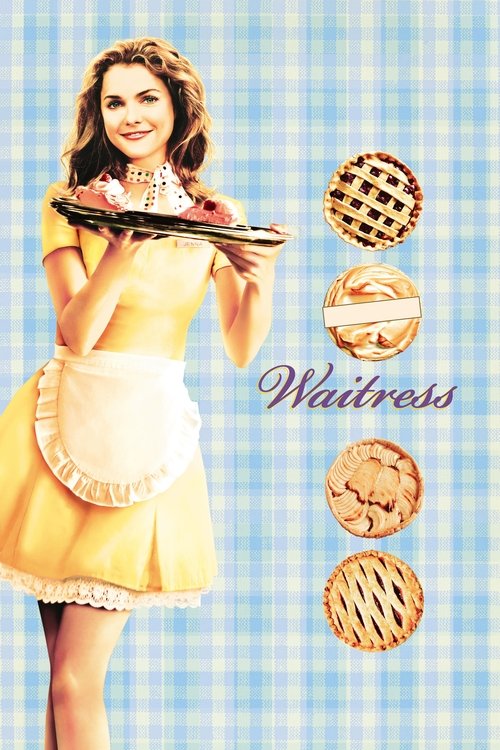
Waitress (2007)
Directed by Adrienne Shelly
Partly — Waitress is somewhat woke, scoring 40 out of 100 on our wokeness meter.
Waitress arrives from 2007, which is to say from an era before the current cultural accounting began in earnest.
Consciousness Markers
Written and directed by a woman (Adrienne Shelly), the film centers a female protagonist's journey out of an abusive marriage toward independence, anchored by female friendship and her ultimate choice of self and daughter over the men in her life.
The film's themes of escaping abuse and finding self-worth are dramatized warmly and whimsically rather than delivered as a sermon; there is little overt preaching.
The cast is almost entirely white, with no deliberate diverse or inclusive casting choices; the film predates the representation-driven casting practices of the 2020s.
There are no LGBTQ+ characters, relationships, or themes anywhere in the story.
The film engages no racial themes or commentary; its small-town Southern setting is depicted without any racial consciousness.
There is no environmental or climate-related content in the film.
The pie-contest prize money and diner setting carry no critique of capitalism or wealth; the film is a personal, not economic, story.
Pregnancy and body image are present as plot elements, but the film makes no body-positivity argument or self-acceptance messaging around physical appearance.
No character is depicted with or discussed in terms of neurodivergence; Ogie's quirks are played for comedy, not as a condition.
The film is a contemporary fictional story with no historical revisionism of any kind.
Why it received this score
Waitress arrives from 2007, which is to say from an era before the current cultural accounting began in earnest. Adrienne Shelly wrote, directed, and appears in it as Dawn, and the film concerns Jenna Hunterson (Keri Russell), a gifted pie maker in a Southern town who is trapped in a marriage to a controlling and abusive husband and who becomes pregnant against her wishes. The pies carry names like Bad Baby Pie. The tone is whimsical, the palette is warm, and the whole enterprise sits comfortably inside the romantic comedy tradition while quietly declining several of its conventions.
What the film does possess is a genuine, if modest, feminist spine. Shelly builds the story around a woman's interior life, her friendships with two co-workers, and her slow accumulation of cash toward an escape. The affair with the obstetrician is not presented as salvation. The ending, in which Jenna names her daughter, refuses her husband, ends the affair, and opens her own restaurant with an inheritance from the diner's owner, is a story about a woman choosing herself. It is dramatized, not preached. There is no sermon here and no lecture. The film trusts its audience to reach the conclusion on its own.
Elsewhere the ledger is bare. The cast is white, the setting is rendered without racial dimension, and no character is marked by sexuality, disability, or environmental concern. The economics of a pie contest and a small diner carry no critique of wealth or capital. This is a personal story told at a personal scale, and it makes no claim to be anything else. It is sweet, it is sad, and it is over. We file it accordingly.
Analysis generated by our Consciousness Algorithm


Synopsis
A small town waitress stuck in a lousy marriage finds love when an exciting out-of-towner enters her life.
Questions about Waitress
Is Waitress woke?
Partly — Waitress is somewhat woke, scoring 40 out of 100 on our wokeness meter. That earns it a verdict of Woke-Adjacent.
What makes Waitress woke?
1 of the 10 markers register at 30 or above, led by Feminist Agenda (55). On Feminist Agenda: Written and directed by a woman (Adrienne Shelly), the film centers a female protagonist's journey out of an abusive marriage toward independence, anchored by female friendship and her ultimate choice of self and daughter over the men in her life.
How does Waitress compare to other 2007 movies?
It ranks #10 of the 201 films from 2007 we've scored; their average is 12. The wokest is Like Stars on Earth (92).
How is the Woke Score calculated?
An AI-assisted process researches the film and its reception, scores it 0–100 on ten markers, then combines those into one 0–100 Woke Score. It measures a specific set of 2020s cultural themes, not film quality.