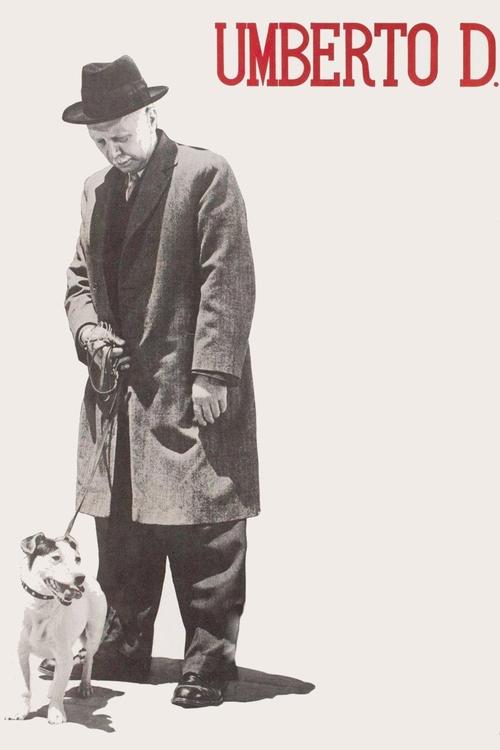
Umberto D. (1952)
Directed by Vittorio De Sica
No — Umberto D. is not woke, scoring 12 out of 100 on our wokeness meter.
Vittorio De Sica's Umberto D. follows a retired civil servant through a Rome that has no further use for him.
Consciousness Markers
The plot turns on a pension protest, an exploitative landlady evicting a tenant for rent, and the humiliation of poverty — a genuine structural critique of postwar economic indifference, though framed as humanist tragedy rather than ideological indictment.
De Sica's neorealist practice of casting non-professionals (including a linguistics professor and a real dog) foregrounds ordinary working-class and elderly faces, but this is a 1952 artistic doctrine rather than modern identity-conscious casting.
Ebert noted the film 'does not reach for its effects or strain to make its message clear'; its social critique is embedded in quiet observation rather than delivered as a sermon.
The pregnant maid Maria and the domineering landlady are given interiority and agency, but the film's concerns are class and dignity, not gender politics.
No LGBTQ+ characters, themes, or subtext appear anywhere in the film.
The film is entirely concerned with white Italian pensioners and contains no engagement with race.
No environmental or climate themes are present.
No body-positivity themes or messaging.
No neurodivergence is depicted or discussed.
The film is a contemporary portrait of 1950s Rome, not a revisionist reframing of historical events.
Why it received this score
Vittorio De Sica's Umberto D. follows a retired civil servant through a Rome that has no further use for him. The landlady wants fifteen thousand lire by month's end. He sells a watch, sells his books, raises a third of it, and is refused. The film is most often praised for its casting of non-professionals, including a linguistics professor in the title role and a dog credited as Napoleone. This was a doctrine of postwar Italian realism, an argument about where dignity resides, not a modern exercise in identity-conscious hiring. The result is a gallery of unglamorous faces the camera declines to prettify, which earns a small measure of credit and no more.
The film's grievance is economic, and it is genuine. A street demonstration of pensioners is dispersed by police. A landlady rents a room by the hour. A man contemplates begging and cannot. Here is a structural complaint about what a recovering economy does to those it has finished with, and it lands as tragedy instead of pamphlet. Roger Ebert observed that the film does not strain to make its message clear. The critique arrives through a hole knocked in a wall, a dog at the city pound, a friend who will not hear a request for a loan.
Elsewhere the ledger is bare. Race does not appear, nor climate, nor body politics, nor neurodivergence, nor any queering of the margins. The pregnant maid Maria is given a private dilemma and a choice between two soldiers, which registers as a flicker of interest in women's interiority and little beyond it. De Sica's subject is shame, not patriarchy. The final sequence, a walk toward the railway tracks that dissolves into a chase and then into play, resists our taxonomy altogether. We file the numbers regardless. The film is seventy years old and remains indifferent to them, which is its own quiet correction.
Analysis generated by our Consciousness Algorithm


Synopsis
When elderly pensioner Umberto Domenico Ferrari returns to his boarding house from a protest calling for a hike in old-age pensions, his landlady demands her 15,000-lire rent by the end of the month or he and his small dog will be turned out onto the street. Unable to get the money in time, Umberto fakes illness to get sent to a hospital, giving his beloved dog to the landlady's pregnant and abandoned maid for temporary safekeeping.
Questions about Umberto D.
Is Umberto D. woke?
No — Umberto D. is not woke, scoring 12 out of 100 on our wokeness meter. That earns it a verdict of Ultra Based.
Does Umberto D. have any woke elements?
1 of the 10 markers register at 30 or above, led by Eat the Rich (42). On Eat the Rich: The plot turns on a pension protest, an exploitative landlady evicting a tenant for rent, and the humiliation of poverty — a genuine structural critique of postwar economic indifference, though framed as humanist tragedy rather than ideological indictment.
How does Umberto D. compare to other 1952 movies?
It is the wokest of the 8 films from 1952 we've scored; their average is 5.
How is the Woke Score calculated?
An AI-assisted process researches the film and its reception, scores it 0–100 on ten markers, then combines those into one 0–100 Woke Score. It measures a specific set of 2020s cultural themes, not film quality.