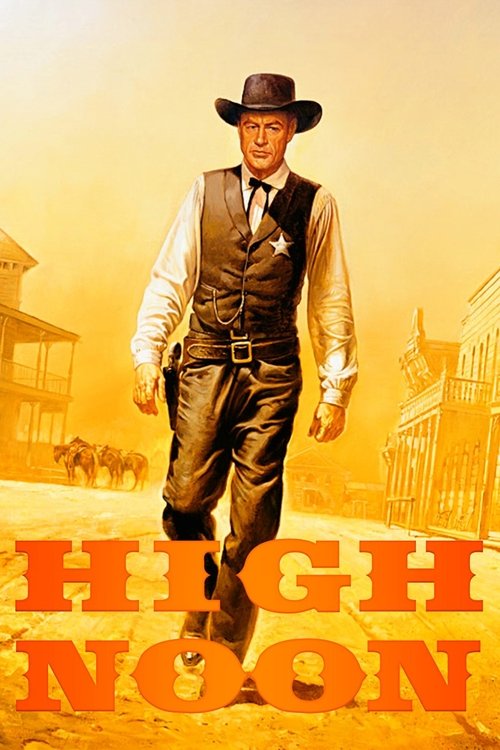
High Noon (1952)
Directed by Fred Zinnemann
No · Ultra Based
How we score movies →Consciousness Markers
Katy Jurado as a Mexican American businesswoman was groundbreaking for 1952, but this represents pre-2015 progressive casting, not contemporary woke sensibility.
Female characters are complex and subvert Western genre conventions, but this reflects good storytelling rather than explicit feminist ideology or consciousness.
Jurado's presence is significant but the film does not center racial consciousness as a modern concept or engage with systemic racial analysis.
The film engages in political allegory about the present moment (McCarthy era) rather than revisionist reinterpretation of historical events.
The film contains moral weight and thematic seriousness but does not adopt a preachy or preachy tone characteristic of contemporary progressive cinema.
No LGBTQ+ themes or characters present in the film.
No climate themes or environmental consciousness present.
No anti-capitalist critique or commentary on economic systems present.
No body positivity or body-related consciousness present.
No representation of neurodivergence or disability consciousness.


Synopsis
Will Kane, the sheriff of a small town in New Mexico, learns a notorious outlaw he put in jail has been freed, and will be arriving on the noon train. Knowing the outlaw and his gang are coming to kill him, Kane is determined to stand his ground, so he attempts to gather a posse from among the local townspeople.
Why it received this score
High Noon stands as a curious artifact when subjected to contemporary cultural scrutiny. The 1952 Western, directed by Fred Zinnemann and written by Carl Foreman (soon to be blacklisted), functions as a Cold War political allegory about individual courage and the failure of collective moral responsibility. For its era, the film displays genuine progressive instincts: Katy Jurado appears as Helen Ramirez, a Mexican American businesswoman in a major role, marking the first such casting in a Hollywood Western. Grace Kelly's Amy Kane, a Quaker pacifist, provides ideological counterweight to the masculine action rather than serving as mere decoration. These choices subvert the genre's typical gender and ethnic hierarchies.
Yet to score this film according to 2020s cultural markers is to perform a kind of historical category error. The film's progressivism belongs to the 1950s liberal consensus, not to the specific constellation of sensibilities that emerged around 2015 and hardened thereafter. It contains no explicit interrogation of systemic racism, no climate consciousness, no corporate critique framed through a contemporary lens. The women are well-written, but not as an assertion of feminist ideology. The casting of Jurado represents enlightened thinking for the era, not an engagement with modern debates around representation.
What remains is a serious work about civic virtue and moral isolation, themes that predate and transcend the categories we now apply to popular culture. To call it woke would be to confuse a good film with a contemporary one, to mistake the presence of minority actors and complex female characters for the specific ideological apparatus that drives modern progressive cinema. High Noon earns its place in film history through craft and thematic weight, not through alignment with twenty-first century social consciousness.
Analysis generated by our Consciousness Algorithm
Critic Reviews
“Meaningful in its implications, as well as loaded with interest and suspense, High Noon is a western to challenge “Stagecoach” for the all-time championship. (Review of Original Release)”
“The Western may be one of the few truly American art forms, and High Noon shows exactly how much potential it can embrace.”
“Not a frame is wasted in this taut, superbly directed, masterfully acted film, the first so-called "adult Western." (Review of Original Release)”
“Some of the results ring false, but the memorable theme song and some equally memorable character acting (by Thomas Mitchell and Lon Chaney Jr. more than Lloyd Bridges and Katy Jurado) help things along.”