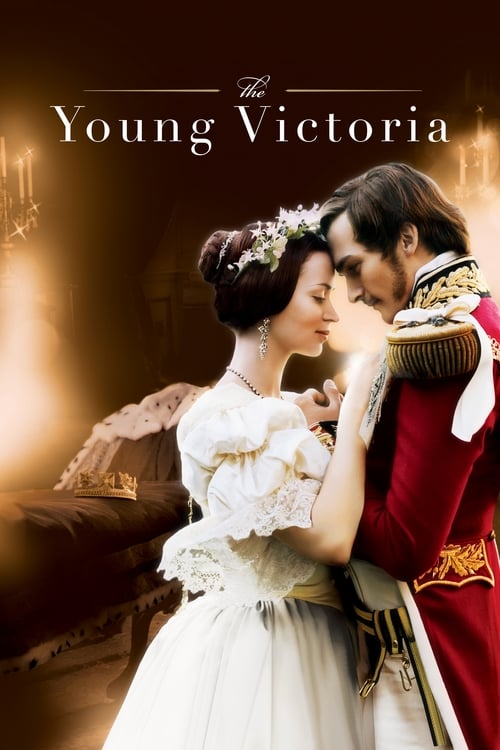
The Young Victoria (2009)
Directed by Jean-Marc Vallée
No — The Young Victoria is not woke, scoring 19 out of 100 on our wokeness meter.
The Young Victoria arrives dressed in its finest corsetry, a Julian Fellowes script guided by Jean-Marc Vallée, who was hired to drag the period drama away from the BBC and toward something with a pulse.
Consciousness Markers
Queen Victoria is portrayed as a fiercely independent and powerful figure who actively fights against patriarchal constraints and political machinations to assert her own agency.
While based on history, the film employs dramatic embellishments (such as the assassination attempt) rather than offering a radical reinterpretation of established historical facts.
The film features a strong, capable British lead actress in the central role, though it does not push modern boundaries of diverse representation.
The political conflicts revolve around aristocratic power and royal influence, not modern economic exploitation or class warfare.
The film is a character-driven historical drama and romance, lacking the didactic, lecture-style social commentary often associated with high lecture energy.
There are no discernible LGBTQ+ themes or representation within the narrative or character dynamics.
The film is set in 19th-century European royalty and contains no commentary or representation regarding race.
Environmental issues or climate change are entirely absent from the plot and setting.
The film does not address body image, health, or body positivity in any meaningful way.
There is no evidence of neurodivergent themes or character traits being explored.
Why it received this score
The Young Victoria arrives dressed in its finest corsetry, a Julian Fellowes script guided by Jean-Marc Vallée, who was hired to drag the period drama away from the BBC and toward something with a pulse. Emily Blunt plays the teenage monarch as a creature of appetite and nerve, a girl who inherits an empire and immediately begins shoving the furniture around. The film's central preoccupation is her refusal to be managed. Her mother and the loathsome Sir John Conroy would have her sign away her authority. Her uncle Leopold would have her marry on his schedule. She does neither, or at least not on their terms.
Here the picture's progressive instincts are genuine and narrowly focused. Victoria's fight is against the men who treat her as an instrument, and the screenplay takes visible pleasure in her small rebellions: banishing Conroy, choosing her own household, proposing marriage herself when protocol forbids Albert from doing it. It is a portrait of female self-determination rendered in velvet and candlelight, and it lands with conviction. The camera does not need to announce its politics. The throne room does the talking.
Beyond that, the film keeps its cultural ambitions modest. Race, sexuality, class economics, the environment: none of these enter the drawing room. The one real liberty taken is dramatic, not ideological. Albert takes a bullet that history never gave him, a fabrication Fellowes defended as a means of showing devotion, and the resulting moment plays as pure cinema instead of argument. What remains is a handsome, well-mannered romance that flatters its heroine and its audience in equal measure, content to let a queen be difficult without ever asking why difficulty was necessary. It is pleasant company. It is not a manifesto.
Analysis generated by our Consciousness Algorithm


Synopsis
As the only legitimate heir of England's King William, teenage Victoria gets caught up in the political machinations of her own family. Victoria's mother wants her to sign a regency order, while her Belgian uncle schemes to arrange a marriage between the future monarch and Prince Albert, the man who will become the love of her life.
Questions about The Young Victoria
Is The Young Victoria woke?
No — The Young Victoria is not woke, scoring 19 out of 100 on our wokeness meter. That earns it a verdict of Ultra Based.
Does The Young Victoria have any woke elements?
1 of the 10 markers register at 30 or above, led by Feminist Agenda (65). On Feminist Agenda: Queen Victoria is portrayed as a fiercely independent and powerful figure who actively fights against patriarchal constraints and political machinations to assert her own agency.
How does The Young Victoria compare to other 2009 movies?
It ranks #53 of the 230 films from 2009 we've scored; their average is 14. The wokest is Home (79).
How is the Woke Score calculated?
An AI-assisted process researches the film and its reception, scores it 0–100 on ten markers, then combines those into one 0–100 Woke Score. It measures a specific set of 2020s cultural themes, not film quality.