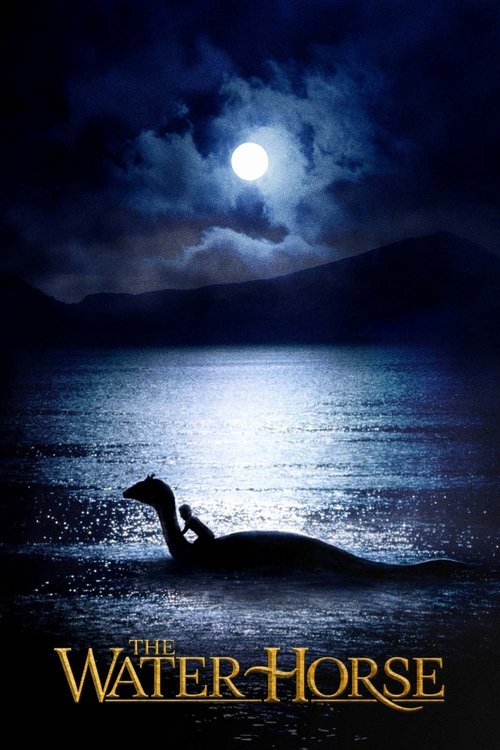
The Water Horse (2007)
Directed by Jay Russell
No — The Water Horse is not woke, scoring 0 out of 100 on our wokeness meter.
The Water Horse arrives from 2007, a Christmas release from Walden Media, and concerns a lonely boy on Loch Ness who finds an egg and raises the creature inside it.
Consciousness Markers
The cast is predominantly white and reflects the film's 1940s Scottish setting; there is no evident modern inclusive casting agenda.
No LGBTQ+ characters, relationships, or themes appear in the film.
Female characters are present but the film does not advance a feminist agenda or critique patriarchy.
The film does not engage with racial identity, systemic racism, or racial justice themes.
Although set around Loch Ness, the film contains no climate-change advocacy or environmental crusade.
There is no critique of capitalism, wealth inequality, or corporate power.
The film does not address body image, size acceptance, or related themes.
Angus's grief and fear are not framed as neurodivergence or a neurodiversity narrative.
The WWII setting and Loch Ness legend are used for fantasy drama, not ideological historical revisionism.
The film tells a family adventure story without overt preachy or lecture-like messaging.
Why it received this score
The Water Horse arrives from 2007, a Christmas release from Walden Media, and concerns a lonely boy on Loch Ness who finds an egg and raises the creature inside it. There is a war on, a father missing at sea, a manor house requisitioned by the Royal Artillery, and a plesiosaur that grows from a bathtub to a battleship. It is a family picture, and it knows it. The film asks nothing of its audience beyond a willingness to believe that a boy and a sea monster might love each other.
The cast is white and Scottish by setting, and no effort is made to correct this. No character announces a pronoun, interrogates a power structure, or reads a pamphlet. The soldiers are soldiers. The mother is a mother. The creature is, per the script, genderless, a fact the film treats as zoology instead of theology. There is no lecture here, no sermon, no moment where the story stops to instruct the viewer on how to live. The grief of a child is allowed to remain grief.
The Loch Ness legend might invite some grander statement, but none comes. The film earns its tears honestly, through a boy accepting his father's death and a monster swimming out to sea. No agenda intrudes. No lesson is appended. It is a rare artifact: a piece of entertainment that trusts its audience to feel something without being told what to feel. The score, as such, is a flat zero, and the film is better for it.
Analysis generated by our Consciousness Algorithm


Synopsis
A lonely boy discovers a mysterious egg that hatches a sea creature of Scottish legend.
Questions about The Water Horse
Is The Water Horse woke?
No — The Water Horse is not woke, scoring 0 out of 100 on our wokeness meter. That earns it a verdict of Ultra Based.
Does The Water Horse have any woke elements?
No. All 10 markers score zero.
How does The Water Horse compare to other 2007 movies?
It ranks #174 of the 201 films from 2007 we've scored; their average is 12. The wokest is Like Stars on Earth (92).
How is the Woke Score calculated?
An AI-assisted process researches the film and its reception, scores it 0–100 on ten markers, then combines those into one 0–100 Woke Score. It measures a specific set of 2020s cultural themes, not film quality.