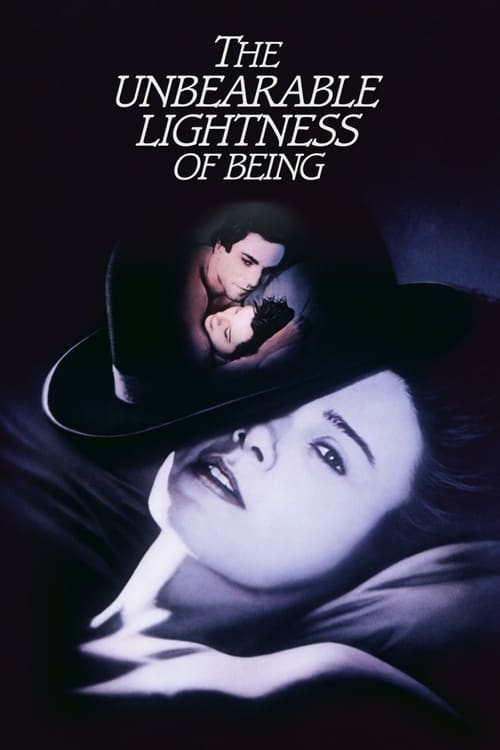
The Unbearable Lightness of Being (1988)
Directed by Philip Kaufman
No — The Unbearable Lightness of Being is not woke, scoring 7 out of 100 on our wokeness meter.
The Unbearable Lightness of Being arrives from 1988, an American production of Milan Kundera's novel, directed by Philip Kaufman and set amid the Prague Spring and the Soviet invasion that followed.
Consciousness Markers
Tereza and Sabina are given substantial interior lives and independent arcs, but the film is a study of sexual mores and jealousy rather than a feminist polemic.
Political repression forms the backdrop, but the film remains a character-driven romance rather than a preachy sermon.
The cast is almost entirely European, which is natural to the Czechoslovak setting rather than a deliberate diversity initiative. No conscious representation casting is evident.
No LGBTQ+ characters or themes appear; the film's eroticism is strictly heterosexual.
Race is entirely absent as a theme; the film concerns Czech and Swiss characters in a European political context.
No environmental or climate themes whatsoever.
The film critiques Soviet totalitarianism and the police state, not capitalism or wealth; there is no eat-the-rich sentiment.
Nudity and free love are depicted, but as erotic and political subject matter, not as a body-positivity message.
No neurodivergent characters or themes are present.
The film dramatizes the Prague Spring and 1968 Soviet invasion faithfully to its source novel; it is not a revisionist reframing of history.
Why it received this score
The Unbearable Lightness of Being arrives from 1988, an American production of Milan Kundera's novel, directed by Philip Kaufman and set amid the Prague Spring and the Soviet invasion that followed. The cast is European because the characters are Czechoslovak and Swiss, not because a diversity office demanded it. That detail matters to the ledger. The film's politics are anti-totalitarian, aimed at the police state and the Warsaw Pact, not at capitalism or wealth. There is no eat-the-rich current here. The Soviet tanks are the villains, and the characters mostly want to be left alone to conduct their complicated love lives.
Tereza and Sabina are granted real interior lives. Tereza moves from waitress to photographer, and Sabina drifts through affairs with a bohemian independence that the camera respects. This gives the film a modest feminist pulse. It is not a polemic. The movie is a study of sexual mores, jealousy, and freedom under repression. Its eroticism is strictly heterosexual. No LGBTQ current runs through it. Nudity appears, but as desire and political vulnerability, not as a body-positivity sermon. The body here is a site of pleasure and betrayal, not a platform.
Other modern markers simply do not appear. Race is absent as a theme. The environment is absent. Neurodivergence is absent. The historical events are dramatized in keeping with the source, so no revisionist reframing occurs. The film can be heavy with ideas, yet it rarely lectures. Its heaviness comes from Kundera's paradoxes, not from a screenwriter wagging a finger. The result is a serious, sensual, and somewhat sad film that predates the contemporary vocabulary it now must be judged by. It scores low on the current index. It remains, by most measures, a good film.
---
{"thematic_tags":["book_adaptation"]}
Analysis generated by our Consciousness Algorithm


Synopsis
Successful surgeon Tomas leaves Prague for an operation, meets a young photographer named Tereza, and brings her back with him. Tereza is surprised to learn that Tomas is already having an affair with the bohemian Sabina, but when the Soviet invasion occurs, all three flee to Switzerland. Sabina begins an affair, Tom continues womanizing, and Tereza, disgusted, returns to Czechoslovakia. Realizing his mistake, Tomas decides to chase after her.
Questions about The Unbearable Lightness of Being
Is The Unbearable Lightness of Being woke?
No — The Unbearable Lightness of Being is not woke, scoring 7 out of 100 on our wokeness meter. That earns it a verdict of Ultra Based.
Does The Unbearable Lightness of Being have any woke elements?
Very few. None of the 10 markers reaches 30, the level where a marker counts as present; the highest is Feminist Agenda at 15.
How does The Unbearable Lightness of Being compare to other 1988 movies?
It ranks #35 of the 73 films from 1988 we've scored; their average is 10. The wokest is Stand and Deliver (58).
How is the Woke Score calculated?
An AI-assisted process researches the film and its reception, scores it 0–100 on ten markers, then combines those into one 0–100 Woke Score. It measures a specific set of 2020s cultural themes, not film quality.