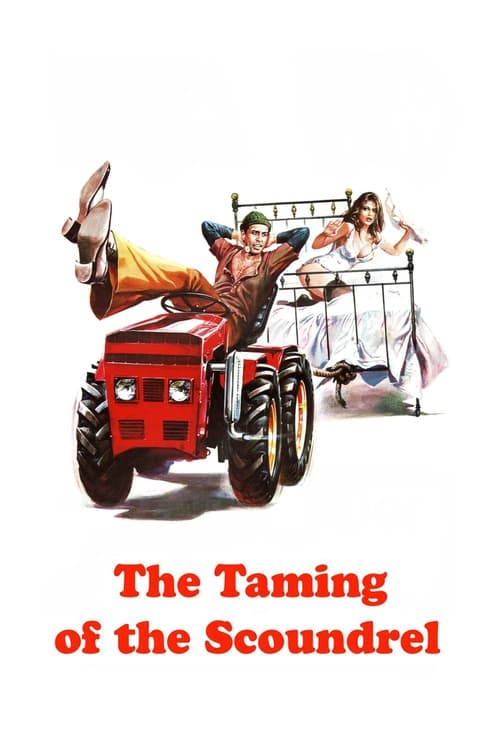
The Taming of the Scoundrel (1980)
Directed by Pipolo
No — The Taming of the Scoundrel is not woke, scoring 0 out of 100 on our wokeness meter.
Italian cinema of 1980 had a reliable formula, and The Taming of the Scoundrel follows it with the diligence of a man stacking firewood.
Consciousness Markers
A wholly Italian cast of the era; no deliberate diversity casting or representation agenda. Casting is incidental and homogeneous.
No LGBTQ+ characters, subtext, or themes whatsoever. A heterosexual battle-of-the-sexes courtship comedy.
A 1980 Italian sex comedy in which a 'gorgeous girl' sets out to tame a cantankerous misogynist. The female initiative is a romantic plot device, not a feminist agenda in the modern sense.
No engagement with race, racism, or racial identity. The film concerns a grumpy farmer and his would-be bride.
The vineyard and farm are set dressing for romance, not vehicles for environmental messaging. No climate themes present.
The protagonist's wealth is a character detail, not a target of critique. No class-warfare or eat-the-rich sentiment.
No body positivity themes; the comedic appeal rests on conventional beauty standards of its era.
The lead's grumpiness and misanthropy are comic personality traits, not framed as neurodivergence.
A loose comic riff on The Taming of the Shrew, but no revisionist historical narrative or reframing of past events.
A light screwball comedy with no didactic or preachy messaging. It aims to amuse, not instruct.
Why it received this score
Italian cinema of 1980 had a reliable formula, and The Taming of the Scoundrel follows it with the diligence of a man stacking firewood. Adriano Celentano plays Elia, a wealthy farmer whose misanthropy is presented as a lifestyle rather than a condition. He resists his housekeeper's matrimonial scheming. He splits logs to manage feelings he cannot name. Ornella Muti arrives with a broken-down car and a fiancé waiting elsewhere, and the machinery of courtship begins its slow, creaking turn. The film is loosely indebted to Shakespeare, though the debt is paid in comic incident instead of verse.
Assessing this for contemporary social content is a brief exercise. The cast is entirely Italian, the romance entirely heterosexual, and the politics entirely absent. Elia's wealth is a prop, not a target. The vineyard exists to be looked at. When Lisa invents reasons to extend her stay, she is performing the work of a romantic plot device, not of an ideological program. The comedy of the final act involves a basketball match, a public address system, and a marriage proposal delivered at volume. Nothing is being argued. Everything is being enjoyed.
The film was the highest grossing picture on the Italian market for the 1980/81 season and moved fifty-six million tickets in the Soviet Union, which tells us more about appetites than about agendas. It is a screwball courtship comedy with a grumpy man, a determined woman, and a house that shakes at the end. There is no sermon here, no lesson, no accounting of historical wrongs. Just Celentano glowering, Muti persisting, and a closing song that charted for sixteen weeks. We classify it accordingly, and we move on.
Analysis generated by our Consciousness Algorithm

Synopsis
A rich farmer is well known for being very unkind. He's misanthropic, misogynous and cantankerous. Until he meets by chance a gorgeous girl...
Questions about The Taming of the Scoundrel
Is The Taming of the Scoundrel woke?
No — The Taming of the Scoundrel is not woke, scoring 0 out of 100 on our wokeness meter. That earns it a verdict of Ultra Based.
Does The Taming of the Scoundrel have any woke elements?
No. All 10 markers score zero.
How does The Taming of the Scoundrel compare to other 1980 movies?
It ranks #32 of the 37 films from 1980 we've scored; their average is 10. The wokest is Nine to Five (42).
How is the Woke Score calculated?
An AI-assisted process researches the film and its reception, scores it 0–100 on ten markers, then combines those into one 0–100 Woke Score. It measures a specific set of 2020s cultural themes, not film quality.