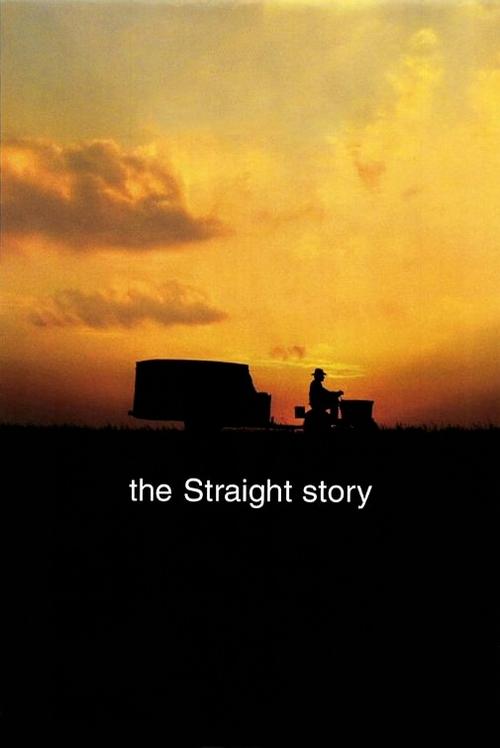
The Straight Story (1999)
Directed by David Lynch
No — The Straight Story is not woke, scoring 0 out of 100 on our wokeness meter.
Some vintages resist the usual instruments.
Consciousness Markers
The cast is almost entirely white rural Midwesterners, cast for authenticity to the real people and region rather than for any representational agenda. No diverse casting intent is present.
There are no LGBTQ+ characters, themes, or subtext anywhere in the film.
Sissy Spacek's Rose is a sympathetic figure with an unspecified disability, but the film treats her with quiet dignity rather than advancing any feminist thesis. No feminist agenda is articulated.
Race is entirely absent as a subject; the film concerns white rural America and makes no commentary on racial dynamics.
No environmental or climate themes appear; the lawnmower journey is about personal reconciliation, not ecological messaging.
A brief scene has two mechanics overcharge Alvin before he bargains them down, but this is a folksy character beat, not an anti-capitalist critique.
Body image and body positivity are not themes of the film.
Rose's disability is present but never framed through a neurodivergence-advocacy lens; it functions as a quiet character detail.
The film faithfully adapts the true 1994 story of Alvin Straight without reinterpreting or revising historical events for ideological purposes.
The film is deliberately understated and non-preachy, letting its themes of family and forgiveness emerge through silence and observation rather than lecture.
Why it received this score
Some vintages resist the usual instruments. The Straight Story arrives in a bottle labeled David Lynch and turns out to be a G-rated Disney release about a seventy-three-year-old man crossing two states on a riding mower at five miles per hour. The premise sounds like a prank. The execution is so patient and so plain that the prank dissolves in the first ten minutes, leaving only Richard Farnsworth's face and the sound of a small engine.
The film's encounters are its method. A pregnant runaway, a woman who keeps hitting deer, a fellow veteran with a bottle, two mechanics who try to inflate a bill. Each of these people gets a scene and none of them gets a lesson attached. Alvin listens, offers what he has, and moves on. Sissy Spacek's Rose is treated with the same plainness: her disability is a fact of the household, not a platform. The film has no interest in converting anyone's suffering into curriculum. It wants to show a stubborn old man making peace with his brother before the clock runs out, and it does that with a bundle of sticks and a long silence on a porch.
For the cultural ledger, this is a dry well. There is no representational arithmetic in the casting, no thesis in the dialogue, no sermon in the final shot of two old men looking at stars. The film was shot along the actual route, in the actual house, with the actual neighbors, which is a form of authenticity that predates any contemporary accounting. It is a beautiful object and a useless one for our purposes. We score it accordingly and return to the shelf.
Analysis generated by our Consciousness Algorithm


Synopsis
Retired farmer and widower Alvin Straight learns one day that his estranged brother Lyle has suffered a severe stroke. Alvin is determined to make things right with Lyle while he still can, but his brother lives in Wisconsin, while Alvin is stuck in Iowa with no car and no driver's license. He then has the idea of making the trip on his old lawnmower, thus beginning a picturesque and at times deeply spiritual odyssey.
Questions about The Straight Story
Is The Straight Story woke?
No — The Straight Story is not woke, scoring 0 out of 100 on our wokeness meter. That earns it a verdict of Ultra Based.
Does The Straight Story have any woke elements?
No. All 10 markers score zero.
How does The Straight Story compare to other 1999 movies?
It ranks #94 of the 103 films from 1999 we've scored; their average is 14. The wokest is Boys Don't Cry (60).
How is the Woke Score calculated?
An AI-assisted process researches the film and its reception, scores it 0–100 on ten markers, then combines those into one 0–100 Woke Score. It measures a specific set of 2020s cultural themes, not film quality.