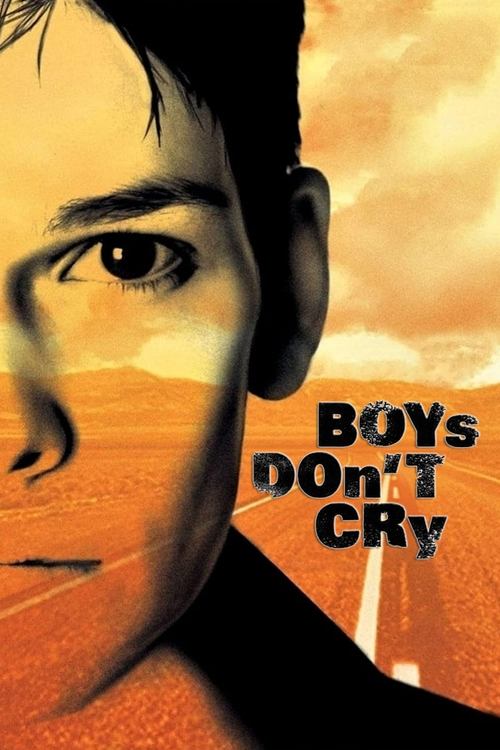
Boys Don't Cry (1999)
Directed by Kimberly Peirce
Yes — Boys Don't Cry is woke, scoring 60 out of 100 on our wokeness meter.
Kimberly Peirce's 1999 dramatization of the Brandon Teena case arrives with the grim authority of a story that refuses to be tidy.
Consciousness Markers
The entire film revolves around a trans man's identity, his relationship with Lana, and the transphobic violence that kills him; this is about as LGBTQ-central as a 1999 studio release gets.
A woman director frames gender performance, toxic masculinity, and violence against a trans man through a critical lens, though it is not primarily a feminist manifesto.
It is a serious issue drama with a clear moral indictment of transphobia and hate-crime violence, though it mostly persuades through tragedy rather than direct sermonizing.
Centers a transgender protagonist and a queer romance, but the lead is played by cisgender actress Hilary Swank—a landmark for 1999, yet not the authentic casting modern wokeness demands.
The film takes liberties with real events and composites characters, drawing criticism from people involved; the revisionism is biopic-standard rather than a modern ideological rewrite.
The rural Nebraska setting and cast are overwhelmingly white; race is not a concrete narrative concern.
No environmental or climate themes appear.
Class marginality is background texture, not a sustained anti-capitalist argument.
The film deals with bodily autonomy and dysphoria in traumatic terms, not with body-positive celebration or fat-acceptance politics.
No neurodivergent characters or themes are developed.
Why it received this score
Kimberly Peirce's 1999 dramatization of the Brandon Teena case arrives with the grim authority of a story that refuses to be tidy. Hilary Swank, twenty-two years old and earning seventy-five dollars a day, disappears into the role of a young trans man navigating rural Nebraska, and the film follows his courtship of Lana Tisdel with a tenderness that makes the eventual violence almost unbearable. This is a love story that happens to end in a double homicide, and Peirce never lets us forget which of those facts the surrounding culture preferred to discuss.
On the question of representation, the film is unmistakably a product of its moment. The lead performance is extraordinary, but it is a cisgender woman carrying the weight of a trans man's interior life, the sort of casting decision that would generate several thousand words of commentary today. Peirce directs with a critical eye on masculine performance and the small-town codes that police it, though her interests remain narrative and moral, not programmatic. Race does not enter the frame. Neither does the environment, the economy as a sustained argument, body acceptance, or neurodivergence. The screenplay composites characters and rearranges events, drawing complaints from people who had been there, though such liberties are the ordinary trade of the biographical drama.
The film's moral urgency is unmistakable. It indicts transphobia and the indifference of institutions, and it does so through tragedy instead of sermon. Peirce earns her outrage. The result remains a landmark of queer cinema and a sobering document of what a small town does when it decides someone has lied about who they are. We are left, as ever, holding the receipt.
Analysis generated by our Consciousness Algorithm
Part of


Synopsis
A young transgender man explores his gender identity and searches for love in rural Nebraska.
Questions about Boys Don't Cry
Is Boys Don't Cry woke?
Yes — Boys Don't Cry is woke, scoring 60 out of 100 on our wokeness meter. That earns it a verdict of Woke.
What makes Boys Don't Cry woke?
4 of the 10 markers register at 30 or above, led by LGBTQ+ Themes (95), Feminist Agenda (55) and Lecture Energy (55). On LGBTQ+ Themes: The entire film revolves around a trans man's identity, his relationship with Lana, and the transphobic violence that kills him; this is about as LGBTQ-central as a 1999 studio release gets.
How does Boys Don't Cry compare to other 1999 movies?
It is the wokest of the 103 films from 1999 we've scored; their average is 14.
How is the Woke Score calculated?
An AI-assisted process researches the film and its reception, scores it 0–100 on ten markers, then combines those into one 0–100 Woke Score. It measures a specific set of 2020s cultural themes, not film quality.