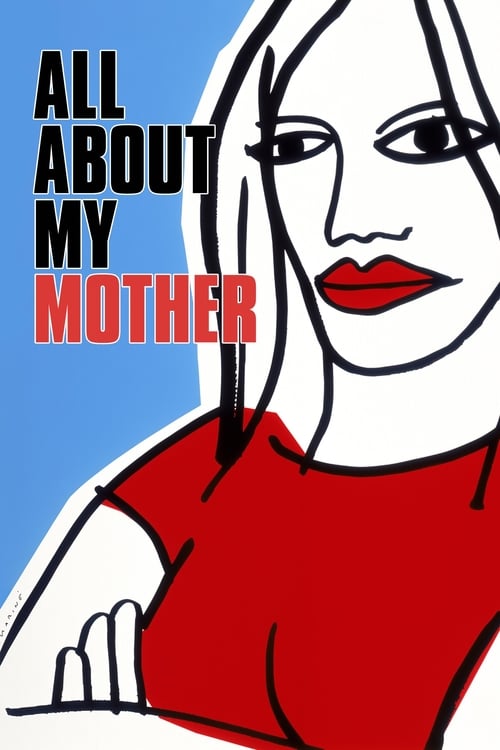
All About My Mother (1999)
Directed by Pedro Almodóvar
Yes — All About My Mother is woke, scoring 60 out of 100 on our wokeness meter.
Pedro Almodóvar's All About My Mother arrives from 1999, a year when the cultural machinery had not yet learned to grade its own homework.
Consciousness Markers
The plot centrally involves transgender identity, homosexuality, AIDS, and drag/sex work, with LGBTQ+ characters driving the melodrama.
Features a trans actress (Antonia San Juan) as a trans character and a prominent ensemble of LGBTQ+ and female roles, though the cast is a natural Spanish-language ensemble rather than a modern diversity checklist.
Centers on women, motherhood, female friendship, and a tribute to actresses and women, though its feminism is humanist and melodramatic rather than explicitly ideological.
No engagement with racial identity or racial justice themes.
No environmental or climate themes.
No critique of capitalism or wealth inequality.
No body-positivity themes or messaging.
No neurodivergence themes; Alzheimer's appears briefly but not as neurodivergence advocacy.
No historical revisionism.
The film is an empathetic melodrama rather than a preachy lecture.
Why it received this score
Pedro Almodóvar's All About My Mother arrives from 1999, a year when the cultural machinery had not yet learned to grade its own homework. The film concerns Manuela, a Madrid nurse who loses her teenage son on his seventeenth birthday and then travels to Barcelona to find the boy's other parent, a transgender woman named Lola. Along the way she collects a transgender sex worker, a heroin-addicted actress, and an HIV-positive nun. This is a melodrama of the old school, built on coincidence and grief, and it treats its characters with a sympathy that never once announces itself as a position statement.
The picture earns its progressive credentials honestly. Antonia San Juan plays Agrado, a trans woman, and the surrounding ensemble is overwhelmingly female and queer. Trans identity, homosexuality, AIDS, and sex work sit at the center of the story instead of the margins, and the film's emotional register is a tribute to women, mothers, and actresses. Dedications at the close confirm the intent. What the film does not do is lecture. There is no climate sermon, no indictment of capital, no racial reckoning, no body-positivity subplot. The nun's Alzheimer's-afflicted father appears for pathos, not advocacy.
This is the interesting case: a film saturated with identities that modern audiences would recognize, delivered without a single moment of instruction. Almodóvar trusts the melodrama to carry the argument. The result is warm, funny, and quietly radical in a manner that predates the branding of such things. We are left with the rare artifact of a genuinely inclusive film that never pauses to congratulate itself. A sobering vintage for the sommelier of social consciousness.
Analysis generated by our Consciousness Algorithm


Synopsis
Following the tragic death of her teenage son, Manuela travels from Madrid to Barcelona in an attempt to contact the long-estranged father the boy never knew. She reunites with an old friend, an outspoken transgender sex worker, and befriends a troubled actress and a pregnant, HIV-positive nun.
Questions about All About My Mother
Is All About My Mother woke?
Yes — All About My Mother is woke, scoring 60 out of 100 on our wokeness meter. That earns it a verdict of Woke.
What makes All About My Mother woke?
3 of the 10 markers register at 30 or above, led by LGBTQ+ Themes (90), Representation Casting (70) and Feminist Agenda (65). On LGBTQ+ Themes: The plot centrally involves transgender identity, homosexuality, AIDS, and drag/sex work, with LGBTQ+ characters driving the melodrama.
How does All About My Mother compare to other 1999 movies?
It is the wokest of the 103 films from 1999 we've scored; their average is 14.
How is the Woke Score calculated?
An AI-assisted process researches the film and its reception, scores it 0–100 on ten markers, then combines those into one 0–100 Woke Score. It measures a specific set of 2020s cultural themes, not film quality.