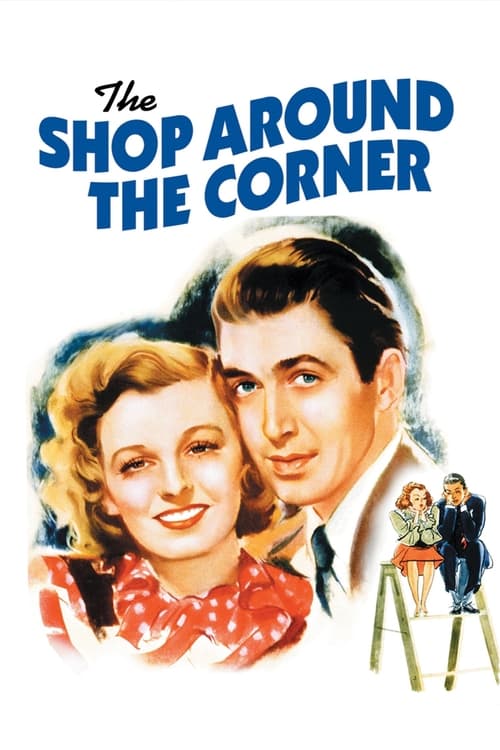
The Shop Around the Corner (1940)
Directed by Ernst Lubitsch
No — The Shop Around the Corner is not woke, scoring 3 out of 100 on our wokeness meter.
Ernst Lubitsch's The Shop Around the Corner arrives from 1940 with the polished manners of a vanished studio system and the quiet confidence of a film that has nothing to prove to a modern audience.
Consciousness Markers
Klara Novak is a working saleswoman with wit and agency, but the film treats her role as romantic-comedy convention rather than any feminist statement.
The cast is uniformly white European, reflecting the 1940 MGM studio system and the Budapest setting; no conscious inclusive casting effort is present.
There are no LGBTQ+ characters or themes; the romance is entirely heterosexual and conventional for its era.
Race is entirely absent as a subject; the film concerns middle-class Hungarian shop workers with no engagement with racial themes.
No environmental or climate content whatsoever.
The film is a warm portrait of a small business and its employees; commerce and the shop owner are treated sympathetically, not as targets of critique.
No body-positivity themes; physical appearance is not a subject of the narrative.
No neurodivergence is depicted or referenced.
The film is a straightforward period romance set in pre-war Budapest, with no historical revisionism.
The film is a light romantic comedy of manners that never lectures its audience on social or political matters.
Why it received this score
Ernst Lubitsch's The Shop Around the Corner arrives from 1940 with the polished manners of a vanished studio system and the quiet confidence of a film that has nothing to prove to a modern audience. James Stewart and Margaret Sullavan bicker in a Budapest leather goods shop, exchange anonymous letters, and discover that contempt and affection can share the same postal address. The setting is specific, the emotions are universal, and the film's cultural awareness is entirely of its moment. The cast is uniformly white European, a fact of MGM casting and the Hungarian milieu, not a statement. The romance is heterosexual and conventional. There is no engagement with race, climate, body image, or neurological difference. The shop is a small business, and the film views it with affection. Commerce is not a villain here. It is a livelihood.
Klara Novak, played by Sullavan, works behind the counter and gives as good as she gets. She has wit, a job, and the nerve to call her rival a little insignificant clerk. That is a measure of agency, though the film frames it as romantic comedy convention. Her independence exists to be softened by the final embrace, not to advance a feminist argument. The screenplay by Samson Raphaelson, adapted from Miklos Laszlo's play Parfumerie, keeps its attention on middle-class lives: friendship, work, loneliness, and the small dignities of a Christmas Eve sale. Mr. Matuschek's marital despair is treated with genuine sadness, but the film never turns that sadness into a sermon about patriarchy, capital, or history.
The result is a warm, humane, and beautifully crafted entertainment. It was preserved by the National Film Registry for being culturally, historically, or aesthetically significant. It simply does not traffic in the progressive signifiers that a contemporary awards campaign might demand. There is no lecture, no revisionist history, no ideological instruction. Lubitsch trusts the audience to feel the ache of missed connection and the relief of recognition. The film's only social project is to observe ordinary people with tenderness. For a modern classifier, that makes it a low-yield specimen, but a lovely one.
Analysis generated by our Consciousness Algorithm


Synopsis
Two employees at a gift shop can barely stand one another, without realising that they are falling in love through the post as each other's anonymous pen pal.
Questions about The Shop Around the Corner
Is The Shop Around the Corner woke?
No — The Shop Around the Corner is not woke, scoring 3 out of 100 on our wokeness meter. That earns it a verdict of Ultra Based.
Does The Shop Around the Corner have any woke elements?
Very few. None of the 10 markers reaches 30, the level where a marker counts as present; the highest is Feminist Agenda at 5.
How does The Shop Around the Corner compare to other 1940 movies?
It ranks #7 of the 8 films from 1940 we've scored; their average is 8. The wokest is The Grapes of Wrath (28).
How is the Woke Score calculated?
An AI-assisted process researches the film and its reception, scores it 0–100 on ten markers, then combines those into one 0–100 Woke Score. It measures a specific set of 2020s cultural themes, not film quality.