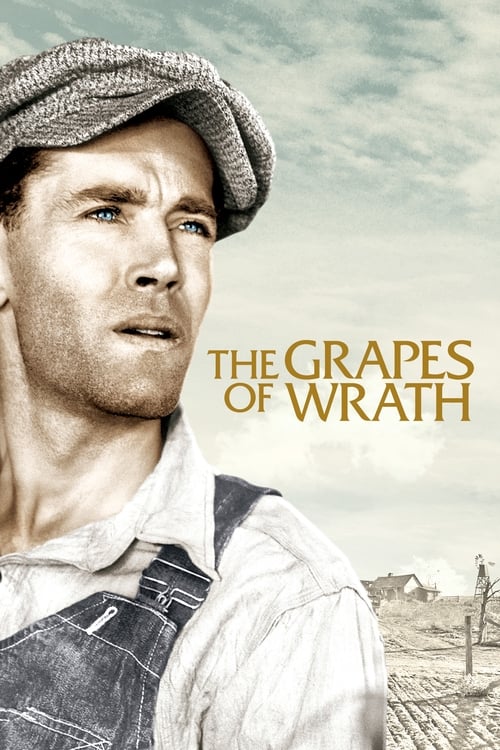
The Grapes of Wrath (1940)
Directed by John Ford
No · Based
How we score movies →Consciousness Markers
The film explicitly critiques corporate agriculture and banking systems that exploit migrant labor. The Hooverville sequences and Tom's final monologue articulate a clear anti-capitalist perspective, though it remains rooted in 1940s labor movement rhetoric rather than modern progressive analysis.
Tom Joad's final monologue contains explicit philosophical messaging about collective action. The film occasionally prioritizes message delivery over naturalistic dialogue, though Ford generally maintains dramatic restraint.
Rose of Sharon's narrative arc concludes with her nursing a starving man, a gesture of maternal sacrifice. Her agency is limited to supporting family survival. No feminist critique of patriarchal structures within the family or labor contexts.
The cast reflects the era's Hollywood demographics. No meaningful diversity in casting. The film depicts migrant communities but casts them with Depression-era studio conventions.
The film presents a sympathetic but simplified version of Depression-era labor struggle. It omits significant historical actors and complications, though this reflects adaptation choices rather than conscious revisionism.
No LGBTQ+ themes, representation, or subtext. The film is entirely heteronormative in its domestic arrangements and family structures.
The film entirely erases race. Migrant farmworker communities were substantially composed of Mexican, Filipino, and Black workers, none of whom appear. This is a profound absence.
No engagement with environmental themes or climate consciousness. The Dust Bowl is treated as a backdrop rather than an ecological or systemic problem.
No body positivity messaging. The film depicts hunger and physical degradation as tragic consequences of economic systems, not as subjects for affirmation or reframing.
No representation of neurodivergent characters or acknowledgment of neurodiversity. Characters with disabilities or differences are depicted through a purely pathological lens.


Synopsis
Tom Joad returns to his home after a jail sentence to find his family kicked out of their farm due to foreclosure. He catches up with them on his Uncle's farm, and joins them the next day as they head for California and a new life... Hopefully.
Why it received this score
John Ford's adaptation of Steinbeck's Depression-era masterwork stands as a work of genuine social consciousness, though we must be careful not to conflate pre-2015 progressivism with the specific cultural markers that define contemporary progressive sensibilities. The film depicts economic exploitation, land theft, and the systematic dehumanization of migrant laborers with unflinching clarity. Tom Joad's final monologue about collective action and solidarity reads like genuine labor advocacy. Yet the film remains a product of 1940s Hollywood aesthetics and assumptions, operating within the constraints of the era.
The representation of women, particularly through Rose of Sharon's arc, operates according to Depression-era logic. The film's treatment of race is entirely absent, which is to say it erases the actual racial composition of migrant farmworker communities. There are no LGBTQ+ themes, no body positivity messaging, no neurodivergent representation. What we have instead is a humanist work about class struggle and economic justice. These are serious matters, but they do not constitute the specific markers we are evaluating.
The film's score reflects its genuine engagement with anti-capitalist themes, specifically the predatory behavior of agricultural corporations and banking systems. This alone prevents it from scoring lower. However, it lacks nearly every other marker of contemporary progressive cultural consciousness. We are scoring the film not as a bad work, but as a work operating according to a different vocabulary entirely. Ford was angry about injustice, but he was not expressing that anger through the specific language of identity-based cultural analysis that emerged decades later.
Analysis generated by our Consciousness Algorithm
Critic Reviews
“The message is boldly displayed, but told with characters of such sympathy and images of such beauty that audiences leave the theater feeling more pity than anger or resolve. It's a message movie, but not a recruiting poster.”
“Gregg Toland captures the open spaces and big skies of rural America, while the normally conservative Ford puts forward a sympathetic but radical plea for workers' rights and freedom for the people.”
“Too many films these days trivialize poverty as an ironically, tastelessly over-produced pageant to earn kudos. The Grapes of Wrath is flawed, but it captures that shiver of panic that grips anyone for whom the money for the next meal is unknown. The film remains a vital document of the perversion and torment of the fantasy most commonly known as the American Dream.”
“This famous film, high on most lists of the greatest films of all time, seems all wrong - phony when it should ring true. Yet, because of the material, it is often moving in spite of the acting, the directing, and the pseudo-Biblical pore-people talk.”