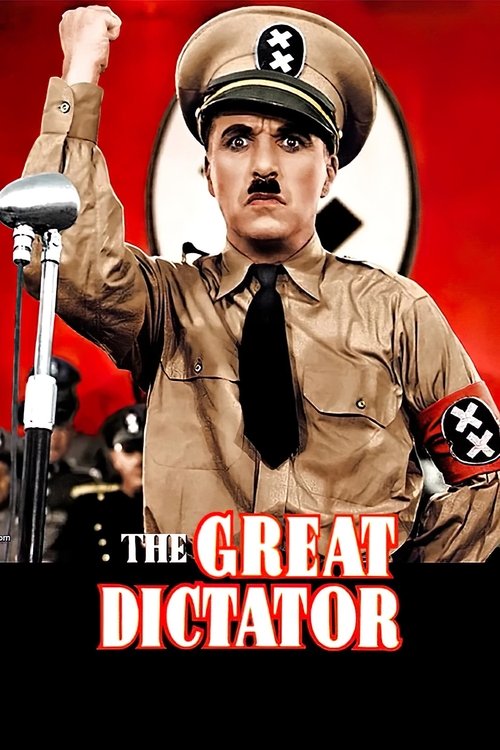
The Great Dictator (1940)
Directed by Charlie Chaplin
No · Ultra Based
How we score movies →Consciousness Markers
The final monologue is preachy and appeals for peace and humanity, but it reads as passionate rhetoric rather than progressive instruction or moral lecturing.
Paulette Goddard is present in a supporting role, but her character lacks agency and development. No meaningful representation by modern standards.
The female lead exists primarily as a romantic interest and source of inspiration for the male protagonist. She is not developed as an autonomous character.
The film addresses antisemitism and persecution, but not through a modern framework of racial justice or identity politics. It treats these as aspects of fascist evil rather than systemic oppression.
The critique is directed at fascism and dictatorship, not at capitalist systems or economic inequality.
No LGBTQ+ themes or characters present in the film.
Climate change and environmental concerns are entirely absent from the film's themes.
Body positivity as a modern social movement does not appear in this 1940 film.
Neurodivergence and disability representation are not addressed in the film.
The film is contemporary political commentary on ongoing events, not a reinterpretation of history.


Synopsis
Dictator Adenoid Hynkel tries to expand his empire while a poor Jewish barber tries to avoid persecution from Hynkel's regime.
Why it received this score
The Great Dictator stands as a monument to political cinema, though not in the manner of contemporary progressive sensibilities. Chaplin's 1940 satire emerged as an urgent response to fascism and antisemitic persecution, making it a work of moral courage rather than cultural progressivism. The film's famous final monologue, delivered with characteristic pathos, appeals to universal human dignity and peace, but these sentiments belong to the lineage of classical humanism rather than modern identity-conscious activism.
The construction of the film reveals the distance between 1940 and the present moment. Paulette Goddard serves primarily as a romantic interest, her agency circumscribed by the narrative conventions of the era. The Jewish barber character, played by Chaplin himself, is sympathetic but not presented through a lens of cultural or ethnic consciousness. The film critiques dictatorship and fascism directly, not through the framework of systemic oppression or intersectional analysis that would later define progressive cultural discourse.
What endures is Chaplin's moral clarity about the stakes of totalitarianism and his refusal to remain silent in the face of horror. This represents something important in cinema history, but it operates in a different register from the cultural markers we use to assess contemporary progressive consciousness. The film is serious, urgent, and humanistic, but it is not what we would recognize as socially progressive in the 2020s sense.
Analysis generated by our Consciousness Algorithm
Critic Reviews
“Chaplin's iconic speech at the end of the film is only too relevant nowadays.”
“The first full-blown talkie from the biggest star of the silent era, complete with a message that Chaplin couldn't have sent more loudly or clearly.”
“Through no fault of Chaplin's, during the two years he was at work on the picture dictators became too sinister for comedy.”
“Film historian Richard Schickel wrote that The Great Dictator 'as a moral act is probably unsurpassed in American film history.'”