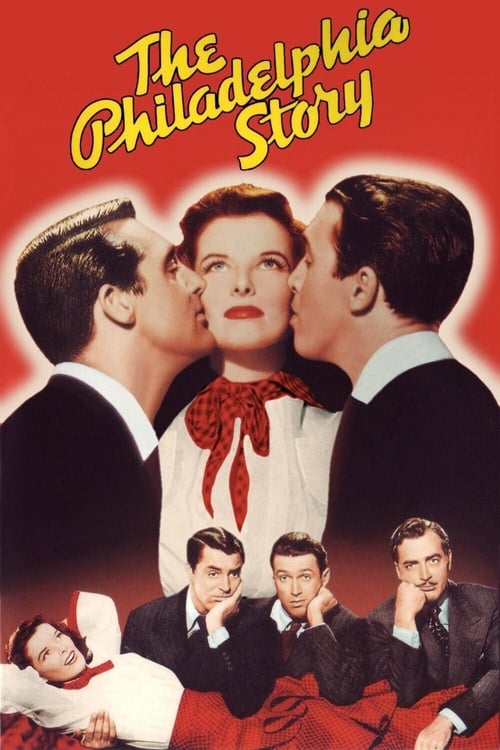
The Philadelphia Story (1940)
Directed by George Cukor
No · Ultra Based
How we score movies →Consciousness Markers
The protagonist exhibits autonomy and verbal dominance, yet the entire narrative arc culminates in matrimonial choice. Female empowerment exists within the framework of romantic resolution.
Katharine Hepburn is a strong female lead with agency and wit, but she remains the only woman of real consequence in the narrative. The supporting female character exists primarily as a cautionary figure.
The collision between working press and old money suggests some critique of class hierarchy, but the film ultimately affirms existing social order.
No LGBTQ+ themes or representation present in the film.
No racial representation or consciousness present. The film depicts an entirely white upper-class world without acknowledgment of this limitation.
Climate concerns are entirely absent from this romantic comedy set in the world of high society.
Body representation is confined to conventional Hollywood standards of the 1940s with no commentary on body diversity or acceptance.
No neurodivergent representation or themes present in the film.
The film does not engage with historical revision or reexamination of past events through a contemporary lens.
The film is a romantic comedy that avoids preachy messaging, maintaining entertainment as its primary function throughout.


Synopsis
When a rich woman's ex-husband and a tabloid-type reporter turn up just before her planned remarriage, she begins to learn the truth about herself.
Why it received this score
The Philadelphia Story represents a peculiar case study in temporal misalignment. Viewing it through the lens of contemporary cultural sensibilities requires a kind of archaeological patience. The film centers on a woman of substantial agency and wit, played by Katharine Hepburn with the kind of verbal dexterity that would make any modern screenwriter weep. Yet this agency exists entirely within the context of matrimony. She chooses, she speaks, she dominates the narrative, but all of it orbits the fundamental question of which man she will marry. Her empowerment is real but circumscribed, a contradiction the film never acknowledges as such.
The class dynamics present a more complex portrait. The collision between old money and working press was genuinely transgressive for 1940, suggesting that character and wit matter more than social station. This was not nothing. Yet the film ultimately affirms the existing order, with everyone returning to their proper stations by the final frame. The representation of women, while more nuanced than most contemporary comedies, still subordinates female autonomy to romantic resolution. The supporting female character exists primarily as a plot device and cautionary tale about ambition.
What the film demonstrates is the challenge of evaluating pre-war Hollywood through any lens except its own. It possesses more sophistication and female agency than its contemporaries, which counts for something. But it remains a product of 1940, and the limitations of that moment are written throughout every frame, no matter how clever the dialogue.
Analysis generated by our Consciousness Algorithm
Critic Reviews
“Add Hepburn’s persona, beautifully explored here in all its wonder, and Stewart’s likeability, and George Cukor’s sensible, subtle, and lovingly unrushed direction of a firecracker script…the result is a studio picture far deeper and richer than its whimsical surface style might lead you to believe.”
“Mercifully, The Philadelphia Story then transmogrifies into one of the smartest, sassiest - and sexiest - movies ever.”
“With such a stellar cast, a fine director working in the type of picture he did best, and some genuinely witty dialogue, this film has all the ingredients for a great comedy. And it is great, though there have been many funnier comedies. The film has an unfortunate tendency to take itself too seriously for long stretches.”