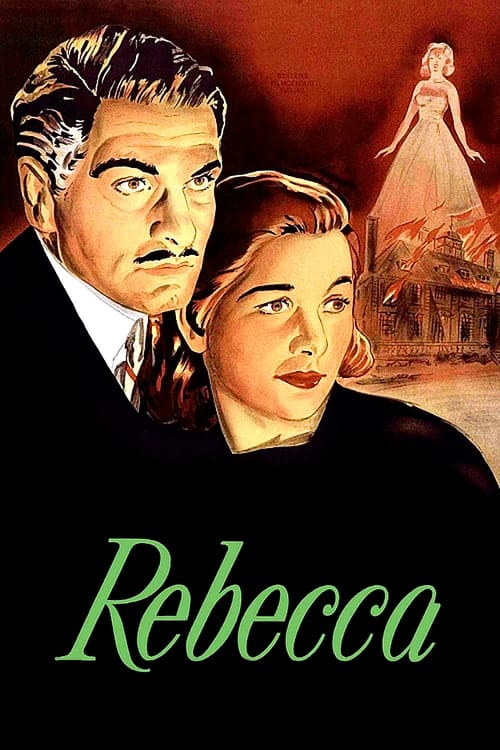
Rebecca (1940)
Directed by Alfred Hitchcock
No · Ultra Based
How we score movies →Consciousness Markers
The cast is entirely white and European. No racial or ethnic diversity present.
No explicit LGBTQ+ themes or representation, despite Mrs. Danvers' intensity.
The protagonist is passive and defined entirely by her husband and his former wife.
No racial themes or consciousness present in the film.
No environmental or climate-related themes.
The estate and class system are never questioned or critiqued.
No body positivity themes or representation.
No representation or discussion of neurodivergence.
No historical revisionism present.
The film tells a psychological thriller without social messaging or lectures.
Synopsis
Story of a young woman who marries a fascinating widower only to find out that she must live in the shadow of his former wife, Rebecca, who died mysteriously several years earlier. The young wife must come to grips with the terrible secret of her handsome, cold husband, Max De Winter. She must also deal with the jealous, obsessed Mrs. Danvers, the housekeeper, who will not accept her as the mistress of the house.
Why it received this score
Rebecca stands as a monument to mid-century Gothic cinema, a film so thoroughly committed to the anxieties of its era that it registers as a perfect zero on any contemporary scale of progressive sensibilities. Hitchcock constructs a world of pure psychological torment, where a nervous young bride navigates the oppressive grandeur of an English estate and the shadow of her predecessor. The film traffics in mood, suspense, and the delicious discomfort of marital power imbalance, but it never pauses to interrogate these dynamics through any lens beyond the personal. The cast is uniformly pale and British, the class structures go unquestioned, and the central female character exists primarily as a vessel for anxiety rather than agency. This is not a criticism of the film itself, which remains a technical masterpiece of visual storytelling and psychological manipulation. Rather, it is an observation that Rebecca belongs entirely to a different cultural moment, one before such frameworks for analysis existed. The film is what it is: a superbly crafted thriller that treats the audience to exquisite dread, nothing more and nothing less.
Analysis generated by our Consciousness Algorithm
Critic Reviews
“Rebecca has a couple of slow stretches, but James is always interesting and always sympathetic, if only because we see her struggling to do her best. After all, it’s much easier to not give up on a character when we see she hasn’t given up on herself. The movie further benefits from the absence of 1940s-style censorship, which suppressed a key plot detail that’s restored here.”
“A dreamy homage to old-school Hollywood as well as a haunting, female-driven psychological thriller with deep mystery and satisfying twists ”
“It’s what James and Thomas bring to the table that makes this new adaptation of Rebecca worth watching.”
“This Rebecca can’t really suffer in comparison to its predecessor. To suffer it would need nerves, a pulse, a conscience, or at least some idea of its reason for being.”