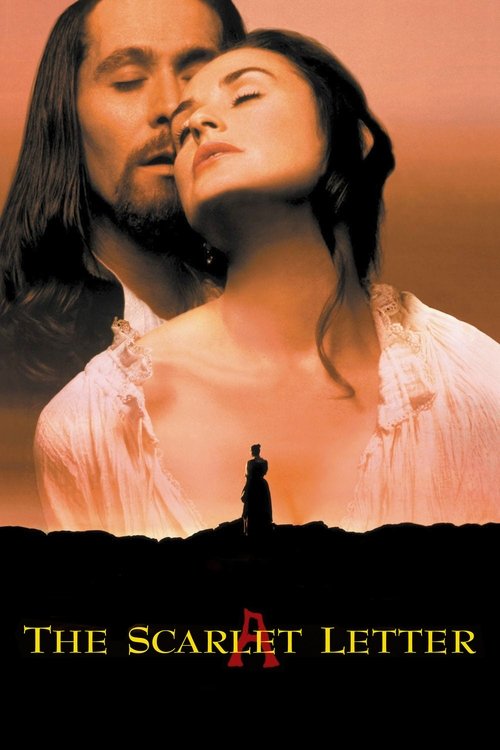
The Scarlet Letter (1995)
Directed by Roland Joffé
No — The Scarlet Letter is not woke, scoring 11 out of 100 on our wokeness meter.
The 1995 adaptation of The Scarlet Letter arrives with the confidence of a film that believes it has improved upon Nathaniel Hawthorne.
Consciousness Markers
Hester Prynne is a defiant female protagonist who challenges rigid patriarchal norms, though the film is a period piece and not a modern feminist statement.
The film explores heavy moral themes, but its execution is dramatic and narrative, not didactic or lecture-driven.
The casting is period-appropriate for 17th-century Puritan Boston, but it does not push modern boundaries of diversity or representation.
The film features the Algonquian tribe, but the narrative focuses on the Puritan moral drama rather than engaging with modern critical racial dynamics.
There are no LGBTQ+ themes, characters, or progressive subtext present in the narrative.
There is no commentary or focus on environmental issues or climate change.
The conflict is rooted in religious and social repression, not economic or anti-capitalist critique.
The film uses Hester's physical state and the scarlet letter as a symbol of shame, not as a platform for body positivity.
No characters exhibit traits related to neurodivergence.
The film critiques Puritan society, but it does not engage in modern revisionist historical theory.
Why it received this score
The 1995 adaptation of The Scarlet Letter arrives with the confidence of a film that believes it has improved upon Nathaniel Hawthorne. Roland Joffe and his collaborators grant Hester Prynne an ending in which she sheds the letter and rides off with her minister, a revision the novel's author, being dead, could not contest. Demi Moore plays her as a woman who defies the elders of Puritan Boston and refuses to name the father of her child. That defiance registers as a feminist gesture, though a modest one, since the material is a period drama about religious repression and not a treatise on the modern condition. The patriarchy here is 17th-century and specific, and the film is content to let it be villainous without commentary.
Elsewhere the ledger is thin. The Algonquian tribe appears throughout, and the plot turns on a scalping engineered to frame them, yet the narrative treats their suffering as weather that happens to the settlers. No modern racial reckoning is attempted. The casting is period-appropriate and nothing more. There is no romance beyond the heterosexual, no economic critique beneath the theological one, no interest in bodies as sites of affirmation, no environmental conscience, and no neurodivergent interiority. The moral themes are heavy, but they are staged as melodrama, with swooning strings and torches, not delivered from a pulpit. The film wants to move us, not instruct us, which is its one reliable virtue.
History has not been kind. It is regularly named among the worst literary adaptations ever assembled, a distinction it wears with a certain tragic dignity. Gary Oldman defended it once, insisting there was good work in there. The whole enterprise remains a curiosity: a serious film about shame that became an object of it.
{"thematic_tags": ["book_adaptation"]}
Analysis generated by our Consciousness Algorithm


Synopsis
Set in puritanical Boston in the mid 1600s, the story of seamstress Hester Prynne, who is outcast after she becomes pregnant by a respected reverend. She refuses to divulge the name of the father, is "convicted" of adultery and forced to wear a scarlet "A" until an Indian attack unites the Puritans and leads to a reevaluation of their laws and morals.
Questions about The Scarlet Letter
Is The Scarlet Letter woke?
No — The Scarlet Letter is not woke, scoring 11 out of 100 on our wokeness meter. That earns it a verdict of Ultra Based.
Does The Scarlet Letter have any woke elements?
1 of the 10 markers register at 30 or above, led by Feminist Agenda (35). On Feminist Agenda: Hester Prynne is a defiant female protagonist who challenges rigid patriarchal norms, though the film is a period piece and not a modern feminist statement.
How does The Scarlet Letter compare to other 1995 movies?
It ranks #33 of the 108 films from 1995 we've scored; their average is 12. The wokest is Total Eclipse (60).
How is the Woke Score calculated?
An AI-assisted process researches the film and its reception, scores it 0–100 on ten markers, then combines those into one 0–100 Woke Score. It measures a specific set of 2020s cultural themes, not film quality.