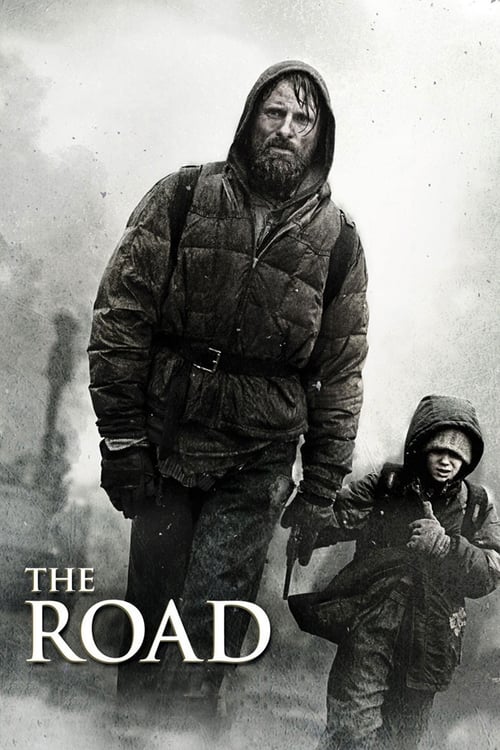
The Road (2009)
Directed by John Hillcoat
No — The Road is not woke, scoring 0 out of 100 on our wokeness meter.
The Road arrives with ash on its shoulders and a Pulitzer pedigree in its pocket, and it asks for nothing more than to watch a father and son shuffle toward a coast that may not exist.
Consciousness Markers
The cast is overwhelmingly white, with Michael K. Williams in a minor role as the Thief; no deliberate inclusive casting or commentary.
No LGBTQ+ characters, themes, or subtext.
The film focuses on a father-son survival journey; Charlize Theron's expanded role as the despairing wife does not advance a feminist agenda.
Race is not addressed or thematized in the post-apocalyptic wasteland.
The apocalypse is unspecified and the film offers no climate-change messaging or environmental crusade.
No critique of capitalism or wealth inequality; the cannibal gangs are a survival horror element, not an economic allegory.
No body-positivity themes or diverse body representation.
No neurodivergent characters or themes.
The film is a fictional post-apocalyptic story, not a historical revision.
The film is bleak and humanist rather than preachy; it does not deliver modern social justice lectures.
Why it received this score
The Road arrives with ash on its shoulders and a Pulitzer pedigree in its pocket, and it asks for nothing more than to watch a father and son shuffle toward a coast that may not exist. John Hillcoat shoots the ruined American landscape with a mortician's patience. Viggo Mortensen and Kodi Smit-McPhee carry the film's slender hope with grave sincerity. The apocalypse remains unspecified, which is either an artistic choice or a prudent avoidance of committee meetings about carbon credits. Either way, the film declines to convert ecological collapse into a sermon. It is a survival story, not a policy paper.
The cast is white, the themes are paternal, and the suffering is universal in the old-fashioned sense. Michael K. Williams appears briefly as a thief and is treated as a thief, not a representative of anything. Charlize Theron's wife is given more screen time than in the novel, but her despair is domestic and terminal, not a platform. The cannibal gangs eat people because they are hungry, not because they are venture capitalists. No character pauses to explain privilege while roasting a can of beans. This is either a relief or a disappointment, depending on how much homework you want from your apocalypse.
The result is a grim, humanist slog with handsome photography and a score by Nick Cave that sounds like the end of the world taking a bow. The film has no interest in contemporary social instruction. It is too busy worrying about the last bullet. We can classify it as a serious work about survival, paternal love, and the thin membrane between civilization and appetite. The sommelier's note is austere: no modern cultural additives, no lecturing, no revisionist history, just ash and endurance. A film can be important without being fashionable. The film is content to be cold.
Analysis generated by our Consciousness Algorithm


Synopsis
A father and his son walk alone through burned America. Nothing moves in the ravaged landscape save the ash on the wind and water. It is cold enough to crack stones and, when the snow falls, it is gray. Their destination is the warmer south, although they don't know what, if anything, awaits them there.
Questions about The Road
Is The Road woke?
No — The Road is not woke, scoring 0 out of 100 on our wokeness meter. That earns it a verdict of Ultra Based.
Does The Road have any woke elements?
No. All 10 markers score zero.
How does The Road compare to other 2009 movies?
It ranks #208 of the 230 films from 2009 we've scored; their average is 14. The wokest is Home (79).
How is the Woke Score calculated?
An AI-assisted process researches the film and its reception, scores it 0–100 on ten markers, then combines those into one 0–100 Woke Score. It measures a specific set of 2020s cultural themes, not film quality.